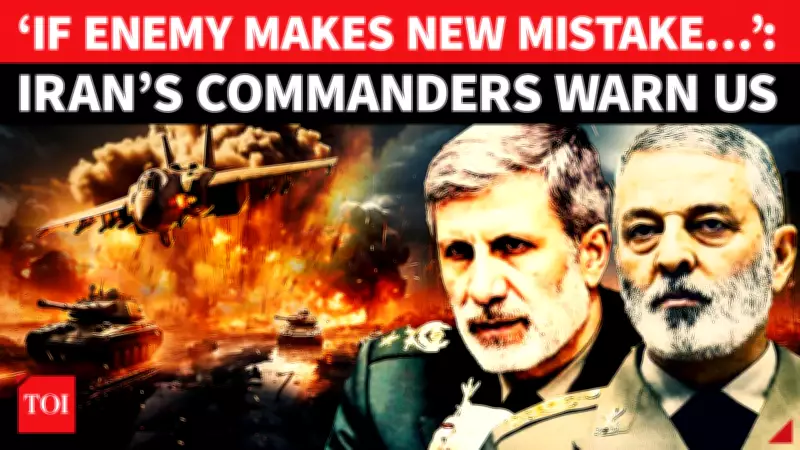
Iranian Military Leaders Issue Stern Warning to US Administration
In a significant escalation of rhetoric, Iran's highest-ranking army commanders have delivered a direct warning to the United States, stating that all American military assets near their borders are under constant and comprehensive surveillance. The statements come amid heightened regional tensions and ongoing diplomatic efforts regarding Iran's nuclear program.
Military Readiness and Deterrence Posture
Major General Amir Hatami, alongside Chief of Staff Abdolrahim Mousavi, emphasized that Tehran maintains full preparedness for potential long-term conflict scenarios. Both commanders asserted that while Iran possesses the capability and resolve for sustained military engagement, the nation has no intention of initiating regional hostilities. Their message combined elements of deterrence with a clear warning about the consequences of aggression.
The military leaders vowed that any hostile action against Iranian interests would trigger an immediate and regret-inducing response, suggesting that Tehran has developed contingency plans for various escalation scenarios. This declaration comes as multiple US warships remain deployed in strategic locations throughout the Middle East, creating what analysts describe as a volatile military standoff.

Diplomatic Concerns and Nuclear Negotiations
Simultaneously, Iranian Foreign Minister Abbas Araghchi expressed serious doubts about Washington's sincerity in ongoing nuclear negotiations. Araghchi pointed to what he characterized as contradictory behavior from the US administration, citing the continuation of economic sanctions alongside increased military movements in the region as evidence of questionable commitment to diplomatic solutions.
"The simultaneous application of maximum pressure through sanctions and military posturing raises legitimate questions about whether certain parties genuinely seek negotiated outcomes," Araghchi stated, reflecting Tehran's growing frustration with what it perceives as mixed signals from Washington.
Strategic Context and Regional Implications
The Iranian statements reflect a carefully calibrated strategy that combines military preparedness with conditional diplomatic engagement. This dual-track approach appears designed to signal both strength and willingness to negotiate, while establishing clear red lines regarding national security.
Regional security experts note that the public warnings from Iranian military leadership serve multiple purposes:
- Demonstrating operational readiness to domestic and international audiences
- Establishing deterrence through public declarations of surveillance capabilities
- Creating negotiating leverage for ongoing nuclear discussions
- Responding to perceived US military provocations in the region
The situation remains fluid, with both military and diplomatic channels active. Iranian officials have carefully framed their statements to emphasize defensive preparedness rather than offensive intentions, while maintaining pressure on Washington to clarify its strategic objectives in the region.
As tensions persist, the international community watches closely how this delicate balance between military posturing and diplomatic engagement will evolve in coming weeks, particularly regarding the nuclear negotiations that have significant implications for regional stability and global non-proliferation efforts.