

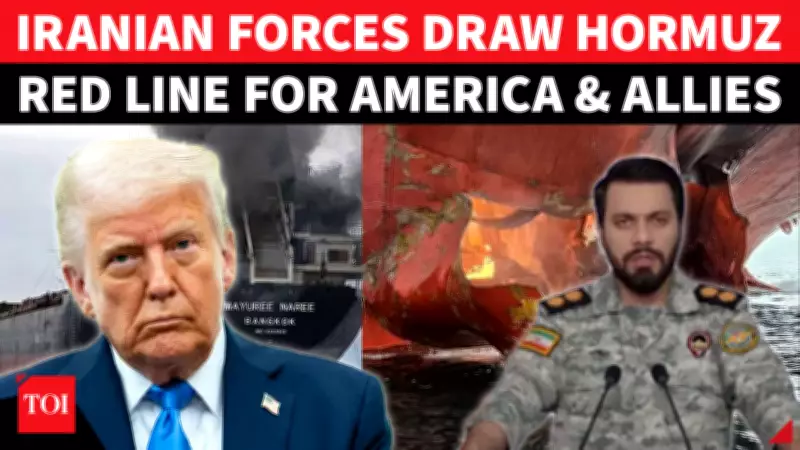
Iranian Military Issues Stark Warning Over Strait of Hormuz Oil Transit
In a dramatic escalation of hostilities, Iran has drawn a firm red line regarding oil shipments through the critical Strait of Hormuz, amid its ongoing war with the United States and Israel. The Khatam al-Anbiya Central Headquarters, a key military command, has declared that it will not permit any vessel carrying oil for the benefit of the United States or its partners to transit this vital waterway.
Spokesperson Details Severe Consequences for Violations
Spokesperson Ebrahim Zolfaghari emphasized the gravity of the situation, warning that any ship transporting oil linked to the U.S., Israel, or their allies could be treated as a "legitimate target." This statement underscores Tehran's uncompromising stance, as it reiterated that it would not allow "even a single litre of oil" to pass through the strait for Washington and its partners. The warning highlights the strategic importance of the Strait of Hormuz, through which a significant portion of global oil supplies flows, making this threat a potential trigger for broader economic and geopolitical repercussions.
Context of Ongoing Conflict and Regional Tensions
The announcement comes against the backdrop of heightened military engagements and diplomatic strains. Iran's actions are part of a larger pattern of confrontations with the U.S. and Israel, which have included missile strikes, drone attacks, and espionage allegations. This move aims to leverage control over oil routes as a bargaining chip or deterrent in the conflict, reflecting Tehran's determination to assert its influence in the region. The situation remains fluid, with international observers closely monitoring for any violations or retaliatory measures that could further destabilize the area.







