

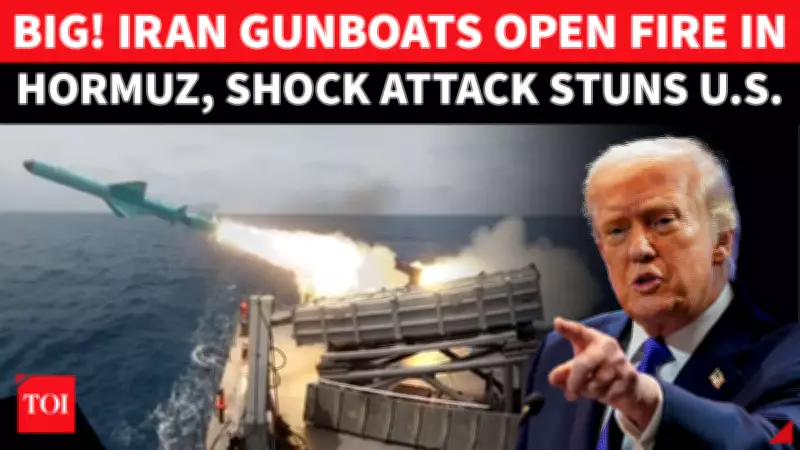
Iranian Gunboats Unleash Bullet Barrage on Ship in Hormuz Strait, Captain Details Terror
In a dramatic escalation of regional tensions, the Strait of Hormuz has once again become a critical flashpoint as Iranian forces launched a shocking attack on a commercial vessel, with the captain revealing horrifying details of the assault. According to reports, Iranian gunboats approached the ship and unleashed a relentless rain of bullets, creating a scene of chaos and fear in the strategically vital waterway.
Iran Declares Strait Under Strict Military Control
Following the attack, Iran has officially declared the Strait of Hormuz to be under strict military control, a move that signals Tehran's aggressive stance amid rising disputes with the United States over maritime access and shipping operations linked to Iranian ports. This declaration comes as part of a broader strategy by Iran to assert dominance in the region, framing its actions as a necessary response to what it describes as external threats and interference.
The captain of the targeted vessel provided a chilling account of the incident, describing how Iranian forces suddenly appeared and opened fire without warning. "It was like a nightmare," the captain stated, "bullets were raining down on us, and we had no idea why. We were just trying to navigate through the strait as usual." This firsthand testimony underscores the severe risks faced by ships traversing this crucial chokepoint, which handles approximately one-fifth of the world's oil shipments.

Escalating Tensions with the United States
The attack and subsequent military declaration have significantly heightened tensions between Iran and the United States. The US has long expressed concerns over Iran's activities in the Strait of Hormuz, with recent discussions focusing on naval blockades and maritime security. Iranian officials, including figures like Ghalibaf, have threatened to choke the strait in retaliation to US pressures, highlighting the volatile nature of the situation.
Reports indicate that Iranian forces have been increasingly active in the area, with incidents of warning fire and aggressive maneuvers adding to the growing unease among international shipping communities. Tehran has made it clear that any perceived interference will be met with direct and forceful action, raising the stakes for diplomatic resolutions.
Broader Implications for Global Shipping and Security
This latest incident not only threatens the safety of vessels in the Strait of Hormuz but also has profound implications for global trade and energy markets. The strait is a lifeline for oil exports from the Middle East, and any disruption could lead to significant economic repercussions worldwide. Security analysts warn that continued aggression could trigger a broader conflict, drawing in regional and global powers.
In response to the attack, international observers are calling for increased vigilance and diplomatic efforts to de-escalate the situation. The captain's harrowing experience serves as a stark reminder of the human cost of such conflicts, urging stakeholders to prioritize peaceful solutions over military posturing.
As the crisis unfolds, the world watches closely, hoping for a resolution that ensures safe passage through one of the planet's most strategic maritime corridors. The events in the Strait of Hormuz underscore the fragile balance between national sovereignty and international security, with the potential to reshape geopolitical dynamics in the Middle East and beyond.






