

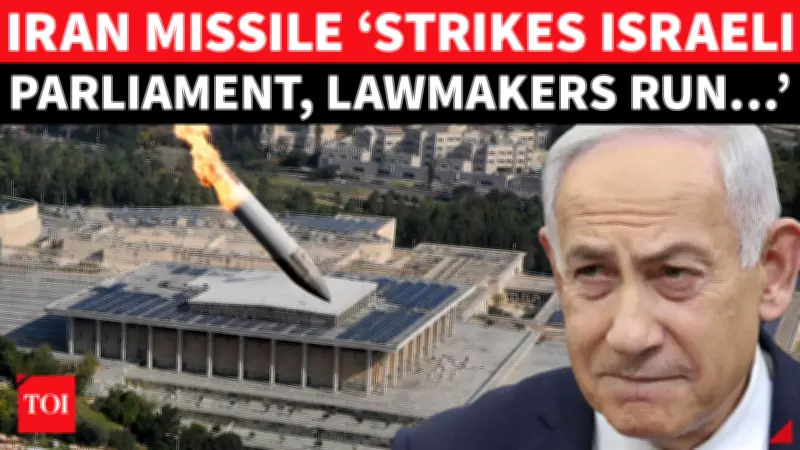
Iran Fires Missile Barrage Towards Israeli Parliament, Sparking Panic and Evacuation
In a dramatic escalation of Middle East tensions, Iran launched a missile barrage targeting the Israeli Knesset parliament building late on March 23, 2026. The attack triggered widespread panic across Jerusalem as air raid sirens blared, forcing an emergency suspension of parliamentary proceedings and the evacuation of lawmakers to secure locations.
Emergency Evacuation and Parliamentary Disruption
The missile strike occurred during a late-night session of the Knesset, Israel's legislative body. According to eyewitness reports and official statements, lawmakers were abruptly moved to safety as the alert system activated across the capital city. The parliamentary session was suspended for approximately fifteen minutes before resuming under heightened security protocols.
Israeli emergency services confirmed that no immediate injuries or casualties were reported in Jerusalem following the attack. Preliminary assessments suggest the missile barrage was intercepted by Israel's advanced air defense systems, though some debris reportedly fell in open areas surrounding the parliamentary complex.

Trump Announces Temporary Military Action Pause
The Iranian missile attack coincided with a significant announcement from United States President Donald Trump, who revealed a temporary pause on planned military action against Iran. In a statement released shortly after the attack, Trump indicated that "very good" backchannel negotiations were underway between American and Iranian officials.
"We have initiated productive discussions aimed at reducing hostilities in the region," Trump stated, without providing specific details about the nature or participants in these diplomatic exchanges. The announcement represents a notable shift in U.S. policy toward Iran, which had been facing increasing pressure from Western nations over its nuclear program and regional activities.
Regional Context and Escalating Tensions
The missile attack on Israel's parliament comes amid heightened regional tensions that have been building for several months. Iran has repeatedly threatened retaliation against Israel for what it describes as "hostile actions" in the Middle East, while Israel has maintained a policy of preemptive strikes against Iranian military assets in neighboring countries.
Security analysts note that the targeting of the Knesset represents a symbolic escalation, as parliamentary buildings are typically considered civilian infrastructure under international law. The attack follows a series of smaller-scale incidents between Iranian proxies and Israeli forces along Israel's northern border with Lebanon and Syria.
International Response and Diplomatic Implications
The international community has been closely monitoring the situation, with several European nations expressing concern about the potential for broader regional conflict. The timing of Trump's announcement regarding paused military action suggests coordinated diplomatic efforts may be underway to prevent further escalation.
Israeli officials have maintained their right to self-defense while calling for increased international pressure on Iran to cease what they describe as "unprovoked aggression." The Israeli Defense Forces have been placed on heightened alert status following the attack, with additional air defense systems deployed around major population centers.
As the situation continues to develop, observers are watching closely to see whether the backchannel negotiations mentioned by President Trump will yield tangible results in de-escalating one of the world's most volatile geopolitical flashpoints.






