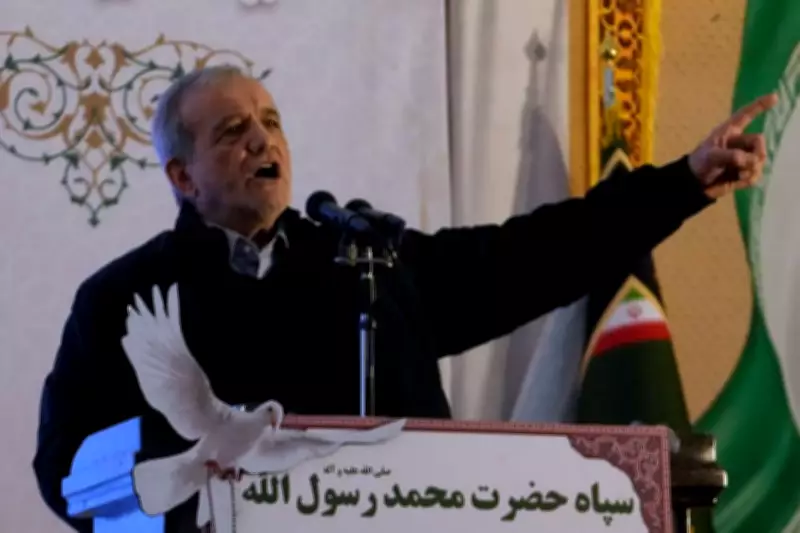
Iran's President Pezeshkian Delivers Firm National Address, Pledges Continued Hardline Strikes
In a significant national address, Iran's President Masoud Pezeshkian has reaffirmed the country's commitment to a hardline foreign policy stance, vowing to continue striking hard against perceived threats. The speech, delivered to the nation, underscored Iran's determination to uphold its sovereignty and resist external pressures, marking a clear continuation of the assertive strategies that have characterized recent Iranian diplomacy.
Key Points from President Pezeshkian's Address
President Pezeshkian's address focused on several critical themes, emphasizing resilience and strength in the face of international challenges. He articulated a vision of Iran as a steadfast nation, unwilling to compromise on its core principles or security interests.
- Continuation of Hardline Strikes: The president explicitly stated that Iran will persist with its policy of striking hard against any entities deemed hostile, reinforcing a message of deterrence and strength.
- National Sovereignty: Pezeshkian highlighted the importance of protecting Iran's sovereignty, asserting that the country will not bow to foreign dictates or interference in its internal affairs.
- Economic and Social Resilience: Alongside security matters, the address touched on Iran's efforts to bolster economic independence and social cohesion, framing these as essential components of national strength.
- Regional Stability: The president addressed Iran's role in the Middle East, suggesting that its actions are aimed at promoting stability, albeit through a firm and uncompromising approach.
Context and Implications of the Speech
This address comes at a time of heightened tensions in the region, with Iran facing ongoing diplomatic and economic challenges from various international actors. President Pezeshkian's words are seen as a direct response to these pressures, signaling that Iran intends to maintain its current trajectory without significant concessions.

The speech is likely to have broad implications for Iran's foreign relations, potentially escalating conflicts with adversaries while rallying domestic support among hardline factions. It reflects a broader trend in Iranian politics, where leaders often use such addresses to consolidate power and project an image of unwavering resolve.
Analysis of Iran's Strategic Posture
Iran's pledge to continue hardline strikes aligns with its historical approach to security and diplomacy, which often involves a combination of military posturing and strategic alliances. This stance is rooted in a deep-seated perception of external threats, particularly from Western nations and regional rivals.
- Military and Security Dimensions: Iran has invested heavily in its military capabilities, including missile programs and proxy forces, which it uses to exert influence and respond to threats across the Middle East.
- Diplomatic Maneuvering: Despite its hardline rhetoric, Iran also engages in diplomatic efforts, such as nuclear negotiations, though these are often framed within a context of strength and resistance.
- Domestic Politics: President Pezeshkian's address serves to bolster his standing within Iran's political landscape, appealing to conservative elements while addressing broader national concerns about security and independence.
In summary, President Masoud Pezeshkian's national address reinforces Iran's commitment to a hardline foreign policy, with continued strikes against perceived enemies. This stance is set against a backdrop of regional instability and international pressure, highlighting Iran's determination to assert its sovereignty and resist external influence. The speech is a clear indicator that Iran will not deviate from its current path, potentially shaping future geopolitical dynamics in the Middle East and beyond.