

Iran Formulates Response to Ceasefire Proposals While Rejecting Temporary Truce
Iran announced on Monday that it has developed its official positions and demands in response to recent ceasefire proposals transmitted through diplomatic intermediaries. Simultaneously, Tehran firmly rejected the concept of a temporary truce in its ongoing conflict with the United States and Israel, emphasizing its preference for a permanent resolution to hostilities.
Diplomatic Efforts and Proposal Details
The statements emerged amidst renewed international diplomatic initiatives aimed at halting the fighting. According to Reuters, both Iran and the United States received a proposal to end hostilities that could potentially take effect immediately. Additionally, Axios reported that discussions involving the US, Iran, and regional mediators were focusing on a possible 45-day ceasefire as part of a comprehensive two-phase agreement designed to permanently terminate the war.
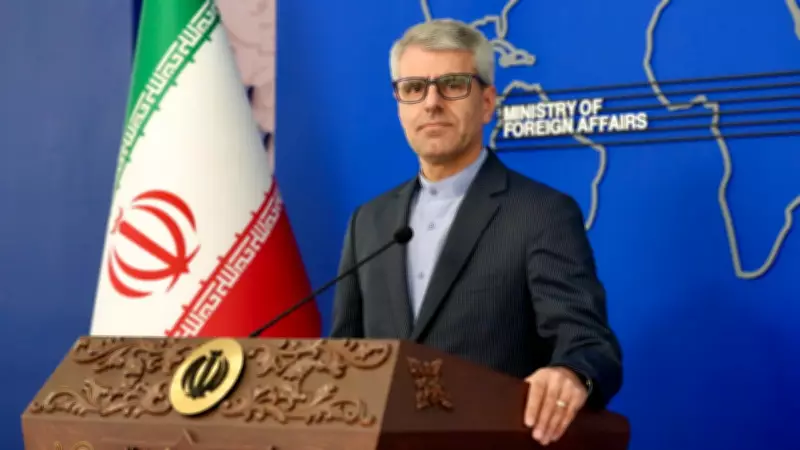
Foreign Ministry spokesperson Esmaeil Baghaei confirmed that Tehran has already communicated its specific requirements through intermediary channels. He explicitly stated that earlier American proposals had been deemed unacceptable by Iranian authorities.

Iran's Firm Stance on Negotiations
During a press conference, Baghaei characterized previous US demands, including a 15-point plan conveyed through Pakistan, as "extremely excessive and unusual and illogical." He referenced Iran's "very bitter experience of negotiating with the US" as justification for their cautious approach.
"Iran does not hesitate to clearly express what it considers its legitimate demands," Baghaei declared. "Doing so should not be interpreted as a sign of compromise, but rather as a reflection of its confidence in defending its positions." He added that Iran has "formulated our own responses" and will disclose details at an appropriate time in response to questions about ongoing ceasefire efforts.
Rejection of Temporary Solutions
Baghaei clarified that while Iran is not opposed to ending the conflict, it categorically rejects temporary ceasefire arrangements. He argued that such pauses would merely allow adversaries to regroup and prepare for intensified future fighting. "We are calling for an end to the war and for preventing its recurrence," Baghaei was quoted as saying by Iran's state news agency IRNA.
The spokesperson further emphasized that diplomatic negotiations cannot proceed under military pressure or threats. "Any diplomatic talks are 'absolutely incompatible with ultimatums, crimes, and threats to commit war crimes,'" he stated, specifically referencing former US President Donald Trump's threat to bomb key Iranian infrastructure if Tehran does not open the Strait of Hormuz.
Military Readiness and Warning of Escalation
Separately, Iranian military officials asserted the country's preparedness to continue the conflict indefinitely if necessary. Army spokesman Mohammad Akraminia told the ISNA news agency, "We can continue the war as long as the political authorities see fit." He added that "the enemy must definitely regret it because, after this war, we need to reach a point of security and not witness another war."
In a more severe warning, Iranian Armed Forces spokesman Ebrahim Zolfaghari indicated that Iran would significantly escalate its response if attacks on civilian targets persist. According to the semi-official Tasnim news agency, Zolfaghari warned that repeated attacks would trigger retaliation "on a much wider scale" resulting in losses "several times greater" than previous incidents.
The developments highlight the complex diplomatic landscape surrounding the conflict, with Iran positioning itself as willing to negotiate but only under conditions that ensure permanent resolution rather than temporary pauses in hostilities.






