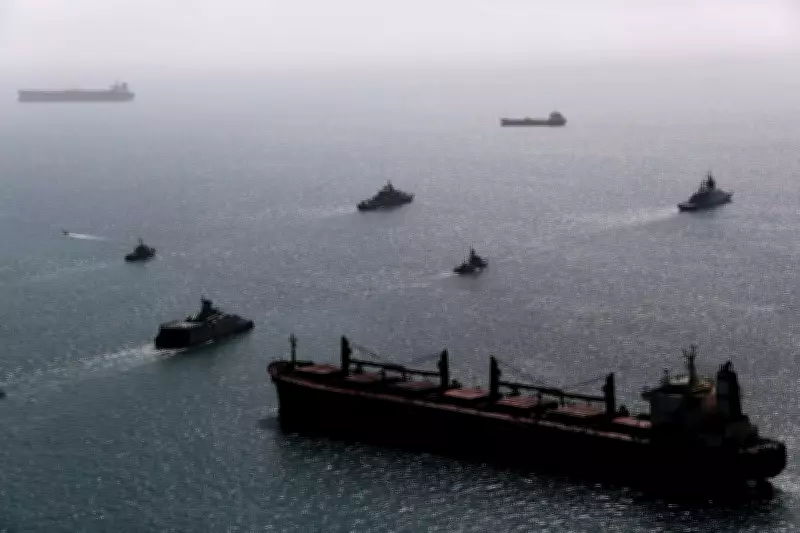
Iran-Russia Military Drills Intensify Amid US Carrier Deployment and Nuclear Standoff
In a significant escalation of geopolitical tensions, Iran conducted its annual military exercises with Russia on Thursday, coinciding with the deployment of a second American aircraft carrier to the West Asia region. This development comes as both the United States and Iran have openly signaled their preparedness for potential conflict, should ongoing negotiations regarding Tehran's controversial nuclear program ultimately collapse.
Stalled Nuclear Talks and Heightened Military Posturing
Indirect talks held in recent weeks between Iran and world powers have yielded little to no visible progress, raising concerns that one or both sides may be strategically buying time to finalize preparations for a possible military confrontation. The timing of these joint drills and the US naval movement underscores the precarious nature of the current diplomatic impasse.
Iranian forces, alongside Russian sailors, executed the annual exercises in the strategically vital waters of the Gulf of Oman and the Indian Ocean. According to Iran's state-run IRNA news agency, the primary objectives of these maneuvers were to "upgrade operational coordination" and facilitate the "exchange of military experiences" between the two nations. In a move that further heightened regional alertness, Iran issued a formal rocket-fire warning to pilots operating in the area, strongly suggesting the imminent launch of anti-ship missiles during the drills.

Iran's Unwavering Stance on Nuclear Enrichment Rights
Adding another layer of complexity to the already volatile situation, Iran's atomic energy chief, Mohammad Eslami, made a defiant statement on Thursday. He asserted that "no country can deprive Iran of the right" to pursue nuclear enrichment activities. This declaration directly challenges international efforts to curb Tehran's nuclear ambitions and reinforces Iran's position as it navigates the high-stakes negotiations.
The convergence of these events—the Iran-Russia military collaboration, the advancing US naval presence, and Iran's uncompromising rhetoric on its nuclear program—paints a stark picture of a region on the brink. Analysts warn that the failure of diplomatic channels could rapidly devolve into open hostilities, with global implications.
The international community watches with bated breath as these parallel developments unfold. The joint drills serve not only as a demonstration of military capability but also as a potent political message regarding alliances and readiness. Meanwhile, the US carrier group's approach is interpreted as a clear show of force and a deterrent, underscoring Washington's commitment to regional security and its strategic interests.