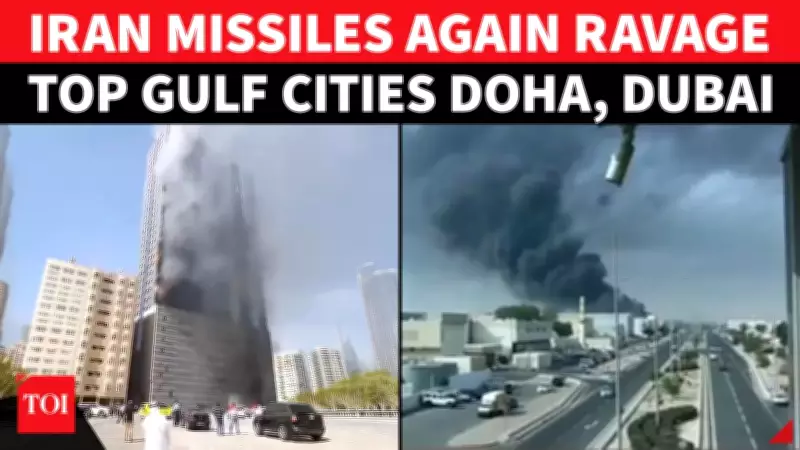
Iranian Forces Launch Strikes on US-Linked Sites in Gulf Capitals
Air raid sirens echoed through Doha on March 1, 2026, as Iranian sources announced retaliatory strikes targeting American facilities in Qatar. The Islamic Revolutionary Guard Corps (IRGC) claimed responsibility for the attacks, which also reportedly extended to US-linked sites in Bahrain and the United Arab Emirates, including Dubai.
Visual Evidence and Official Responses
Videos circulating on social media platforms depicted plumes of smoke rising from areas within Doha, though Qatari authorities have not independently verified the full scope of the damage. In an official statement, Qatar's Interior Ministry disclosed that Civil Defence teams addressed a minor fire ignited by falling shrapnel following the interception of a missile. The ministry emphasized that no injuries were reported from the incident.
Iranian state-affiliated media outlets asserted that the strikes were precise retaliatory actions against US military assets, though confirmation from US or Gulf officials remains limited. The developments signal a significant escalation in regional tensions, placing key American military hubs across the Gulf on heightened alert.

Broader Regional Implications
The IRGC's claims of targeting multiple nations underscore a widening confrontation that risks destabilizing the strategically vital Gulf region. Analysts note that these strikes represent a direct challenge to US presence and influence, potentially triggering further military responses or diplomatic crises.
Security protocols have been intensified at US installations throughout Qatar, Bahrain, and the UAE, with local governments coordinating closely with American defense officials to assess threats and reinforce defenses. The situation remains fluid, with ongoing monitoring for additional provocations or escalations.
Context and Historical Background
This incident occurs against a backdrop of prolonged geopolitical friction between Iran and the United States, compounded by recent conflicts involving Israel. The IRGC has historically positioned itself as a key player in regional power dynamics, often leveraging asymmetric warfare tactics to counter perceived adversaries.
Experts warn that such strikes could exacerbate existing fault lines, impacting global energy markets and international security frameworks. The Gulf region, a critical nexus for oil and gas exports, faces heightened risks of disruption amid escalating hostilities.