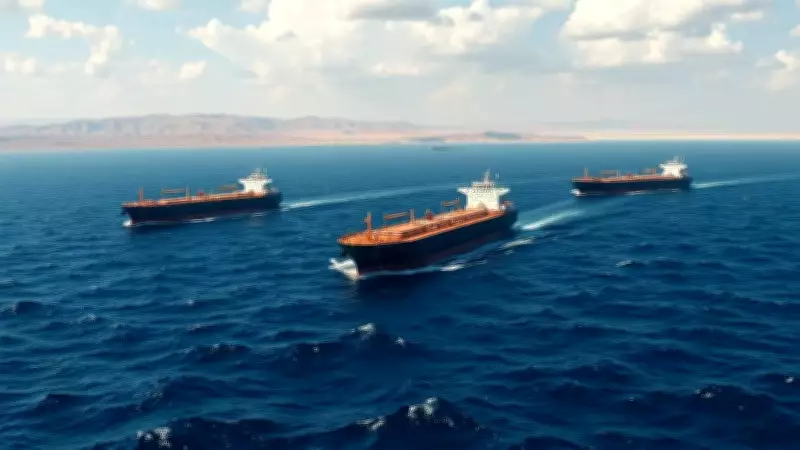
Iranian Official Threatens to 'Set on Fire' Ships in Critical Strait of Hormuz
A senior Iranian military official issued a stark warning on Monday, threatening to "set on fire" any ships traveling through the Strait of Hormuz. This narrow waterway off Iran's southern coast is a vital maritime passage, responsible for transporting approximately one-fifth of the world's oil supply. The threat comes amid escalating tensions following recent US and Israeli strikes on Iran, which have already disrupted global shipping routes and raised concerns about a potential spike in oil prices.
Escalating Conflict and Shipping Disruptions
The threat was made by Ebrahim Jabari, an adviser to the commander of the Islamic Revolutionary Guard Corps. Jabari's statement on Iranian television was unequivocal: "Not a single drop of oil will leave the region." This declaration follows Iran's announcement on Saturday that it was closing the strait, although some vessels managed to navigate through in the immediate aftermath of the American and Israeli attacks.
Most shipping companies have already halted tanker operations through the Strait of Hormuz due to the heightened risk. The conflict has seen several tankers come under attack, including one on Monday flying the US maritime flag and docked in Bahrain. The identity of the attackers remains unclear, adding to the uncertainty and danger in the region.

Impact on Global Oil Markets and Consumer Prices
The sharp reduction in tanker traffic through the Strait of Hormuz is fueling fears of a significant decrease in oil and gas supplies reaching world markets. This disruption could lead to higher prices for both commodities, with analysts warning that a prolonged increase in oil prices might result in elevated gas costs for consumers globally. The situation underscores the strategic importance of the strait and its vulnerability to geopolitical conflicts.
Broader Context of US-Israel-Iran Tensions
This development is part of a larger conflict, with live updates reporting events such as Iran launching a 'massive missile' strike at a US airbase in Bahrain and Israel bombing Beirut. Satellite images have revealed the aftermath of strikes on Iranian sites, from Khamenei's compound to nuclear complexes. Meanwhile, the US military operation, dubbed "Operation Epic Fury," has incurred substantial costs, with reports indicating $700 million spent in just 24 hours, though the final war expenditure remains uncertain.
As tensions continue to mount, the threat to the Strait of Hormuz highlights the potential for broader economic repercussions, affecting not only regional stability but also global energy security and consumer wallets.