

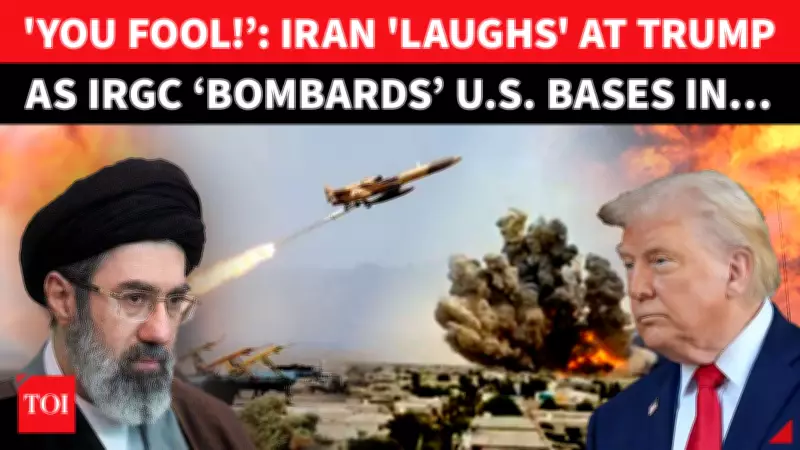
Iran Issues Dire Warning to Gulf Nations Amid Trump's Power Plant Strike Threats
Tensions have dramatically escalated in West Asia, with Iran delivering a fiery rebuke to US President Donald Trump while simultaneously launching a series of fresh strikes across the volatile region. In a provocative post on social media platform X, a senior advisor to Iran's Supreme Leader, Ali Akbar Velayati, directly addressed what he termed the "foolish" actions of Trump, issuing a stern warning that any threats to Tehran's critical electricity infrastructure could have catastrophic consequences, potentially destabilizing the entire Middle East.
Trump's Aggressive Rhetoric Fuels Regional Instability
The Iranian warning comes in direct response to alarming statements made by President Trump during a recent interview with Fox News, where he openly declared he is "considering blowing everything up" in Iran. This aggressive rhetoric has heightened fears of a potential military confrontation, with Iran interpreting these comments as a direct threat to its national security and essential energy facilities. The situation underscores the fragile geopolitical landscape, where verbal provocations can quickly translate into tangible military actions.
Iran Backs Words with Military Action Across the Gulf
Iran did not limit its response to mere verbal warnings. Reports indicate that the Islamic Revolutionary Guard Corps (IRGC) has actively backed Velayati's ominous message by executing coordinated strikes across the Gulf region. These military actions demonstrate Iran's readiness to defend its interests and retaliate against perceived aggressions, further complicating the security dynamics in an already tense area. The strikes serve as a clear signal that Iran is prepared to escalate conflicts if its infrastructure is targeted.

The broader implications of this confrontation are profound. A potential US strike on Iran's power plants could disrupt electricity supplies not only within Iran but also to neighboring countries, triggering widespread humanitarian and economic crises. Gulf nations, in particular, are being cautioned by Iran to reconsider their alliances and policies, as they could become collateral damage in a larger conflict. This development highlights the interconnected nature of regional stability, where actions against one nation can ripple across borders.
Escalating Tensions and the Risk of Wider Conflict
The current standoff between Iran and the United States, under Trump's leadership, poses a significant risk of spiraling into a broader regional war. Iran's dual approach of diplomatic warnings and military strikes reflects a strategy aimed at deterring US aggression while asserting its influence in West Asia. Observers note that the involvement of Gulf nations adds another layer of complexity, as they navigate their relationships with both Iran and the US amidst rising hostilities.
This unfolding crisis demands urgent international attention. The potential for miscalculation or escalation is high, given the volatile mix of political rhetoric, military posturing, and historical animosities. As Iran continues to roar against Trump's plans and Gulf nations weigh their responses, the world watches closely, hoping for de-escalation but preparing for the possibility of further conflict in an already troubled region.






