

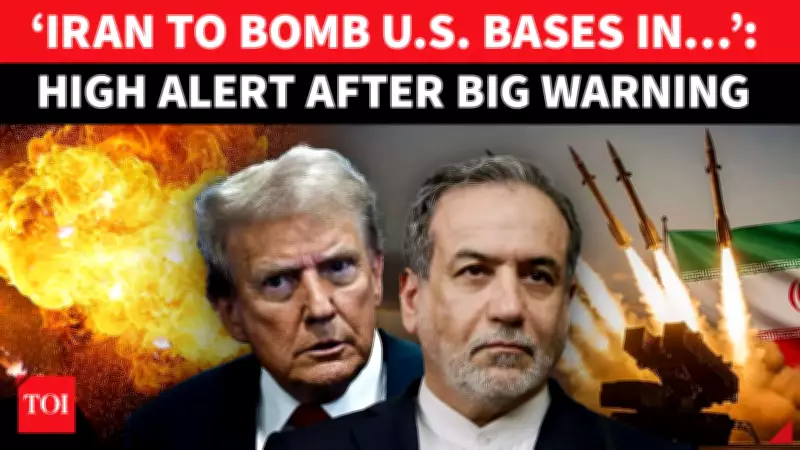
Iran Issues Stark Warning to US Over Potential Military Strikes
In a significant escalation of regional tensions, Iran's Foreign Minister Abbas Araghchi has delivered a direct threat to the United States, stating that Tehran will not hesitate to strike American military bases across the Middle East if Iran comes under attack. This warning comes amid heightened friction over nuclear negotiations and ongoing sanctions.
Diplomatic Standoff Intensifies as Uranium Enrichment Continues
Speaking in an interview with Al Jazeera, Araghchi emphasized that Iran's uranium enrichment activities will proceed without interruption, and he firmly rejected any discussions regarding the country's missile capabilities. This stance underscores Tehran's determination to maintain its strategic autonomy despite international pressure.
The foreign minister clarified that Iran has no intentions of targeting neighboring nations, but he made it unequivocally clear that US forces stationed in the region would face retaliatory actions in the event of an assault on Iranian soil. This declaration has sent shockwaves through diplomatic circles and military command centers.

US Response and Regional Alarm Bells
Concurrently, the United States has been ramping up economic sanctions against Iran, with President Donald Trump cautioning of "very steep" consequences should the nuclear talks collapse. The combination of Araghchi's threats and Trump's warnings has created a volatile atmosphere, raising concerns about a potential military confrontation.
Security analysts and regional observers are closely monitoring the situation, as the prospect of Iran targeting US bases could destabilize the entire Middle East. Key points of concern include:
- The specific locations of US military installations that might be at risk.
- The readiness and response protocols of American forces in the area.
- The impact on ongoing diplomatic efforts to revive the nuclear agreement.
- Potential reactions from allied nations in the Gulf region.
This development highlights the fragile state of US-Iran relations and the broader geopolitical tensions that continue to simmer in the Middle East. As both sides posture and prepare, the international community watches with apprehension, hoping for a de-escalation through dialogue rather than military action.






