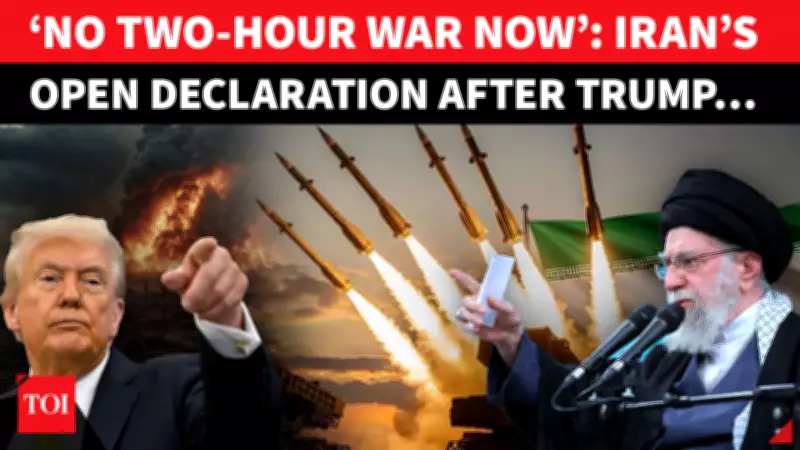
Iran Draws Hard Red Line With Ultimatum to Trump Administration
In a significant escalation of tensions, Iran has issued a stark warning to the United States following new threats from Washington, declaring there will be no delay in retaliation against any aggression. The ultimatum comes as Tehran signals a major shift in its military doctrine and rules of engagement in the volatile Middle East region.
Military Spokesman Delivers Uncompromising Message
Army spokesman Brigadier General Mohammad Akraminia delivered the hardline position, stating unequivocally that any U.S. or Israeli aggression will be met instantly. This represents a clear departure from previous strategic approaches and follows the intense 12-day conflict that occurred in June, which Iranian officials claim has fundamentally altered their defense posture.
Akraminia specifically dismissed Western notions of limited strikes or contained military actions, emphasizing that this is "no two-hour war" scenario. The military spokesman accused Trump-era U.S. foreign policy of creating dangerous unpredictability and employing failed coercion tactics that have only strengthened Iranian resolve.

Tehran Claims Strategic Advantages After Recent Conflict
Iranian authorities assert that the recent hostilities have actually strengthened national unity and exposed what they characterize as Washington's strategic miscalculations. According to Tehran's assessment, the conflict demonstrated both the resilience of Iranian forces and the limitations of American military options in the region.
The warning comes amid heightened tensions between the two nations, with Iran positioning itself as prepared for immediate and comprehensive response to any perceived threats. This new doctrine suggests Tehran believes it has gained both tactical and psychological advantages through recent confrontations.
Broader Implications for Regional Stability
The Iranian ultimatum represents more than just bilateral posturing between Tehran and Washington. It signals potential changes in how future conflicts might unfold in the Middle East, with implications for:
- Regional security dynamics and alliance structures
- Nuclear negotiations and non-proliferation efforts
- Global energy markets and oil supply routes
- Diplomatic efforts to de-escalate tensions
As the situation continues to develop, military analysts are closely monitoring whether this represents genuine strategic recalibration or primarily rhetorical positioning. What remains clear is that Iran has chosen to communicate its red lines with unprecedented clarity and immediacy, setting the stage for potentially volatile interactions in the coming months.