

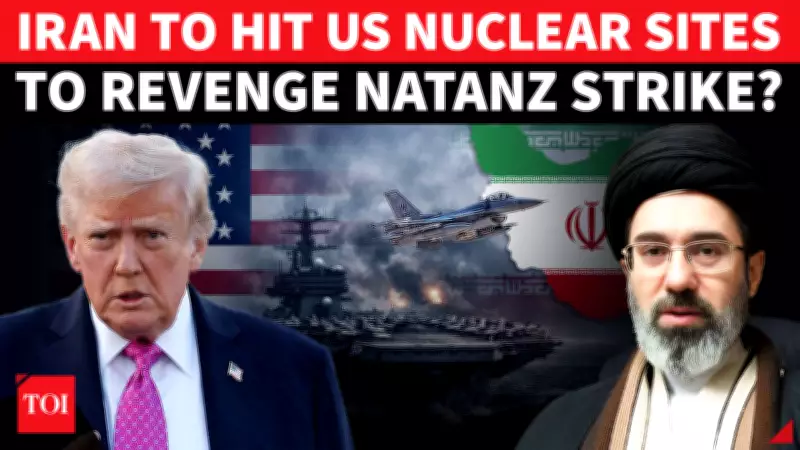
Iran Issues Stark Warning to US and Israel Over Infrastructure Attacks
As the Iran war enters its 22nd day, tensions have escalated dramatically with Iran's Khatam al-Anbiya Central Headquarters delivering its most direct and ominous threat yet regarding critical infrastructure across the region. The military command stated unequivocally: "Strike our infrastructure, and we will strike more important infrastructure than you." This deliberately open-ended declaration places every vital installation throughout the Middle East under implicit threat without specifying any particular targets, effectively forcing adversaries to defend all potential sites simultaneously.
Escalating Conflict and Regional Strikes
The conflict has already seen significant action on multiple fronts. Iran has conducted strikes against refineries in Saudi Arabia, Kuwait, Qatar, and the Israeli port city of Haifa, demonstrating its capability to target energy infrastructure across the Persian Gulf region. In response, the United States and Israel have launched attacks against Iran's defense factories, power grid facilities, and the strategically important Kharg Island oil terminal.
Israeli Defence Minister Yoav Katz has now announced that attacks against Iranian targets will "increase significantly" this week, signaling a dangerous new phase in the conflict. Both sides appear to be escalating their military actions simultaneously, creating a volatile situation where miscalculation could lead to broader regional warfare.

Strategic Implications of Iran's Warning
The Iranian statement represents a calculated strategic move designed to complicate defense planning for the United States and Israel. By refusing to name specific targets while promising retaliation against "more important infrastructure," Iran creates maximum uncertainty for its adversaries. This approach forces the US and Israel to allocate defensive resources across a wide range of potential targets throughout the region, stretching military capabilities and creating vulnerabilities.
The warning comes amid reports that Iranian missiles have reached what sources describe as the "heart" of Israel's secret nuclear program, though these claims remain unverified by independent sources. Meanwhile, the United States faces increasing international pressure, with reports suggesting Washington may be forced to lift oil sanctions against Iran under global diplomatic pressure.
Regional and International Dimensions
The conflict has drawn in multiple regional and international actors. Russian President Vladimir Putin has declared Russia a "loyal friend of Iran" even as former US President Donald Trump reportedly deploys ground troops to the Middle East. China has been urged to help resolve the escalating Hormuz crisis, though Beijing has largely remained on the sidelines of the conflict.
Saudi Arabia has publicly criticized Iran, questioning what Tehran has "done for Islamic causes" following attacks on energy sites across the Gulf region. The situation has grown so tense that a US military base was recently placed under lockdown after a drone was spotted over a military facility in Washington DC, though no connection to the Iran conflict has been established.
As both sides continue to escalate their military actions, the risk of miscalculation grows daily. With Iran promising devastating retaliation for any attacks on its infrastructure and the US-Israel alliance vowing to increase strikes, the Middle East faces one of its most dangerous moments in recent years, with potential consequences that could extend far beyond the immediate region.






