Iranian Activist Blasts Kamala Harris for Ignoring Regime Violence Amid US-Israel Strikes
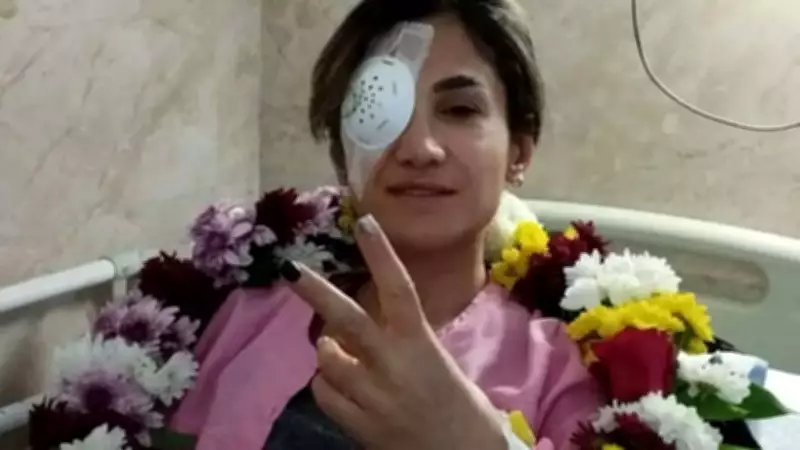
Mersedeh Shahinkar, an Iranian activist who lost an eye after being shot by security forces during the 2022 "Woman, Life, Freedom" protests, has launched a scathing critique of former US vice president Kamala Harris. Shahinkar condemned Harris for speaking out against recent US-Israeli strikes on Iran while allegedly overlooking the suffering of ordinary Iranians under the Islamic Republic's regime.
Decades of Peaceful Efforts Met with Brutal Crackdowns
Now residing in California, Shahinkar expressed deep frustration with Western politicians who advocate for peaceful reform but fail to support Iran's pro-democracy movement. In an interview with the California Post, she detailed how activists have long pursued democratic methods to demand change, only to face violent repression.
"For many years, we tried peaceful and democratic ways to demand change, or at least reform," Shahinkar stated. "The same methods that some members of the Democratic Party and leftists are now teaching us. But I ask them: Where were you?"

Anger Over Western Response to Mass Protests and Killings
Shahinkar pointed to large-scale protests earlier this year in Iran, claiming that thousands were killed during crackdowns across hundreds of cities. She highlighted efforts by the Iranian diaspora to draw attention to these events online, appealing to US political figures including Kamala Harris, Joe Biden, and Barack Obama.
"Where were you when more than 30,000 people were slaughtered in early 2026, when millions of people went to peaceful protests with their children in 300 cities across Iran?" she questioned. "Since January 8, we in the Iranian diaspora have left thousands of comments and messages on their accounts. We respectfully begged them to raise their voices for innocent children and young people whose internet access was cut off by the regime."
According to Shahinkar, these appeals largely went unanswered, with Western leaders failing to offer even words of sympathy.
Critique of Anti-War Slogans and Regime Threats
Addressing Western anti-war messaging, Shahinkar argued that slogans like "No War" ignore the daily violence faced by Iranians. "Yes, 'No War' is a good slogan. No one loves war in the world," she said. "But where were you when we were shot in our eyes and faces? When they lashed us, harassed us, and tortured us?"
She warned that peaceful protests have repeatedly led to harsher repression, mass killings, and executions. Shahinkar also emphasized the dangers of an Iranian regime armed with advanced weapons, stating, "Imagine the brutality we have endured from a regime that opens fire with live ammunition on its own unarmed youth. If such a regime obtains nuclear weapons or long-range missiles, what would it do to you and to other countries in the world?"
For many Iranians, she concluded, current events are not viewed as war but as a potential rescue from oppression.
Kamala Harris's Comments on US-Israeli Strikes
Harris recently criticized President Donald Trump over the US-Israeli strikes on Iran during a book tour event in Madison, Wisconsin, on March 1. She described the operation as an unauthorized "war of choice" and accused Trump of risking American lives without congressional approval.
"In the last 48 hours Donald Trump has dragged America into a war that we don’t want," Harris said. While opposing a regime-change war, she stressed that Iran must never acquire nuclear weapons and called for steady leadership for US troops.
Additional Criticism from Iranian-American Activist
Earlier, Iranian-American activist Masih Alinejad also targeted Harris in a sharp post on X, accusing her of remaining silent during mass killings in Iran while speaking out against the strikes. "Who are you? No, honestly. Who are you?" Alinejad wrote. "A Democrat who built a career talking about women’s rights, yet stayed silent when more than 30,000 people were massacred. Now suddenly you’ve found your voice?"

Alinejad argued that Western politicians often discuss human rights but fail to stand with Iranians when protests are violently suppressed, echoing Shahinkar's sentiments about abandonment and hypocrisy.