

Iranian Leadership Makes Rare Public Appearance Amid Escalating Regional Tensions
In a striking display of public engagement, Iranian President Masoud Pezeshkian and Foreign Minister Abbas Araghchi, accompanied by other senior Tehran officials, participated in pro-regime rallies in the capital on Tuesday. The event marked "Islamic Republic Day" and occurred against a backdrop of soaring tensions across the Middle East and persistent threats targeting Iran's leadership.
Unprecedented Public Interaction With Minimal Security
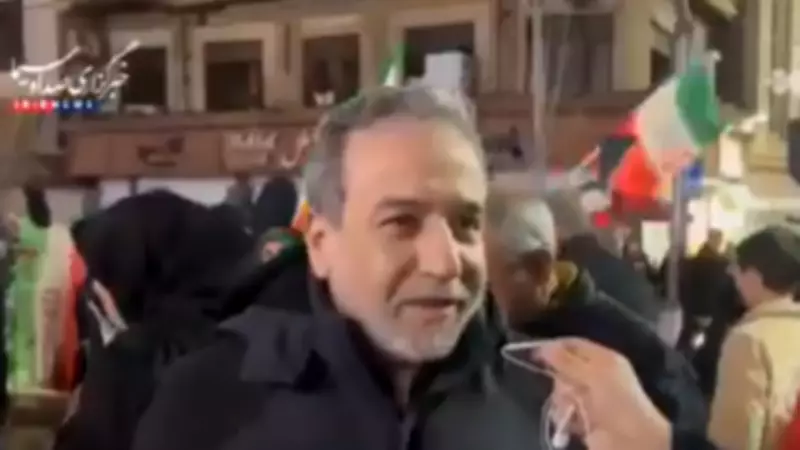
The officials were observed casually mingling with rally participants, taking selfies, and moving through the dense crowds without visible security details. This rare public appearance represents a significant departure from typical security protocols for high-ranking Iranian figures, especially given recent threats.
Foreign Minister Araghchi addressed reporters during the event, stating, "I came to be among them, to draw energy from the movement on the ground and to enjoy this unity and popular cohesion." Videos documenting their participation quickly circulated across various social media platforms, as reported by Ynet news.

Context of Previous Appearances and Recent Threats
This public appearance follows the leaders' last documented public outing during "Iranian Quds Day," where they were seen alongside former security chief Ali Larijani. Tragically, Larijani was killed just days later in a joint US-Israeli strike, highlighting the precarious security situation for Iranian officials.
The timing is particularly notable given recent statements from Israeli Prime Minister Benjamin Netanyahu, who publicly listed "10 plagues" against Iran, including specific strikes targeting the country's senior leadership. Netanyahu asserted that Israel was "systematically crushing the terrorist regime," escalating rhetoric in the ongoing regional conflict.
Diplomatic Posturing and Conditional Willingness for Peace
During remarks to the European Council, President Pezeshkian reiterated Iran's conditional willingness to end the ongoing conflict. He emphasized that Tehran would consider peace "provided essential conditions are met — especially the guarantees required to prevent repetition of the aggression."
These statements represent Tehran's counterproposal to a 15-point peace plan presented by the United States. The Iranian position demands specific mechanisms that would prevent Israel and the United States from resuming hostilities against Iran, reflecting deep-seated concerns about long-term security.
Clarification on Communications With the United States
Foreign Minister Araghchi confirmed ongoing communications with US Middle East envoy Steve Witkoff but explicitly denied these exchanges constitute formal negotiations. In an interview with Al Jazeera, he clarified, "What is happening now is not negotiations, but an exchange of messages, directly or through our friends in the region."
Araghchi further stated, "We have not sent any response to the United States' 15-point proposal. Our conditions for ending the war are clear. We will not accept a ceasefire." This distinction between message exchanges and formal negotiations underscores Iran's cautious diplomatic approach.
Temporary Removal From Assassination Lists and Defense Posture
Reports indicate that both Araghchi and Parliament Speaker Mohammad Bagher Ghalibaf were temporarily removed from US and Israeli assassination lists approximately one week ago. This temporary suspension appears designed to facilitate potential diplomatic talks, though such discussions have not yet materialized.
Despite this diplomatic maneuvering, Iranian leadership has consistently emphasized their readiness to defend the nation in any scenario. The public rally participation, while showcasing unity, also serves as a demonstration of resilience amid external pressures.
The convergence of public spectacle, heightened security threats, and delicate diplomatic exchanges paints a complex picture of Iran's current strategic positioning. As regional tensions continue to simmer, these developments suggest Tehran is simultaneously projecting domestic strength while navigating intricate international negotiations with cautious pragmatism.






