Lebanese journalist and author Kim Ghattas has declared that the Islamic Revolution has failed the people of Iran. She made this statement during an interview at the Jaipur Literature Festival. Ghattas pointed to a prolonged political impasse gripping the nation.
Three Paths for Iran's Future
Ghattas outlined three possible pathways for the Islamic Republic. She said these options have confronted the regime for decades. The first path involves transformation from within the existing system. The second is transformation from inside against the regime. The third option is transformation driven from outside Iran.
"We don't know the answer," Ghattas admitted. "But those three paths are the three options." She emphasized that external powers play a crucial role. Decisions by the United States and Israel will significantly influence which path Iran follows.

External Pressure and Military Action
Ghattas noted that external pressure on Tehran is likely to increase. However, she said military action remains contingent on specific conditions. She referenced former US President Donald Trump's assessment.
"Right now, the assessment that Trump has made is that a strike would not actually bring down the regime," Ghattas explained. She added this assessment could change if protests regain serious momentum inside Iran.
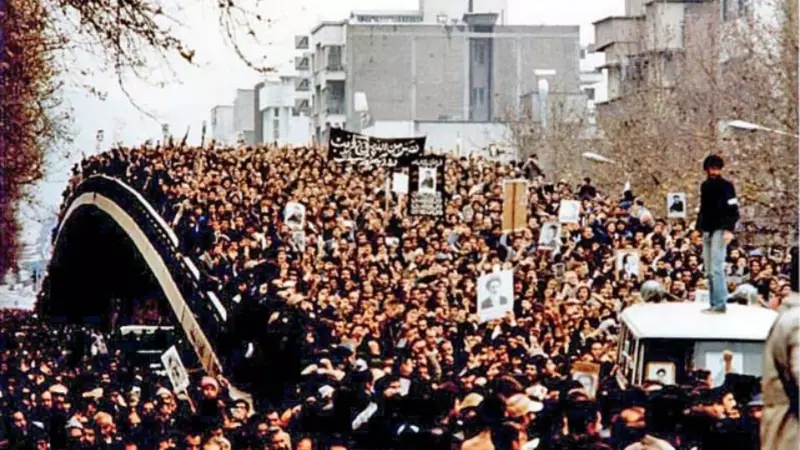
The journalist pointed to a historical pattern familiar to Iranians. She mentioned the forty-day mourning cycle following deaths during crackdowns. This cycle sustained the revolutionary rhythm in the late 1970s. "You may see recurrent protests," Ghattas predicted.
Risks of Regime Collapse
Ghattas warned about the greater risk lying in what follows a potential regime collapse. "Anything that just involves bombing from outside is a terrible scenario," she stated. Iran is a country of ninety million people. Chaos inside Iran would have severe spillover effects across the entire Middle East region.
"Nobody is ready for the day after," Ghattas said. This concern explains why regional powers like Saudi Arabia and Turkey have urged caution. The potential for widespread instability worries neighboring countries.
Unprecedented Violence and Failed Ideology
Ghattas believes the Islamic Republic has reached the limits of its ideological project. She described the violence used against recent protests as unprecedented in scale. "More people died in those two weeks than during the whole revolution," she revealed.
This scale of repression shapes how people assess the risks of returning to the streets. Her verdict on the current situation was stark and direct. "The Islamic Republic has nothing left to offer the Iranian people anymore. The Islamic Revolution has failed them," Ghattas concluded.
Expectations and Internal Transformation
Expectations also play a significant role in the current crisis. Ghattas mentioned that Trump promised help to protesters but did not deliver. "So Iranians are going to think twice before they take to the streets again," she observed.
While avoiding prescriptions for regime change, Ghattas described one possible scenario. Internal transformation could occur if the leadership feels its survival is at stake. "If the Islamic Republic leadership feels that its survival is at stake, they could decide to make some changes," she said.
The crucial question remains whether such changes would go far enough for the Iranian people. Discussion of alternative leadership has intensified recently. Some voices call for the return of Iran's former monarchy. Ghattas noted that Israeli Prime Minister Benjamin Netanyahu has developed a relationship with Reza Pahlavi.
Historical Context and Regional Impact
Ghattas identified 1979 as the pivotal year for the modern Middle East. Three major events reshaped the region that year. The Iranian Revolution, the seizure of the Grand Mosque in Mecca, and the Soviet invasion of Afghanistan occurred.
Together, these events reshaped politics, culture, and religious authority across the Middle East. Pakistan became a critical node after 1979. Saudi funding, the Afghan jihad, and General Zia-ul-Haq's Islamisation policies converged there.

"Language that turns violent leads to real violence," Ghattas said. She referred to the hardening of sectarian divisions across the region. Despite political narrowing, cultural resistance persisted. The poetry of Faiz Ahmed Faiz circulated across borders for decades.
"Poetry doesn't overthrow regimes," Ghattas acknowledged. "But it brings moral courage." Her closing caution returned to historical lessons. "You cannot control the consequences," she reflected, considering the long afterlife of 1979.