Iran Confronts Escalating Public Defiance Amidst Ongoing Crackdown
A powerful new wave of popular anger is surging across Iran, as citizens emboldened by last month's violent crackdown on protesters openly express their deepening hatred for the regime. Despite continuing arrests and severe repression, Iranians from all walks of life are finding increasingly bold ways to voice their opposition to Supreme Leader Ali Khamenei's government.
Funerals Become Platforms for Protest
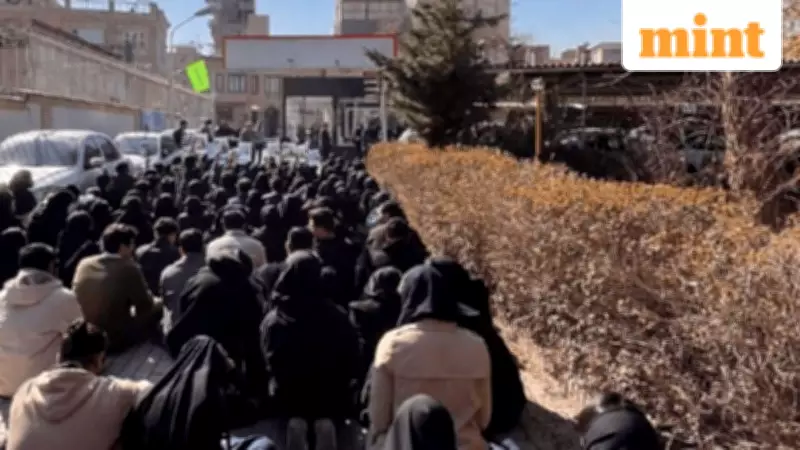
Across Iranian cities, funeral services and memorial gatherings have transformed into platforms for political expression. Mourning families have been documented shouting "Death to Khamenei!" during ceremonies for those killed in January's violence. University students in Mashhad, Tabriz, and Shiraz have organized memorial events for fellow students who lost their lives during the recent unrest.
Medical students in Mashhad were captured on verified video chanting, "A student who dies won't accept humiliation," while their counterparts in Shiraz staged a multi-day sit-in demanding the release of arrested doctors and protesters. "The imprisoned student must be released! The honorable doctor must be released!" echoed through their demonstrations.

Educational Institutions as Centers of Resistance
The resistance has penetrated educational institutions at all levels. High school students in Tehran have begun refusing to sing the national anthem during morning assemblies, while teachers have taken extraordinary measures to protect their students. One 17-year-old Tehran student revealed that when security forces planned to search their school, teachers warned students in advance and advised those with injuries to stay home to avoid arrest.
The Coordinating Council of Iranian Teachers' Trade Associations issued a powerful statement declaring, "The peaceful protest of people with ordinary demands was turned into dust and blood. The grief has turned into a deep hatred in our hearts and bones."
Cultural Figures and Dissidents Speak Out
Prominent cultural figures are joining the chorus of dissent. Iranian actress Elnaz Shakerdoost announced she was quitting her profession, stating on Instagram, "I will never again play a role in a land that smells of blood." Meanwhile, former Prime Minister Mir Hossein Mousavi, under house arrest for years, delivered his sharpest rebuke yet of the Islamic Republic, calling for leadership to "put down your gun and step down from power."
A group of 17 civil-society activists published an open letter describing the mass killings as government-led crimes against humanity and directly blaming Khamenei. Three signatories—Vida Rabbani, Abdollah Momeni, and Mehdi Mahmoudian—were subsequently arrested according to the Narges Foundation.
Medical Community Under Siege
The crackdown has particularly targeted medical professionals who treated injured protesters. Mohammad Raeeszadeh, head of Iran's Medical Council, confirmed 17 medical workers were detained following the January 8-9 violence. However, networks of Iranian doctors abroad have documented over 30 such arrests.
Cancer surgeon Ali Reza Golchini was beaten and taken from his home after offering to treat injured protesters on Instagram, mirroring his actions during 2022's women's rights protests. The Medical Council has demanded security for healthcare workers, emphasizing their duty to provide care "regardless of social, political, or security conditions."
International Context and Domestic Concessions
The simmering dissent coincides with President Trump's military buildup off Iran's coast and planned diplomatic talks in Oman. Meanwhile, Iranian authorities have made some concessions, releasing prominent protester Erfan Soltani on bail and announcing they would begin issuing motorcycle licenses to women—a move seen as attempting to win support through relaxed social rules.
However, these small gestures appear unlikely to quell the growing unrest. Merchants at Tehran's Grand Bazaar, where protests first flared in December, have called for nationwide demonstrations on February 17-18—days marking the end of the traditional 40-day mourning period for January's killings. Their statement aims to "avenge the greatest street massacre in contemporary history."

Human Toll and Continuing Repression
Human Rights Activists in Iran reports approximately 7,000 confirmed deaths and over 50,000 arrests since demonstrations began in late December. Iranian authorities acknowledge around 3,000 dead and several hundred arrests, describing those detained as rioters or terrorists.
Hadi Ghaemi, executive director of the Center for Human Rights in Iran, warned, "After killing thousands of civilians, the Islamic Republic is now going house to house to punish those who dared to protest and crush any potential flicker of further resistance."
As one woman from Kermanshah expressed via text message, "People are full of fear but also resentment. We're willing to die one by one, but we don't want our children to suffer our pain and torture." This sentiment captures the profound transformation occurring across Iranian society as citizens increasingly risk everything to voice their opposition to a regime they believe has crossed irreversible lines.