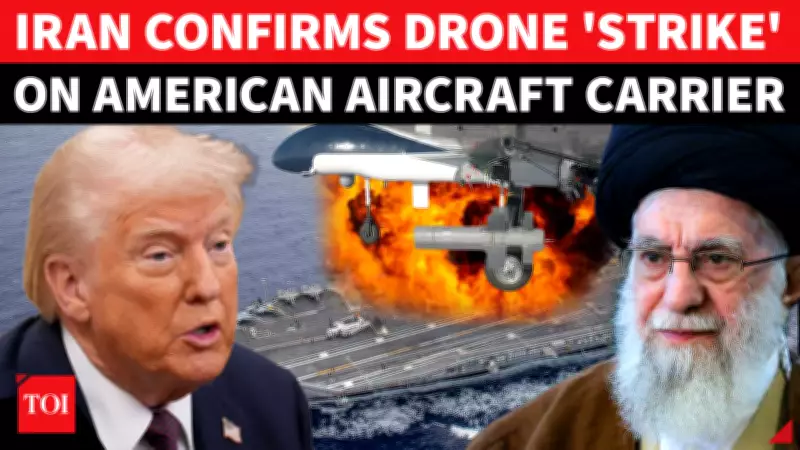
IRGC Declares 'Mission Accomplished' Following U.S. Drone Shootdown Near Carrier
Tensions in the Arabian Sea have reached a critical point following a dramatic military confrontation between the United States and Iran. The U.S. military has confirmed shooting down an Iranian drone that was approaching the aircraft carrier USS Abraham Lincoln in international waters. This incident marks a significant escalation in the ongoing maritime standoff between the two nations.
Iran's Revolutionary Guard Insists on Lawful Mission
Iran's Islamic Revolutionary Guard Corps (IRGC) has responded to the incident with a bold declaration of success. According to their statement, the drone was conducting a lawful reconnaissance mission and had already transmitted valuable surveillance data before contact was lost. The IRGC maintains that their unmanned aerial vehicle completed its primary objectives prior to being intercepted by U.S. forces.
This claim of 'mission accomplished' represents a strategic narrative from Tehran, suggesting operational success despite the physical loss of their drone. The Iranian military's insistence on the legality of their surveillance activities adds another layer of complexity to the already tense situation.

Broader Context of Maritime Confrontations
The drone incident occurred against a backdrop of increasing maritime friction in the region. Reports indicate that Iranian boats and another drone allegedly harassed a U.S.-flagged tanker in the strategically vital Strait of Hormuz around the same time period. These parallel incidents suggest a coordinated pattern of Iranian naval activity designed to test U.S. responses and demonstrate regional influence.
The Arabian Sea has become a focal point for these confrontations, with both nations deploying significant military assets to the area. The presence of carrier strike groups and heightened naval patrols indicates that neither side is willing to back down from their strategic positions in this critical global shipping corridor.
Military Deployments and Escalation Risks
With multiple investigations underway and military assets on high alert, the situation remains volatile. The deployment of advanced naval forces, including the USS Abraham Lincoln carrier group, demonstrates the U.S. commitment to maintaining freedom of navigation in international waters. Meanwhile, Iran continues to assert its right to operate surveillance and patrol missions in what it considers its regional sphere of influence.
The standoff highlights several concerning factors:
- Increasing frequency of direct military encounters between U.S. and Iranian forces
- Growing risks of miscalculation or accidental escalation
- Potential impact on global shipping through vital Middle Eastern waterways
- Broader implications for international security and regional stability
As both nations maintain their positions, the international community watches closely, aware that any further escalation could have far-reaching consequences for global trade and security architecture in one of the world's most strategically important regions.