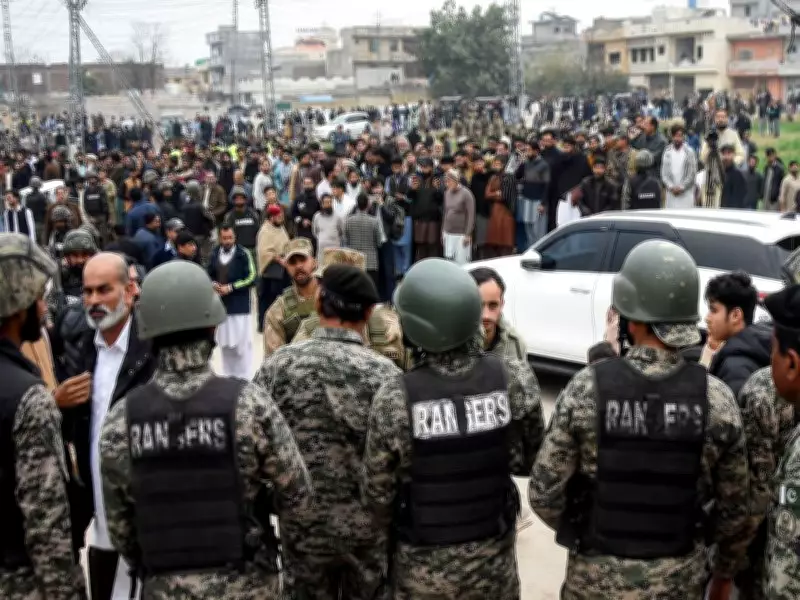
Deadly Suicide Attack Strikes Islamabad Imambargah During Prayers
A devastating suicide bombing targeted an Imambargah in Islamabad on Friday, resulting in a significant loss of life and injuries. According to authorities cited by Dawn, the explosion occurred at the Imambargah Khadijah-tul-Kubra located in the Tarlai area, claiming at least 31 lives and leaving 169 people wounded. The attack took place during Friday prayers, a time when the religious site was likely crowded with worshippers, amplifying the impact of the violence.
Authorities Investigate Attacker's Background
Minister of State for Interior, Tallal Chaudhry, provided initial details to the media in Islamabad, stating that forensic tests had revealed the attacker was not an Afghan national. However, authorities were able to determine the number of times the individual had travelled to Afghanistan, suggesting potential cross-border connections or influences. This information points to ongoing investigations into the motives and networks behind the attack, which has shaken the capital city.
Baloch Liberation Army Claims Concurrent Military Operation
The bombing coincides with a statement from the Baloch Liberation Army (BLA), which claimed victory in Operation Herof II. According to the BLA, this was a six-day campaign of coordinated urban combat across fourteen cities in Balochistan, described as the most extensive military engagement in the modern history of the Baloch national resistance. The operation, which ran from January 31 to February 6, reportedly resulted in significant casualties on both sides.

Key details from the BLA statement include:
- 93 BLA fighters were killed, including members from the Majeed Brigade, Fateh Squad, and Special Tactical Operations Squad.
- Over 362 enemy personnel, comprising Pakistani Army, Frontier Corps, police, and state-sponsored death squads, were reported killed.
- Seventeen enemy soldiers were captured, with seven remaining in BLA custody for potential war crimes trials.
- Dozens of military facilities were destroyed, and weapons stockpiles were seized during the operation.
Objectives and Ideology of the Baloch Resistance
The BLA outlined three primary objectives for Operation Herof II: demonstrating the capability to strike and control urban centers, reaffirming collective strength to the Baloch nation, and dismantling the illusion of unchecked authority by occupying forces. In their statement, spokesperson Jeeyand Baloch emphasized that the Baloch armed resistance is not driven by terrorism or religious extremism but is a political movement led by educated individuals from various professions, including students, professors, lawyers, doctors, and engineers.
The statement further urged international human rights organizations to acknowledge alleged atrocities committed by occupying forces in Balochistan, highlighting calls for global attention on the region's conflicts.
Context and Implications
This suicide bombing in Islamabad adds to the ongoing security challenges in Pakistan, particularly in the context of regional tensions and internal conflicts. The timing of the attack, alongside the BLA's claims of a successful military operation, underscores the complex interplay of religious, ethnic, and political factors in the area. Authorities continue to investigate the bombing, while the situation in Balochistan remains volatile, with both sides reporting significant casualties and strategic gains.