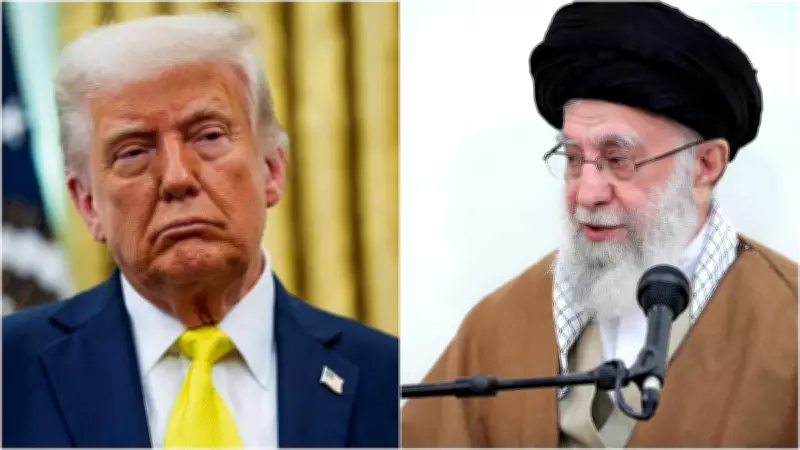
Israel's Push, Trump's Pause: Navigating the Complex Iran Dilemma
In the volatile landscape of Middle Eastern geopolitics, Iran stands as a pivotal player, with recent developments highlighting a critical dilemma. Israel's assertive push and former US President Donald Trump's strategic pause have created a complex scenario that demands careful analysis. This situation underscores the delicate balance of power in the region, where Iran's actions and responses are closely watched by global observers.
Iran's Civilizational Pride and Fragmentation Fears
Iranians take immense pride in their ancient civilization, viewing their nation as a civilizational state with a rich historical legacy. This pride is not merely cultural but deeply political, shaping Tehran's foreign policy and domestic stability. The last thing Iran desires is the fragmentation of its territory, a fate that has befallen neighboring countries like Lebanon, Libya, and Syria. These examples serve as stark warnings, fueling Iran's determination to maintain unity and sovereignty amid external pressures.
The fear of disintegration is a powerful motivator for Iranian leadership, including Ayatollah Ali Khamenei. It influences their stance on regional conflicts and interactions with global powers. This context is crucial for understanding Iran's resistance to foreign intervention and its efforts to bolster national cohesion.

Geopolitical Dynamics: Israel and the US Role
Israel's push in the region, often characterized by military and diplomatic maneuvers, adds a layer of tension to Iran's strategic calculations. Concurrently, Donald Trump's pause—referring to shifts in US policy under his administration—has introduced uncertainties in Washington's approach to Tehran. These factors intertwine to create a multifaceted dilemma for Iran, where it must navigate between assertive adversaries and fluctuating international support.
The interplay between Israeli actions and US policies highlights the broader geopolitical struggle in the Middle East. Iran's response to these pressures is shaped by its historical experiences and current regional ambitions, making this a critical issue for global diplomacy.
Implications for Regional Stability
The Iran dilemma has far-reaching implications for regional stability. Key points include:
- Increased Tensions: Israel's push could escalate conflicts, affecting neighboring countries and international relations.
- Policy Uncertainty: Trump's pause leaves a vacuum in US-Iran relations, complicating diplomatic efforts and peace initiatives.
- Iran's Strategic Choices: Tehran may adopt more defensive or aggressive postures, impacting oil markets and security alliances.
As the situation evolves, monitoring these dynamics is essential for predicting future developments in the Middle East. The pride and fears of Iran, combined with external pressures, make this a pivotal moment in contemporary geopolitics.