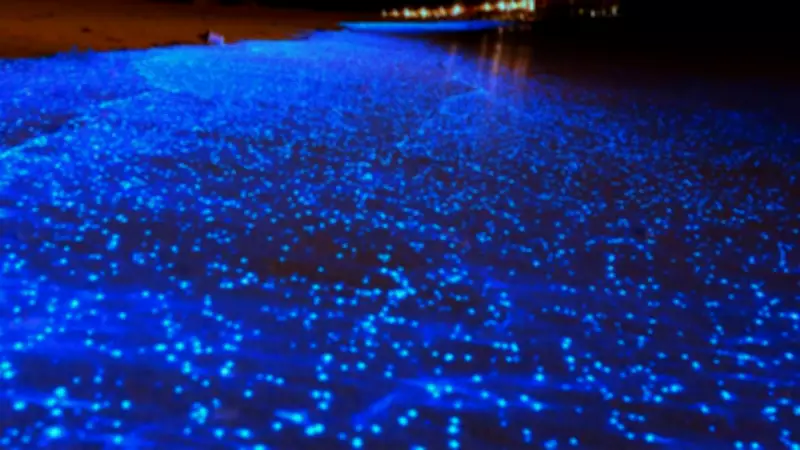
Juhu Beach Waves Illuminate Mumbai with Electric Blue Glow
In a stunning natural display, videos of bright electric blue waves rolling onto Mumbai's Juhu Beach at night have gone viral across social media platforms. This mesmerizing sight, which has surprised many visitors, is a rare occurrence driven by tiny marine organisms and has been documented previously along certain parts of Maharashtra's coastline.
The Science Behind the Blue Tide Phenomenon
The glowing effect, often referred to as a "blue tide," is a result of bioluminescence in phytoplankton, particularly a type known as dinoflagellates. When these microscopic organisms are disturbed by wave action or movement in the water, they emit a vivid blue light through a chemical reaction within their bodies. This process transforms the sea into an illuminated spectacle, captivating onlookers and sparking widespread curiosity.
Understanding Bioluminescence in Marine Life
Bioluminescence is the natural ability of living organisms to produce light, occurring due to a chemical reaction involving a molecule called luciferin and oxygen, catalyzed by the enzyme luciferase. This reaction releases light that can appear in shades of blue, green, or yellow, depending on the species. In oceanic environments, bioluminescence is observed in a variety of creatures, including algae, jellyfish, small crustaceans, worms, fish, and even some sharks, with plankton and deep-sea species being the most common sources of this glow.

Reasons for the Glow and Its Occurrence in India
Scientists suggest that bioluminescence serves as a defense mechanism for these organisms; the sudden flash of light can confuse or deter predators, allowing them to escape. Additionally, glowing may help in forming larger groups or aggregations. Along India's west coast, such bioluminescent events are occasionally seen, primarily during the months of November and December. While not common, similar glowing waves have been reported in areas like Ratnagiri and the Dakshina Kannada–Udupi coast. The appearance of these blue tides depends on factors such as water temperature, nutrient levels, rainfall, and wind patterns, making them unpredictable and rare rather than a regular occurrence.
Environmental Implications and Safety Concerns
Small patches of bioluminescence are generally harmless to humans. However, larger and slow-moving blooms can impact marine ecosystems and fishing activities. Blue tides can also indicate environmental stress, potentially triggered by factors like rising sea temperatures, heavy rainfall, sewage discharge, fertilizer runoff, low oxygen levels, and changing wind patterns. Monitoring these events is crucial for understanding marine health and mitigating any adverse effects on coastal regions.