

Kolkata Airport Experiences Passenger Decline Amid West Asia Conflict
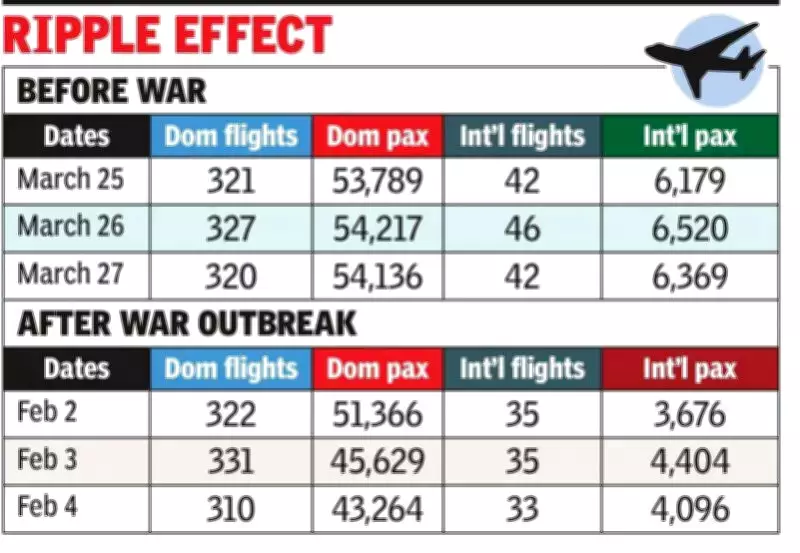
The ongoing conflict in West Asia, which has caused significant disruptions to international air travel, has also led to a noticeable reduction in domestic passenger numbers at Kolkata's Netaji Subhas Chandra Bose International Airport. Data collected over approximately one week following the initial strikes by the US and Israel against Iran on February 28, and Iran's subsequent retaliatory attacks on neighboring countries hosting US military bases, reveals a daily decrease of 5,000 to 10,000 domestic passengers.
Impact on Domestic and International Travel
While the maximum dip of around 10,000 passengers per day occurred on March 3 and 4, potentially influenced by the Dol and Holi festivals, the overall trend showed a decline from over 54,000 passengers before the conflict to just above 51,000 on March 2 and below 50,000 on March 5. Travel agents attribute this reduction to the cancellation of international flights from major hubs like Delhi and Mumbai, which many Kolkata-based travelers rely on due to the lack of direct international flights from the city.
Initial urgency to reach Europe or the US East Coast via other metros quickly tapered off, as closed airspaces resulted in widespread flight cancellations. A travel agent explained, "Following the outbreak of war, those who did not have urgent travel requirements cancelled their trips. Naturally, the domestic legs of the journey were also cancelled."

International Flight Movements Severely Affected
The conflict has had a more pronounced impact on international flight operations at Kolkata airport. Although domestic flight counts remained stable, average daily international flight movements (including arrivals and departures) dropped from approximately 46 to 34, leading to a 40% reduction in international passenger numbers. Prior to the conflict, international passenger movement consistently exceeded 6,000 per day, but it has since fallen to just over 4,000 daily, with a low of 3,676 flyers recorded on March 3.
Another travel agent highlighted the compounding factors, stating, "Passenger count already took a hit due to the reduction in flyers between Dhaka and Kolkata due to visa issues. The situation in the Gulf only added to the woes. In this uncertain atmosphere, no one wants to travel and then get stranded in a foreign country. Thus, people who were scheduled to travel to Europe, Egypt, Turkey, or other places are postponing the trip."
Reduced Diversity of Flyers and Broader Implications
An airport official noted that the conflict has also affected the diversity of passengers at Kolkata airport, as many travelers from Western regions typically use Gulf carriers to visit the city. The current instability has discouraged such travel, further contributing to the decline in overall passenger traffic. This situation underscores the broader economic and logistical challenges faced by airports during geopolitical tensions, with ripple effects extending beyond immediate flight cancellations to long-term travel planning and tourism.
The data from Kolkata airport serves as a microcosm of how regional conflicts can disrupt global aviation networks, impacting not only international routes but also domestic connectivity as travelers adjust their plans in response to uncertainty and logistical hurdles.






