Manipur's Kuki-Naga Tensions Escalate: Homes Burned, Key Road Blockaded Amid Land Dispute
In a troubling development in Manipur's volatile ethnic landscape, tensions between Kuki-Zo and Naga communities have flared up dramatically in Kangpokpi district. The situation reached a critical point on January 26, 2026, when several Kuki-Zo houses were burned down, and a key transportation route connecting two major Kuki-Zo districts was blockaded by Naga villagers.
Violence Erupts Amid Ongoing Blockade
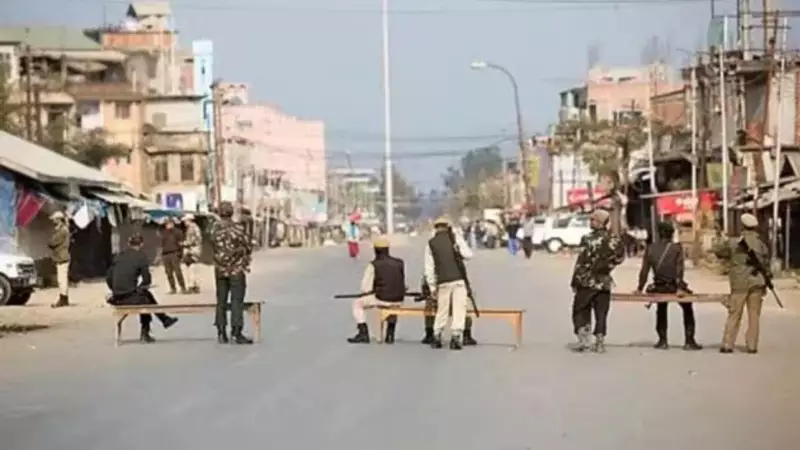
The immediate trigger for the current crisis appears to be a two-week-long blockade of a strategically important road that connects Kangpokpi and Churachandpur districts. This road, built by Kuki-Zo groups to bypass Meitei-majority areas following the outbreak of conflict in Manipur, has become a major flashpoint in the region.
The violence escalated when the Zeliangrong United Front, a Naga insurgent group, claimed responsibility for burning structures in K. Songlung (Part-II) village. The group alleged these structures were being used for illegal poppy cultivation, though Kuki-Zo representatives have strongly contested this claim.

Peace Appeal Amid Continuing Tensions
In response to the deteriorating situation, two apex community bodies - the United Naga Council (UNC) and the Kuki Inpi Manipur (KIM) - held an emergency meeting on Tuesday. The meeting, reportedly initiated by two Naga MLAs - Dinganglung Gangmei from the BJP and Awangbow Newmai from the Naga People's Front - resulted in a joint statement condemning the violence and appealing for peace.
The statement unequivocally condemned the burning of households and called upon all communities to refrain from any form of violence. It also cautioned against spreading rumors or false propaganda that could further inflame tensions between the communities.
Deep-Rooted Land Disputes Surface
Beneath the immediate violence lies a complex web of historical land disputes and competing territorial claims. Kangpokpi district, carved out of Senapati district in 2016, represents a microcosm of Manipur's ethnic diversity, with significant populations of both Kuki-Zo and various Naga tribes.
Naga groups, represented by the Foothills Naga Coordination Committee (FNCC), allege that the construction of the contested road was done illegally through what they claim as Naga ancestral land. "The construction of that road was done illegally, and it passes through Naga ancestral land," stated FNCC spokesperson Akhui Ngaomai. "By doing this, they are claiming our land and didn't seek any permission for it."
Conversely, Kuki-Zo organizations like the Committee on Tribal Unity (COTU) accuse Naga groups of colluding with Meitei organizations to encroach upon their territories. "In the name of acting on poppy cultivation, they are destroying villages," said COTU spokesperson Thangtinlen Haokip.
Conflicting Agendas and Security Concerns
The situation remains precarious with conflicting agendas among different community organizations. Despite the peace appeal from UNC and KIM, COTU has announced plans for a 24-hour district shutdown, while FNCC has vowed to continue its road blockade and agitation.
Security concerns have also been raised, with Naga groups expressing alarm about what they describe as "Kuki militants freely moving around in Naga areas with arms and uniforms." This alleged free movement of armed groups in areas outside their traditional jurisdiction has become a significant point of contention.
Broader Implications for Manipur's Stability
The current tensions represent a dangerous expansion of Manipur's existing ethnic conflicts. While the primary conflict has been between Kuki-Zo and Meitei communities, the involvement of Naga groups introduces a new dimension to the state's complex security challenges.
Community leaders from both sides acknowledge that while the immediate priority is preventing further escalation, fundamental issues regarding land claims and territorial jurisdiction remain unresolved. The road blockade continues to disrupt essential transportation between key Kuki-Zo districts, while allegations of encroachment and illegal construction persist on both sides.

As Manipur navigates this latest crisis, the situation in Kangpokpi district serves as a stark reminder of the fragile nature of ethnic relations in the region and the urgent need for sustainable conflict resolution mechanisms that address both immediate security concerns and long-standing territorial disputes.