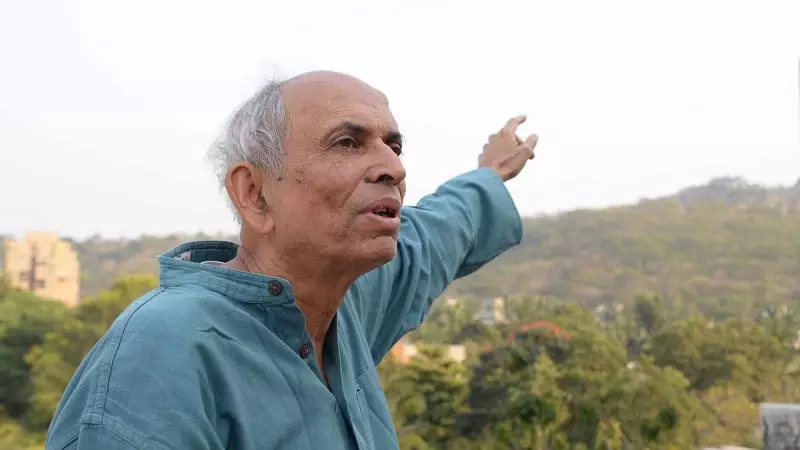
In the heart of India's ecological consciousness stands a quiet yet formidable figure: Madhav Gadgil. Often hailed as the 'people's scientist,' this eminent ecologist has become synonymous with the valiant, decades-long struggle to protect one of the world's most vital biodiversity hotspots—the Western Ghats. His journey is not just one of scientific study, but of unwavering advocacy, public engagement, and a profound commitment to sustainable coexistence.
The Genesis of a Conservation Crusade
The story of Madhav Gadgil's deep connection with the Western Ghats is a long and personal one. For over five decades, he has traversed the lush landscapes, studying its intricate ecosystems and understanding the lives of the communities that call it home. This extensive, ground-level experience positioned him uniquely when, in 2010, the Ministry of Environment and Forests constituted a committee under his chairmanship.
The mandate of the Western Ghats Ecology Expert Panel (WGEEP), popularly known as the Gadgil Committee, was clear yet monumental: to assess the ecological status of the region and propose measures for its protection. After extensive consultations and research, the committee submitted its landmark report in August 2011. The core of its recommendation was a radical, ecologically-sensitive zoning system.

The panel proposed classifying the entire Western Ghats region, spanning six states, into three types of Ecologically Sensitive Zones (ESZs): ESZ1, ESZ2, and ESZ3, with the highest level of protection for the most fragile areas. It suggested that the entire region should be considered ecologically sensitive, with 64% falling under the highest protection categories (ESZ1 and ESZ2). The report called for a complete ban on environmentally destructive activities like mining, quarrying, setting up new polluting industries, and large dams in the most sensitive zones. Crucially, it advocated for a bottom-up, decentralized approach to governance, empowering local communities and gram sabhas in decision-making processes concerning their environment.
Controversy, Dilution, and Unyielding Advocacy
The Gadgil Committee Report, while lauded by environmentalists and civil society, sparked immediate and fierce opposition from various quarters. State governments, mining lobbies, and sections of the industry argued that the recommendations were too restrictive and would hamper economic development in the region. The report was perceived as a threat to existing and planned projects.
In response to the backlash, the government formed a second committee under Dr. K. Kasturirangan in 2012 to review the Gadgil report. The Kasturirangan Committee report, submitted in 2013, significantly diluted the original proposals. It reduced the area earmarked for high protection, suggesting only 37% of the Western Ghats (about 60,000 sq km) as Ecologically Sensitive Area (ESA). It also recommended a more regulated rather than prohibitive approach to many activities, easing restrictions on agriculture and plantations.
For Madhav Gadgil, this dilution was a grave mistake. He has consistently and publicly criticized the Kasturirangan report, arguing that it compromises the ecological security of the region for short-term gains. He famously termed the later report a 'complete betrayal' of the environment and people of the Western Ghats. Gadgil has tirelessly pointed to subsequent ecological disasters, such as the devastating floods in Kerala in 2018 and 2019, as direct consequences of ignoring his panel's warnings against unchecked construction, mining, and dam management in sensitive zones.
The People's Scientist: Bridging Knowledge and Action
What sets Madhav Gadgil apart is his steadfast belief in democratizing ecological knowledge. His title, 'people's scientist,' is earned. He has spent years interacting with tribal communities, farmers, and local residents, documenting their traditional knowledge and highlighting their role as natural stewards of the landscape. The recommendation to empower gram sabhas stemmed from this conviction.

Even after the official rejection of his committee's core ideas, Gadgil has not retreated to an ivory tower. He continues to be a vocal public intellectual, writing articles, giving lectures, and engaging with citizen groups. He frames the protection of the Western Ghats not as an obstacle to progress, but as the very foundation for sustainable and equitable long-term prosperity. His advocacy emphasizes that the Ghats are crucial for India's water security, climate resilience, and biodiversity wealth.
The Unfinished Battle for the Ghats
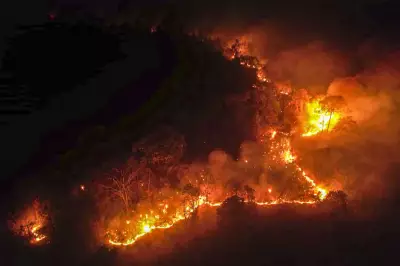
Today, the future of the Western Ghats remains uncertain and contested. Implementation of even the diluted Kasturirangan report has been slow and patchy across the six states. Political and economic pressures continue to drive deforestation, illegal mining, and unplanned development.
However, Madhav Gadgil's work has indelibly changed the conversation. He has provided:
- A scientific blueprint for conservation based on rigorous study.
- A powerful narrative that connects ecological health with human well-being and disaster prevention.
- An inspired model of a scientist engaging directly with the public and policy.
His legacy is a mobilized civil society, numerous citizen-led conservation initiatives, and a constant reference point in environmental debates. The Western Ghats found in Madhav Gadgil not just an expert, but a valiant and principled defender. The battle he sparked continues, reminding the nation that the fate of its natural heritage is a choice between mindful preservation and costly exploitation. The 'people's scientist' stands as a testament to the power of persistent, evidence-based advocacy in the face of formidable odds.