

Maharashtrian Tourists' Chants in Paris Ignite Heated Online Debates
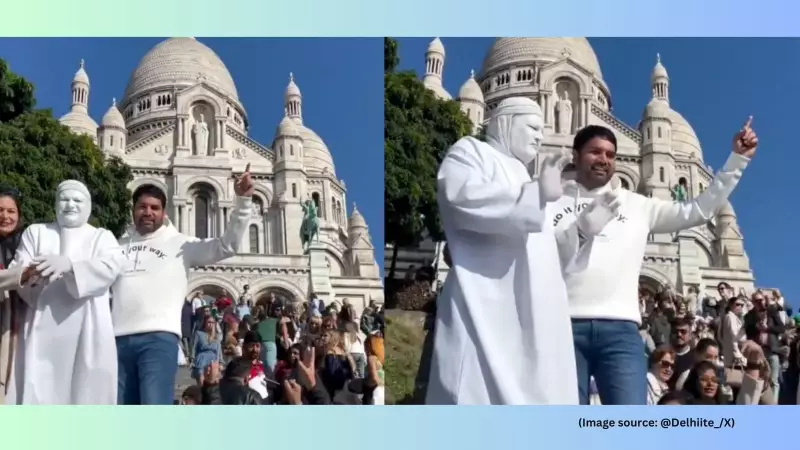
A group of Maharashtrian tourists recently visited the Montmartre area in Paris, a famous neighborhood known for its artistic history. During their visit, a street performer was entertaining the crowd. Suddenly, one tourist put his arm around the performer and started shouting slogans like "Jai Maharashtra" and "Chhatrapati Shivaji Maharaj ki Jai". Others in the group quickly joined in, making the chants louder. The performer looked visibly uncomfortable as the noise grew.
Video Goes Viral and Sparks Widespread Reactions
The incident was captured on video and spread rapidly online. It triggered intense debates about civic sense and how people should behave in public spaces abroad. Many questioned whether it is appropriate to raise regional or political slogans in such settings. The slogans expressed pride in Maharashtra and reverence for historical figure Chhatrapati Shivaji Maharaj, while others praised Eknath Shinde's Shiv Sena.
This is not the first time such events have occurred. Similar incidents, like Ganesh Visarjan in London or Nagar Kirtan in New Zealand, have drawn mixed reactions. Some people see these as vibrant displays of cultural heritage. Others worry about environmental impact, public hygiene, and disruption to local life.

Broader Context of Global Politics and Cultural Expression
At a time when far-right groups worldwide are pushing anti-immigration policies, discussions about immigrants from the Global South finding space in the Global North are ongoing. This makes it crucial for Indians, both at home and traveling abroad, to reflect on their values and actions.
Expressing cultural or regional pride is not inherently wrong. However, such acts should always consider civic responsibility and empathy for others. In India's current political and social landscape, uncivil behavior often gets tacit support when wrapped in aggressive nationalism.
Underlying Insecurity and Historical Significance
Beyond just a lack of civic sense, this incident hints at an undercurrent of insecurity. Rooted in historical and socio-political experiences, this sometimes leads to overcompensatory displays of pride abroad. Montmartre, where this happened, is an iconic area that was central to artistic life in the late nineteenth and early twentieth centuries.
One must wonder if those chanting appreciate the historical importance of places outside their homeland. Do they seek to learn from diverse experiences, or do they impose their own views on unsuspecting people?
Contrasting Global Visions and Sectarian Realities
On one hand, the world has become a global village. Centuries ago, the Marathi saint Dnyaneshwar expressed this idea with "He vishwachi maze ghar", meaning "This entire world is my home". This promotes universal belonging and interconnectedness.
On the other hand, we see rigid sectarian identities and deepening divisions. From mass deportations in the United States to far-right movements in Europe and New Zealand, hyper-nationalistic fervor is rising globally. Small incidents like disruptive chants abroad reflect larger tensions between globalization's openness and exclusionary nationalism.
Poetic Insights and the Call for Civic Sense
The Jnanpith Award-winning Marathi poet G V Karandikar wrote about breaking down walls between people, affirming that all humanity shares one lineage. True acceptance of diversity would make loud displays of narrow pride unnecessary, replacing them with humility and respect.
Urdu poet Nida Fazli asked who understands the value of silence in a noisy world. Embracing this quiet calls for inner awareness over outward noise. Ultimately, we must start with basics: cultivating genuine civic sense, respect for shared spaces, empathy, and restraint. This way, we can appreciate "Jai Maharashtra, Jai Paris" without needing to shout it.
The writer teaches at Suan Sunandha Rajabhat University in Bangkok.

