

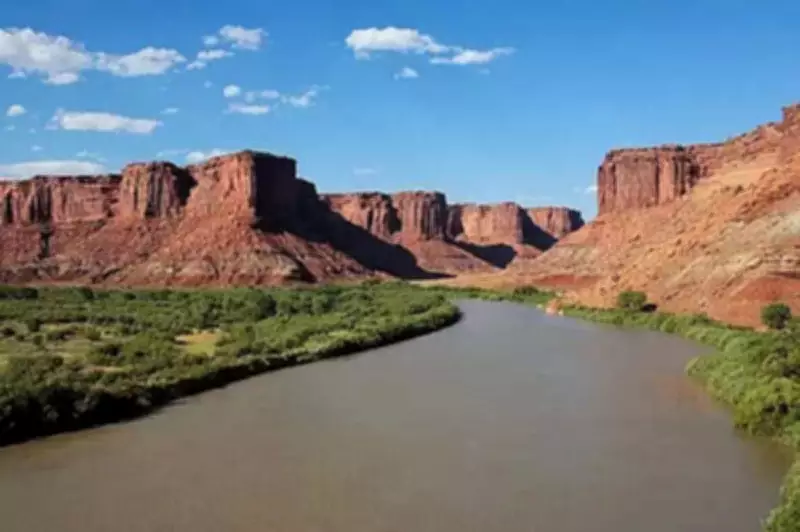
Deep Earth Process Unlocks Geological Mystery of Green River's Path
A long-standing geological puzzle regarding how the Green River managed to carve its way through the formidable Uinta Mountains has moved significantly closer to a definitive answer. Fresh analysis points to a solution that originates not from surface-level river action alone, but from profound changes occurring deep beneath the mountain range itself.
Integration of River Systems Reshaped a Continent
The comprehensive study meticulously examines the critical integration of the Green River with the Colorado River, a transformative event that fundamentally altered drainage patterns across vast stretches of western North America. Geological evidence conclusively demonstrates that the river sculpted its current path millions of years after the Uinta Mountains had fully formed and long after the active processes of mountain building had ceased.
By synthesizing data on river geometry, detailed sediment records, and advanced seismic imaging, the research team presents a compelling argument. They propose that subtle yet immensely powerful alterations within the Earth's mantle dynamically changed the landscape from below. This subterranean activity effectively removed a major continental divide, granting the Green River passage.

Contrasting River Valleys Hold Key Clues
High in the Uinta Mountains, river valleys exhibit characteristics of width and gentle slopes. In stark contrast, these same rivers become markedly steeper and more deeply incised at lower elevations. This pronounced contrast is highly significant. It strongly indicates that the upper river network represents an earlier, more stable geological epoch with slower erosion rates.
These preserved landscape features, known scientifically as relict topography, signal that a subsequent, powerful change dramatically accelerated the rivers' ability to cut through solid rock. The research paper, titled "A Lithospheric Drip Triggered Green and Colorado River Integration," uses reconstructions of ancient river networks to estimate that the mountain range's center experienced uplift of approximately 450 meters relative to its base level.
The Power of a Lithospheric Drip
This substantial uplift event occurred long after the mountains' initial formation over 50 million years ago. Critically, it was not driven by surface faulting or climatic shifts, which the study found played only minimal roles. The true catalyst was revealed through seismic imaging, which detected a dense mass of lithosphere sinking into the mantle below the range.
This process, termed a lithospheric drip, involves the removal of heavy material from the crust's base. As this dense mass detaches and sinks, hotter mantle material rises to fill the void, causing a broad uplift of the land surface above. Calculations from the study suggest this specific lithospheric drip detached between approximately 2 and 5 million years ago.
Timing Aligns Perfectly with River Integration
The estimated timeline for this deep Earth process shows remarkable alignment with independent geological evidence pinpointing when the Green River breached the Uinta Mountains and joined the Colorado River system. As the land surface rose unevenly due to the mantle activity, base levels shifted, river gradients steepened, and the rate of incision accelerated exponentially.
These combined factors created the precise conditions necessary for the Green River to eventually overtop the mountain range and carve out the iconic Canyon of Lodore. The research indicates that only a minor fraction of the observed uplift can be attributed to surface erosion and subsequent isostatic rebound. The overwhelming majority was propelled by mantle dynamics, a process that left minimal immediate trace on the surface landscape.
Quiet Reshaping of Surface Systems from the Depths
The groundbreaking findings underscore a profound geological principle: deep Earth processes can quietly but decisively reorganize entire river systems, reshape continental landscapes, and alter ecosystems long after traditional mountain-building forces have become dormant. This research provides a clearer window into the powerful, often hidden, forces that continuously shape our planet's surface over immense timescales.






