

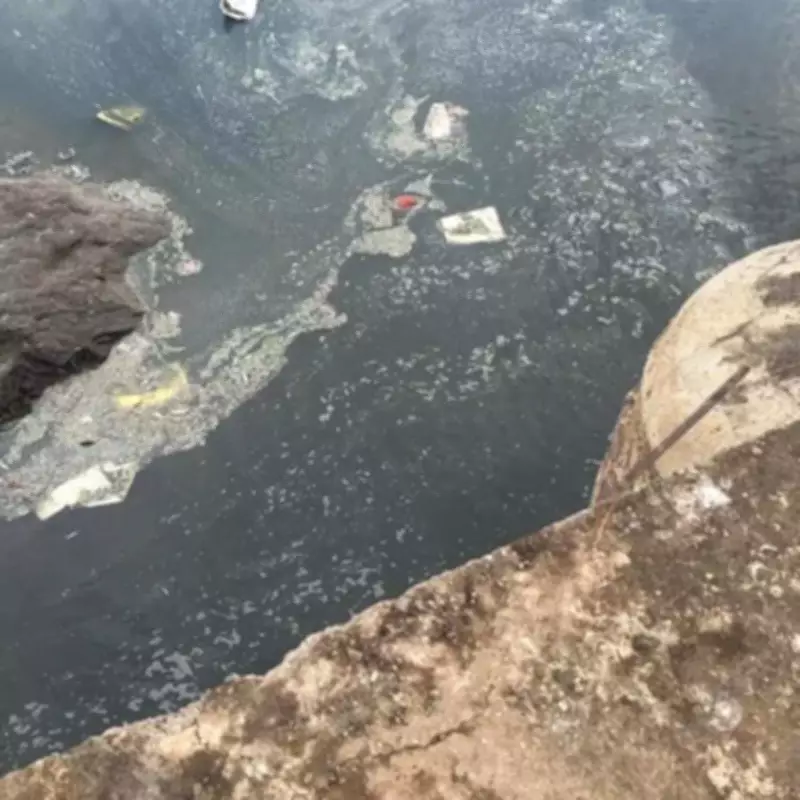
Mass Fish Deaths in Nira River Trigger Pollution Crisis in Pune District
The discovery of hundreds of dead fish in the Nira river over consecutive days has ignited widespread alarm and anger among residents of Baramati tehsil in Pune district. Preliminary investigations strongly indicate industrial pollution as the primary cause, with villagers launching sharp accusations against the Maharashtra Pollution Control Board for alleged negligence despite repeated warnings about deteriorating water quality.
Pollution Control Board Investigates as Evidence Points to Industrial Discharge
A specialized team from the MPCB's Baramati office conducted extensive surveys along affected river stretches during the weekend, collecting multiple water samples for comprehensive laboratory analysis. Kartikeya Langote, who leads the sub-regional MPCB office in Baramati, confirmed that early indicators suggest untreated industrial effluents entering the river system. "Water samples have been systematically collected from various locations near Korhale Khurd village. Initial observations strongly connect the fish mortality to industrial discharge. We will pinpoint the exact pollution sources and contamination levels once laboratory test results arrive in the coming days," Langote explained to reporters.
Villagers Voice Frustration Over Recurring Pollution and Agricultural Damage
The incident has provoked intense reactions from approximately twenty villages that depend on the Nira river for irrigation, livestock, and daily domestic needs. Residents describe the latest fish kill as part of a persistent pollution pattern that has progressively degraded the river ecosystem over many years. "This represents far more than an isolated incident. It results from years of systematic neglect and regulatory failure," stated local environmental activist Yuvraj Khomne. "The MPCB merely issues formal notices without implementing genuine enforcement measures. Polluters operate without fear of consequences, while the board has utterly failed in its fundamental duty to protect this vital waterway."

Farmers provided disturbing accounts of how prolonged exposure to contaminated water has devastated agricultural productivity across the region. "Fifteen years ago, we could safely drink directly from this river. Today, even our livestock cannot consume this water without health risks," reported one farmer from a riverside village. "Chemical-laden irrigation water is rendering our farmland increasingly infertile. Who will assume responsibility for these massive economic and environmental losses?"
Specific Allegations Against Sugar Factories and Industrial Units
Villagers have specifically identified nearby sugar processing facilities and various industrial operations, including some located in neighboring Satara district, as likely sources of untreated waste discharge into the Nira river. They maintain that despite numerous formal complaints submitted over years, regulatory authorities have consistently avoided taking stringent action against violators. "Had the MPCB imposed substantial financial penalties or initiated criminal proceedings against factory management, this crisis would never have reached such catastrophic proportions," emphasized Khomne. "Instead, they continue sending ineffective notices that create no meaningful change on the ground."
Environmental Experts Warn of Severe Ecological and Health Consequences
Environmental specialists caution that such pollution events pose grave threats extending far beyond aquatic life, potentially endangering human health and destabilizing entire ecosystems. Industrial effluents typically contain dangerous toxic substances including heavy metals like mercury, lead, and cadmium, alongside ammonia, nitrates, and phosphates. These chemicals dramatically reduce dissolved oxygen levels in water, causing fish suffocation, while simultaneously contaminating soil and groundwater through irrigation use. Long-term exposure can lead to declining soil fertility, reduced crop yields, and significant health hazards for both humans and livestock.

"The Nira river ecosystem is experiencing severe environmental stress," noted an environmental researcher who requested anonymity. "If industrial discharge continues without proper regulation and control, ecological damage could become irreversible across extensive river sections."
Historical Context and Political Promises Without Implementation
Pollution concerns in the Nira river have surfaced repeatedly over previous years. Late deputy chief minister Ajit Pawar previously conducted inspection visits and directed authorities to implement long-term water quality improvement measures. However, villagers report minimal tangible progress despite these political directives. "What we urgently require is decisive regulatory action—sealing illegal discharge points, dismantling clandestine pipelines, and penalizing repeat offenders," asserted another resident. "Without such concrete measures, these environmental disasters will continue recurring."
Officials from the MPCB's Pune headquarters confirmed that authorities in Satara district have been formally alerted to identify pollution sources and initiate appropriate enforcement actions.
Geographical Significance and Affected Communities
The Nira river originates in the Western Ghats within Bhor tehsil, flowing through Purandar and Baramati tehsils in Pune district before ultimately joining the Bhima river basin at Nira Narsingpur near Akluj in Solapur district. It serves as a crucial water source for Pune, Satara, and Solapur districts, supporting agriculture, industry, and domestic needs across the region.
Farmers from Murum, Limbut, Hole, Korhale Khurd, and Sangvi villages in Baramati tehsil bear the brunt of the current crisis. They report being unable to utilize river water for domestic purposes while experiencing severe agricultural disruption. Goraksha Khomne, sarpanch of Korhale Khurd village, expressed deep frustration: "The MPCB has accomplished virtually nothing to address our legitimate concerns. They collect samples and send notices, but where is the protection for hundreds of villagers' health? Why can't they seal offending industrial plants to demonstrate serious intent? Our community health deteriorates annually while conditions only worsen."





