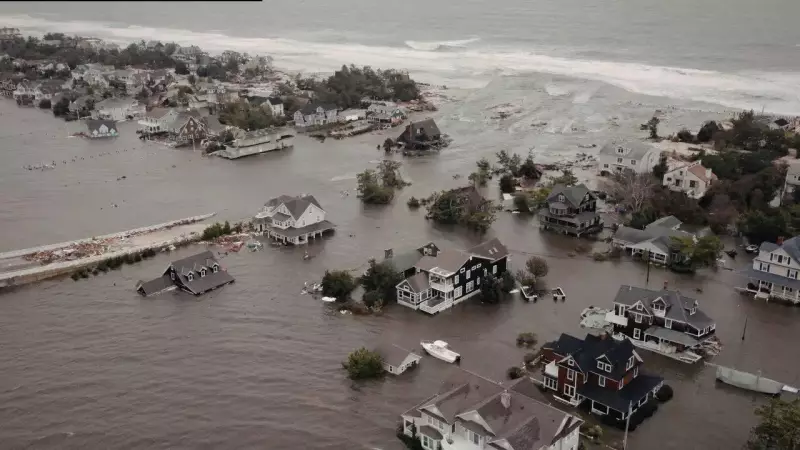
For decades, sea level rise has been framed as a distant environmental challenge, visualized through abstract projections and maps that seem disconnected from daily realities. However, along the United States coastline, a parallel trend has unfolded relentlessly: population growth continues to surge, particularly in low-lying regions already susceptible to flooding. A groundbreaking new study merges these two critical trends, shifting the focus from current risks to future vulnerabilities by combining detailed sea level rise scenarios with granular population projections extending to the year 2100.
Beyond Averages: A Closer Look at Future Coastal Exposure
The research, titled "Millions projected to be at risk from sea-level rise in the continental United States," begins with a straightforward observation. Coastal populations in the continental US are expanding steadily, even as the dangers from rising seas become increasingly evident. Previous assessments often relied on current census data superimposed onto future flood maps, a method that overlooks the influx of new residents over time. By projecting demographic changes alongside environmental shifts, this study bridges that gap, creating a more precise alignment between human settlement patterns and impending environmental hazards.
Staggering Numbers: The Scale of Potential Impact
Under a moderate sea level rise scenario of 0.9 meters by the end of the century, the study estimates that approximately 4.2 million people could reside on land regularly threatened by inundation. In a more severe scenario of 1.8 meters, that figure escalates to about 13.1 million individuals. These projections significantly exceed earlier estimates based solely on today's population, highlighting not a sudden exodus but the cumulative effect of persistent growth in areas destined to face frequent flooding.

Granular Analysis: How Small-Area Modelling Reveals Hidden Risks
A pivotal aspect of this research is its employment of small-area population projections. Rather than depending on county-level data, which can mask local disparities, the team modeled growth at the scale of census block groups. This meticulous approach enabled them to correlate elevation and flood risk with anticipated residential patterns within each county, minimizing the assumption that all coastal inhabitants share identical exposure levels.
Uneven Vulnerability: The Localized Nature of Flood Threats
Coastal counties are not uniformly at risk; some neighborhoods perch safely above sea level, while others, even slightly inland, remain perilously low-lying. By integrating population forecasts with elevation data, the study prevented overestimating exposure in safer zones while spotlighting low-lying areas where development persists despite long-term dangers. These regions often boast existing infrastructure and economic allure, drawing residents unaware of future perils.
Historical Parallels: The Potential for Large-Scale Displacement
While the authors refrain from predicting mass migrations, they emphasize that the magnitude of potential displacement could mirror significant internal movements in US history. This comparison aims not to incite panic but to convey the sheer scale of the issue, framing sea level rise as a profound social dilemma intertwined with environmental change. Without robust protective measures, future population shifts may rival historic relocations, reshaping communities and economies.
Planning Disparities: The Challenge of Coastal Adaptation
These findings emerge amid stark contrasts in coastal planning across states and municipalities. Some jurisdictions invest heavily in defensive infrastructure and stringent zoning regulations, while others continue to authorize development in exposed locales. By pinpointing where future populations may confront heightened risks, the study provides a valuable tool for local policymakers, narrowing uncertainties without prescribing specific solutions but urging proactive, informed decision-making.

A Gradual Warning: The Slow Accumulation of Risk
The study presents no single catastrophic event but rather a gradual escalation of exposure over decades. As populations swell and seas creep upward, their convergence intensifies. This incremental nature may explain why the threat often escapes urgent attention, lurking beneath the surface of immediate concerns. The research enriches our understanding of this protracted process, inviting reflection on its implications rather than forcing abrupt conclusions.
Ultimately, this analysis underscores a critical reality: the interplay between demographic trends and environmental changes demands a reevaluation of coastal resilience strategies. By illuminating the quiet yet profound risks ahead, it calls for heightened awareness and coordinated action to safeguard millions of future Americans from the encroaching tides.