

Iran's Leadership Transition Sparks Immediate Military Escalation in Middle East Conflict
Day nine of the ongoing Iran–US–Israel war has witnessed a seismic shift in Tehran's power structure with the appointment of Mojtaba Khamenei as Iran's new Supreme Leader. The son of the late Ayatollah Ali Khamenei, Mojtaba's ascension to the highest position in Iran has already triggered a significant escalation in the regional conflict, with immediate military consequences.
Missile Barrage Launched Within Hours of Leadership Change
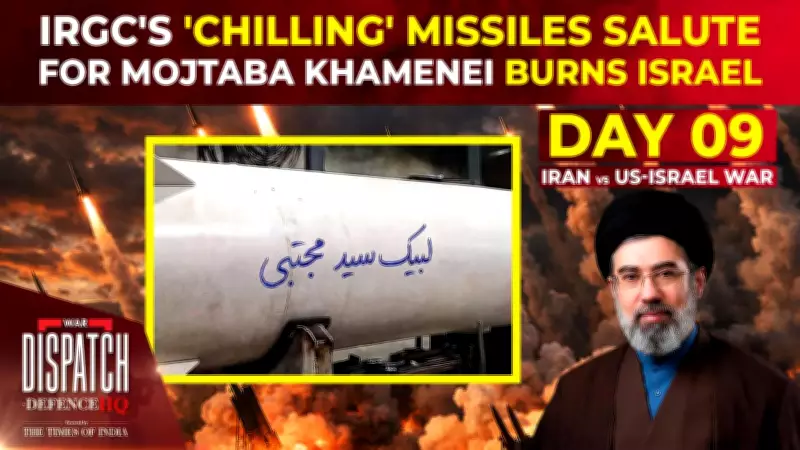
Within mere hours of Mojtaba Khamenei's appointment, Iran's Islamic Revolutionary Guard Corps (IRGC) launched a substantial barrage of missiles and drones toward Israel. One particularly notable missile carried the explicit message "At your service, Mojtaba," directly linking the military action to the new Supreme Leader's authority. Air raid sirens sounded across multiple Israeli cities as the strikes unfolded, marking one of the most direct confrontations in the escalating conflict.
The timing of this military action suggests a deliberate demonstration of power by the new leadership, potentially signaling a more aggressive stance in the ongoing war. The missile attacks represent Iran's deadliest military response in recent weeks, with the explicit dedication to Mojtaba Khamenei indicating his immediate involvement in military decision-making.

Global Reactions to Leadership Change and Escalation
The geopolitical stakes have risen dramatically following these developments. Former US President Donald Trump has publicly declared that Khamenei's son is "unacceptable" as Iran's leader, while Israeli officials have suggested that Mojtaba has already become a potential target in the conflict. These statements indicate heightened tensions between Iran and Western-aligned powers.
Meanwhile, Russia and China have intervened diplomatically, backing Iran's sovereignty and issuing warnings against external interference in Tehran's internal affairs. This diplomatic support from major global powers adds another layer of complexity to the international response to both the leadership change and the subsequent military escalation.
Analysis of the Leadership Transition in Tehran
The sudden transition to Mojtaba Khamenei as Supreme Leader represents a significant development in Iran's political landscape. As the son of the previous leader, his appointment suggests continuity within the existing power structure, but his immediate authorization of military action indicates a potentially more confrontational approach to foreign policy.
This leadership change occurs at a critical juncture in the Iran–US–Israel war, with implications for:
- The strategic direction of Iran's military operations
- Diplomatic negotiations and potential ceasefire efforts
- Regional stability across the Middle East
- International alliances and power dynamics
The message carried on the missile—"At your service, Mojtaba"—serves as both a symbolic gesture of loyalty to the new leader and a clear statement of intent to external adversaries. This combination of symbolic messaging and military action creates a complex scenario for international observers and participants in the conflict.
As the situation continues to develop, the world watches closely to see how Mojtaba Khamenei's leadership will shape the trajectory of the Iran–US–Israel war and what further escalations or diplomatic breakthroughs might emerge from this significant transition in Tehran's power structure.






