

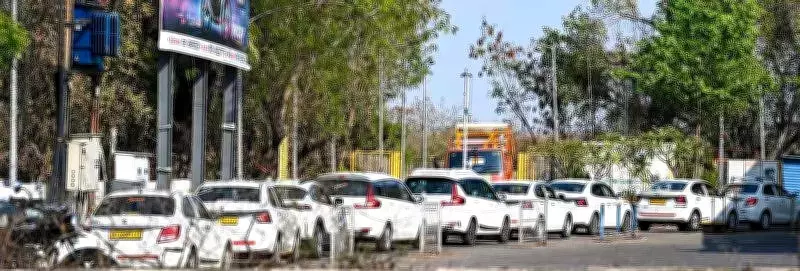
Nagpur Faces CNG Supply Crisis as West Asia Conflict Escalates
The ongoing conflict in West Asia is now having a direct impact on the daily lives of residents in Nagpur, with a severe disruption in the supply of compressed natural gas (CNG) causing significant challenges for the city's taxi drivers. Multiple reports indicate that long queues and extended waiting times at CNG filling stations have become the norm, primarily due to low pressure issues linked to the geopolitical tensions.
Taxi Drivers Struggle with Extended Waiting Periods
Many taxi drivers in Nagpur are expressing frustration as waiting times at CNG pumps have reportedly surged to nearly two hours. This disruption is severely hampering their daily operations, forcing some to make the difficult decision to shift to more expensive fuel alternatives. The situation has created a ripple effect, reducing the number of trips drivers can complete in a day and impacting their overall earnings.
Milind Gadre, a taxi fleet owner, shared his experience: "We have temporarily shifted our operations to petrol because of the increased waiting time at CNG pumps. Previously, CNG pumps already had long queues, but recently the waiting period reached around two hours due to low pressure. While CNG is affordable for us, the uncertain supply forced us to switch to petrol." He noted that CNG prices have seen only a minimal increase, but the availability issue remains a critical concern.

Financial Implications and Operational Costs
The financial burden of this shift is substantial for drivers. According to industry estimates, 7 kg of CNG costs approximately Rs 630 and allows a vehicle to run nearly 200 kilometers, translating to an operational cost of about Rs 4 per kilometer. In stark contrast, running a vehicle on petrol costs around Rs 7 per kilometer, making it a significantly more expensive option.
Despite the higher cost, several drivers are opting for petrol to avoid losing valuable working hours in queues. This trade-off highlights the severity of the supply issues and the immediate impact on their livelihoods. The long waiting hours are not just an inconvenience but a direct threat to their ability to sustain daily operations.
Supply Chain and Official Response
In Nagpur district, the authorized CNG distributor, Haryana City Gas (HCG), supplies fuel to 27 pumps across the region, including its own outlets. HCG receives its CNG from GAIL and is responsible for distribution throughout the city. However, the current disruptions have raised questions about the stability of this supply chain amid the West Asia conflict.
A senior HCG official, however, denied any reports of disruption in CNG supply. "The consumption also did not decrease in the last two days," the official stated, adding that no restrictions have been announced by the government on CNG so far. Nevertheless, the official acknowledged that such measures could be considered if the geopolitical situation escalates further, indicating a potential for future supply constraints.
Broader Context and Regional Impact
The conflict in West Asia, involving tensions between Israel, Iran, and other regional actors, has global implications, including on energy markets. Iran's recent warnings to US tech firms and attacks on military targets have heightened uncertainties, which are now trickling down to affect local economies like Nagpur's. The Ministry of External Affairs has condemned attacks on India-bound ships, emphasizing the loss of innocent lives as unacceptable, underscoring the humanitarian and economic stakes involved.
As the situation develops, residents and businesses in Nagpur are closely monitoring updates, hoping for a resolution that restores normalcy to CNG supplies. For now, taxi drivers continue to navigate the challenges of long queues and higher fuel costs, a stark reminder of how international conflicts can have tangible local consequences.






