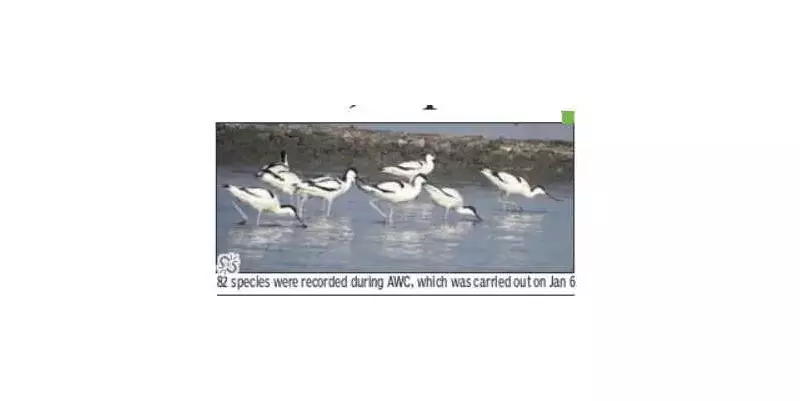
The latest Asian Waterbird Census (AWC) at Gurgaon's crucial Najafgarh jheel has revealed a significant rebound in avian populations, painting a picture of ecological resilience shaped by shifting weather patterns. The census, conducted on January 6, 2026, registered a total of 19,218 waterbirds, a figure described as "a much increased total number" compared to recent years.
Census Reveals Species Diversity and Global Visitors
Despite the surge in overall numbers, the species diversity remained similar to the previous year. The survey documented 82 different species of waterbirds. According to data compiled by TK Roy, an ecologist, ornithologist, and the AWC Delhi state coordinator for Wetlands International South Asia, the count includes 46 migratory species and 36 resident species.
Notably, the census logged 11 globally threatened species from the IUCN Red List. The list of recorded threatened species includes:

- Black-headed Ibis
- Black-tailed Godwit
- Peregrine Falcon
- Common Pochard
- Greater Spotted Eagle
- Woolly-necked Stork
- Eurasian Curlew
- Ferruginous Duck
- Spotted Greenshank
- Sarus Crane
- River Tern
Among the long-distance winter migrants, relatively higher numbers were recorded for species like the Bar-headed Goose, Northern Shoveler, Gadwall, Common Teal, and Northern Pintail.
Climate Change and a Five-Year Rollercoaster Trend
TK Roy directly linked this year's improved count to climatic factors. He explained that the wetland's health and bird numbers move in sharp cycles dictated by rainfall, water retention, and human disturbance. "Due to global climate change impact, delayed monsoon till mid-October 2025 and delayed winter in 2025-26, Najafgarh wetland much revived from drying condition," Roy stated.
An analysis of the AWC trend data from the past five years underscores these dramatic fluctuations:
- 2022: 71 species, 10,592 birds
- 2023: 79 species, 26,539 birds
- 2024: 64 species, 6,004 birds
- 2025: 82 species, 3,650 birds
- 2026: 82 species, 19,218 birds
This volatile pattern highlights the wetland's sensitivity to environmental conditions.
Local Threats Cast Shadow on Conservation Gains
Despite the encouraging numbers, Roy issued a strong caution about persistent local pressures that continue to degrade the Najafgarh jheel ecosystem. He flagged ongoing human disturbance even after conservation directives were issued.
"Apart from global climate change impact, other major local factors… include largely human intervention, i.e., regular illegal fishing, encroachment, water pumping for agriculture and urbanisation," Roy emphasized. These activities threaten to undermine the temporary gains provided by favourable weather, posing a long-term challenge for the wetland's survival and its value as a biodiversity hotspot on the outskirts of the National Capital Region.
The census results serve as both a hopeful sign of natural recovery and a stark reminder of the constant battle between ecological revival and anthropogenic pressure on India's vital urban wetlands.