

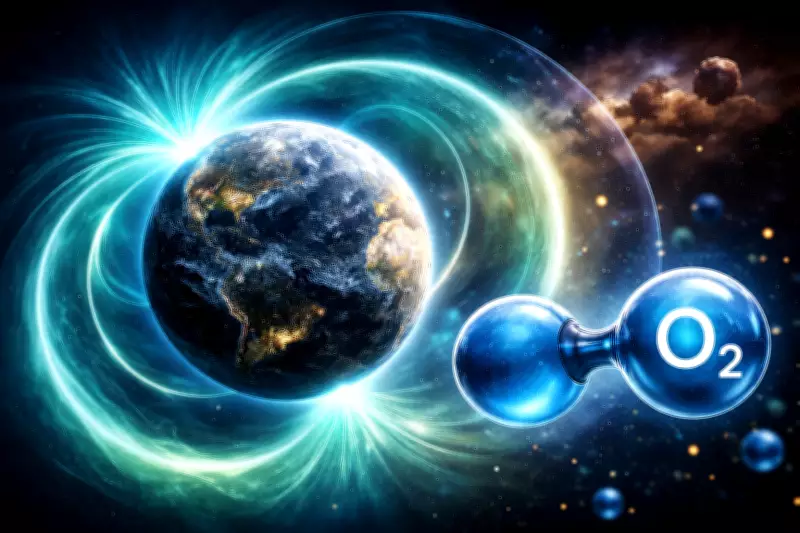
NASA Study Reveals Earth's Magnetic Field May Have Stabilized Oxygen for Life
For decades, scientists have intensely debated whether Earth's magnetic field plays a crucial role in maintaining the planet's habitability. This question holds profound significance because Earth distinguishes itself from other rocky worlds in our solar system. Unlike its planetary neighbors, Earth possesses a remarkably long-lived magnetic field, generated deep within its molten core. Simultaneously, it boasts an atmosphere rich in oxygen, which has supported complex life forms for hundreds of millions of years. A groundbreaking NASA-funded study now delves into whether these two defining features have evolved in tandem over geological time.
Examining Slow Trends Across Geological Eras
Rather than focusing on short-term events, the research team adopted a macro perspective, analyzing slow trends spanning the past 540 million years. Their innovative approach relies exclusively on existing geological records, avoiding speculative models or forecasts. By meticulously comparing two independent datasets side by side, the study investigates whether Earth's magnetic field and surface habitability might be interconnected more deeply than previously assumed.
Unlocking Ancient Secrets from Rocks and Sediments
To explore this compelling question, researchers turned to ancient rocks that formed millions of years ago. Many of these geological formations preserve faint magnetic signals, locked in place as they cooled over eons. These magnetic imprints enable scientists to estimate the historical strength of Earth's magnetic field at various points in the past. Although the record contains gaps and imperfections, it provides a comprehensive overview of how the field has fluctuated throughout the Phanerozoic era.

Oxygen itself leaves no direct fossil evidence, but its pervasive presence indelibly shapes chemical signatures. Traces found in sediments, soils, and fossil remains offer indirect estimates of atmospheric oxygen concentrations throughout history. These proxy indicators suggest that oxygen levels have not remained constant. Instead, they have risen slowly overall, punctuated by periods of unusual abundance, particularly during the late Palaeozoic era.
A Shared Ascent Over Hundreds of Millions of Years
When researchers juxtaposed the two timelines, a striking pattern emerged. Both magnetic field strength and atmospheric oxygen levels exhibited a gradual increase across the same extensive stretch of geological time. Remarkably, both datasets also displayed a pronounced rise between approximately 330 and 220 million years ago. This overlap proved particularly significant because it appeared in records constructed from entirely different and independent sources.
Statistical Analysis Rules Out Mere Coincidence
The research team conducted rigorous statistical tests to determine whether this correlation could be attributed to random chance. They compared the actual data with numerous simulated records designed to mimic natural noise and measurement uncertainty. In the vast majority of cases, chance alone failed to reproduce the strength of the observed link. The strongest statistical match occurred when both records were precisely aligned in time, with no discernible delay between them.
The Connection Manifests Only on Vast Timescales
Interestingly, short-term fluctuations told a completely different story. The connection between magnetic field strength and oxygen levels vanished entirely when the analysis was limited to changes occurring over mere millions of years. This crucial finding indicates that the association is not driven by sudden catastrophic events. Instead, it suggests that the correlation reflects slow, deep-seated processes unfolding within Earth's interior over extraordinarily long geological periods.

Potential Mechanisms Linking Magnetism to Oxygen Stability
A stronger magnetic field provides enhanced protection from solar particles and cosmic radiation, shielding the atmosphere from being stripped away into space. Over immense timescales, this protective effect may significantly reduce oxygen loss to the void. Furthermore, Earth's magnetic field is intrinsically linked to core and mantle dynamics, which govern volcanic activity, weathering processes, and nutrient cycling. All these geological mechanisms collectively influence oxygen production and consumption rates. Thus, the study's findings hint at a subtle yet profound continuum where a planet's deep interior may quietly support surface life, operating through discreet connections without dramatic overt signs.





