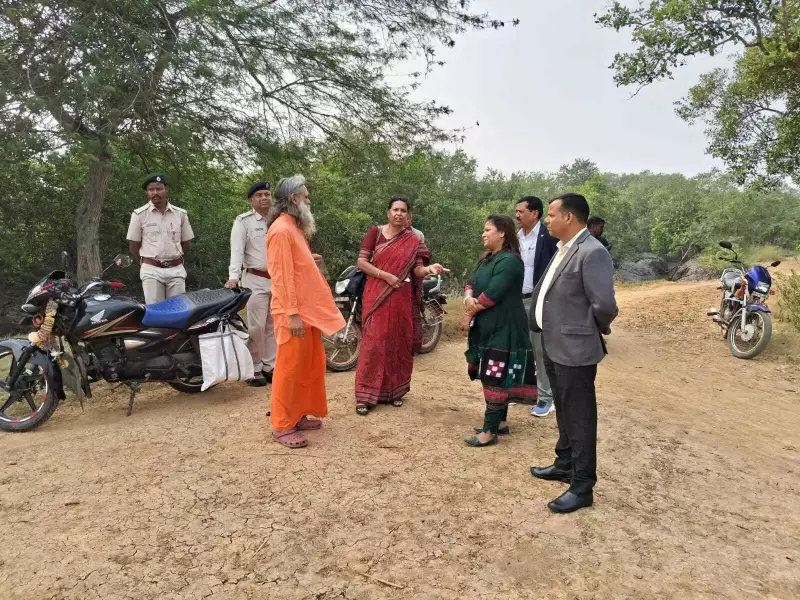
In a significant move to address the plight of communities displaced by coastal erosion, disaster recovery specialist Rita Missal of the National Disaster Management Authority (NDMA) conducted a visit to the severely affected Satabhaya gram panchayat in Kendrapada district, Odisha, on Monday. Her primary mission was to assess the situation and recommend sustainable livelihood solutions for residents now living in the Bagapatia rehabilitation colony.
The Vanishing Coastline and a Lost Homeland
The 12-kilometre stretch of beach at Satabhaya, once a cluster of seven vibrant villages, is often termed the 'fastest eroding beach' on Odisha's coast. Over the past four decades, the relentless advance of the sea has swallowed more than 600 homes and vast tracts of agricultural land, leaving only a minuscule portion of the original coastline. This environmental catastrophe forced the displacement of the local population, who were traditionally dependent on fishing, farming, and livestock rearing.
These families were relocated to the Bagapatia rehabilitation colony, situated approximately 12 kilometres from their original homes in Satabhaya. This settlement is recognized as India's first rehabilitation colony specifically for climate refugees. During her visit, Missal interacted extensively with the residents, who shared their ongoing struggles for basic amenities and a stable income.

Voices from Bagapatia: A Struggle for Survival
The community's grievances were presented clearly to the NDMA official. Residents highlighted persistent challenges in accessing bare necessities. A critical issue raised was the state of education, with children in the colony being deprived of proper schooling due to a severe lack of teachers and inadequate infrastructure.
Prasan Parida, the sarpanch of Satabhaya, articulated the community's loss. "We used to earn our living by fishing, catching crabs, farming, and rearing cattle at Satabhaya. The government rehabilitated us in Bagapatia to save our lives from the marching sea. But we lost our traditional livelihood as the government provided us only a small piece of land to build houses," Parida stated. He added that most of the youth have now been compelled to work as migrant labourers in states like Kerala and Tamil Nadu.
Charting a Path Forward: Policy and Action
In response to these challenges, Rita Missal emphasized the urgent need for a structured approach. She recommended to the district administration that a comprehensive master plan must be developed to provide proper livelihood opportunities for the displaced villagers. This plan aims to compensate for their lost traditional professions.
Missal referenced the National Policy on Mitigation and Rehabilitation Measures for people displaced by coastal and river erosion, prepared by the NDMA in 2022. She stressed that a robust policy and mechanism are essential for effective response and recovery from such disasters, offering immediate relief and better pathways for affected populations to regain control of their lives and livelihoods. "We will help the sea-erosion hit people of Satabhaya by providing them proper livelihood and other help," Missal assured.
The visit was conducted alongside key officials including Odisha State Disaster Management Authority general manager Bebita Manjari Nayak, Kendrapada additional district magistrate Nabakrushna Jena, Rajnagar block development officer Tilottama Prusti, and district project officer Ajay Mohanty. Missal also held a meeting with Kendrapada collector Raghuram R Iyer, environmentalists, and other officials during her visit.
Rita Missal brings extensive experience to the role, having begun her career in disaster management at the UN office in India after the 1999 Odisha super cyclone. She later worked in the Maldives following the 2004 Asian tsunami and has handled various international assignments since 2007, including positions in Geneva and Bangkok.