

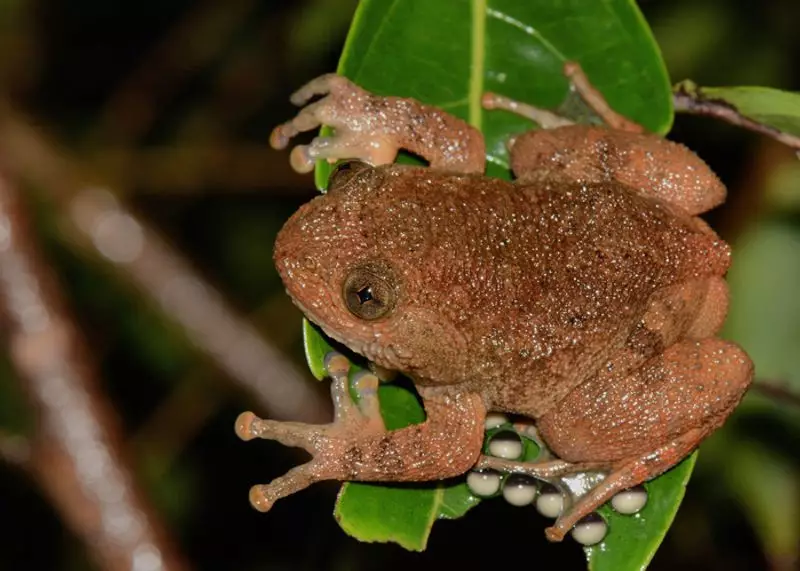
In a significant boost to India's biodiversity records, a team of scientists has discovered two entirely new species of frogs in the pristine forests of Arunachal Pradesh. The exciting find was made within the protected confines of the Namdapha Tiger Reserve, a biodiversity hotspot in the eastern Himalayas.
Spotting the Differences in the Cascade
The newly identified amphibians belong to the Amolops genus, commonly known as cascade frogs due to their preference for fast-flowing hill streams. The research team, comprising scientists from the University of Delhi and the Wildlife Institute of India, meticulously studied the frogs' physical characteristics and genetics to confirm they were unique species never before documented by science.
One species has been named Amolops chanakya. This frog is distinguished by a prominent white mark on its snout. The other has been christened Amolops terraorchis, a name that highlights its association with the mountainous landscape. Both species exhibit subtle but distinct differences in their body shape, skin texture, and coloration compared to their known relatives, which had previously led to them being misidentified.

A Decade of Research Yields Results
The discovery, published in the international journal Zootaxa in March 2024, is the result of extensive fieldwork and analysis spanning nearly a decade. Scientists conducted surveys in the challenging terrain of Namdapha, collecting specimens and recording crucial data. The use of advanced molecular techniques to analyze DNA sequences was key in separating these new frogs from similar-looking species like Amolops marmoratus.
The lead researcher, Prof. SD Biju from the University of Delhi, emphasized that this finding underscores the rich yet underexplored amphibian diversity of the Namdapha region. He noted that many areas in Arunachal Pradesh remain biological treasure troves, likely harboring more unknown species waiting to be found.
Implications for Conservation and Science
The identification of Amolops chanakya and Amolops terraorchis is more than just an addition to a list. It has profound implications for conservation planning in the Eastern Himalayas. Accurate species identification is the foundational step for assessing their population status, understanding their ecological role, and formulating effective protection strategies.
These frogs, as indicators of environmental health, are highly sensitive to changes in their habitat. Their discovery within a tiger reserve is promising, but it also highlights the need for continued and stringent protection of these fragile ecosystems from threats like:
- Climate change altering stream flows and temperatures.
- Potential habitat degradation from infrastructure development.
- Diseases like chytridiomycosis that affect amphibians globally.
This discovery reinforces the global biological significance of Arunachal Pradesh and the Namdapha Tiger Reserve. It serves as a compelling reminder of the hidden biodiversity gems India possesses and the continuous scientific effort required to document them. Each new species discovery helps piece together the complex puzzle of our planet's ecosystems and strengthens the argument for preserving its wild spaces.






