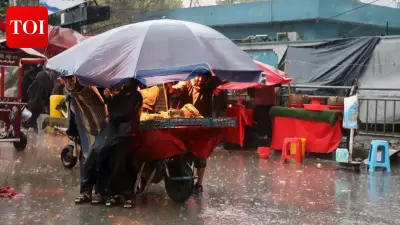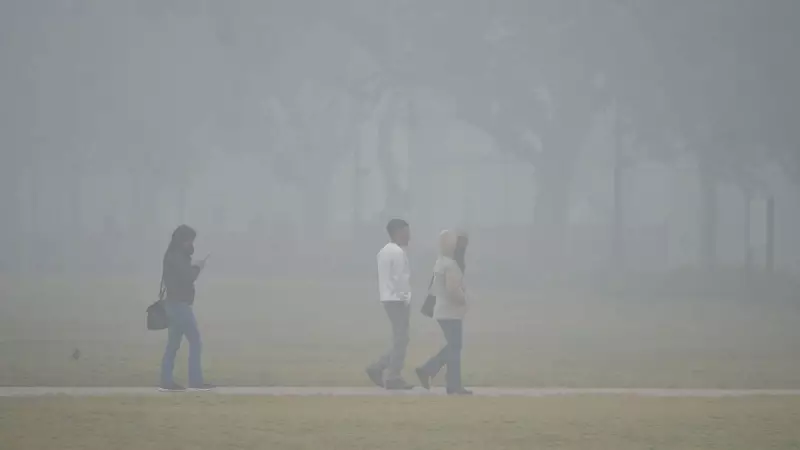
Severe winter conditions gripped large parts of North India on Monday, with the national capital shrouded in thick smog and dense fog causing major travel disruptions. The India Meteorological Department (IMD) has forecast continued harsh weather, including heavy snowfall and snowstorms in the higher reaches of Jammu, Kashmir, Ladakh, and Himachal Pradesh.
Delhi Chokes Under Dense Fog, Travel Chaos Ensues
A thick blanket of smog enveloped Delhi, drastically reducing visibility and pushing the Air Quality Index (AQI) into the 'very poor' category. Iconic landmarks like India Gate, Kartavya Path, ITO, and Akshardham were barely visible through the haze. The low visibility had a severe impact on transportation networks.
More than 105 flights were cancelled and over 450 were delayed at Delhi's Indira Gandhi International Airport on Sunday due to the persistent fog. Rail traffic was also hit hard, with several trains being rescheduled to account for the poor conditions.

Contrasting Weather in Hills: Himachal's Dry Spell vs Kashmir's Chillai-Kalan
While Delhi grappled with fog, the hill states presented a picture of contrast. Himachal Pradesh is experiencing its driest December on record with a 100% rainfall deficit. Although areas like Lahaul and Spiti saw light snowfall, it was insufficient to break the dry spell. Kukumseri was the coldest in the state at minus 2.4 degrees Celsius.
The IMD has issued a yellow warning for dense fog in Bilaspur, Una, and Mandi districts from December 22 to 25. In a surprising twist, state capital Shimla recorded a relatively warm 11 degrees Celsius, nearly five degrees above normal.
Meanwhile, Kashmir entered the traditional 40-day harshest winter period known as 'Chillai-Kalan', marked by increased snowfall. However, Srinagar recorded its warmest night of the season at 4 degrees Celsius. The IMD has predicted heavy snowfall and snowstorms in the higher reaches till Monday.
Punjab and Haryana Also Battle Poor Visibility
The foggy conditions extended to the plains of Punjab and Haryana, significantly reducing visibility. Narnaul in Haryana and Gurdaspur in Punjab recorded the lowest temperatures in their respective states, adding to the winter chill felt across the entire northern region.
The ongoing weather patterns highlight a severe winter phase for North India, combining air pollution, travel disruptions, and contrasting climatic conditions in the hills, with authorities advising caution.