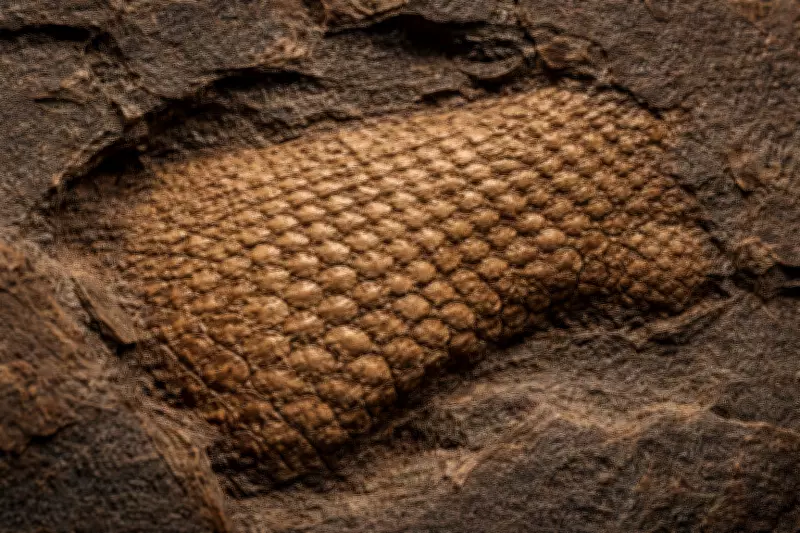
Ancient 289-Million-Year-Old Reptile Skin Fossil Found in Oklahoma Rewrites Evolutionary History
Deep within an Oklahoma quarry, a groundbreaking discovery has emerged that is fundamentally altering our understanding of prehistoric life. Palaeontologists have unearthed a small fragment of fossilised reptile skin, dated at an astonishing 289 million years old, making it the most ancient example of its kind ever recorded. This remarkable find, significantly older than any previously known specimens, is providing unprecedented insights into how early creatures adapted to terrestrial environments long before the age of dinosaurs.
Discovery of the Oldest Fossilised Reptile Skin in Oklahoma
The fossil, a fingernail-sized piece, was discovered in the limestone caves of Richards Spur, Oklahoma, by experienced fossil collectors Bill and Julie May. This site has long been renowned for yielding unique and exciting discoveries, but this particular fragment stands out as exceptionally rare. Analysis by lead researcher Ethan Mooney and his team at the University of Toronto confirmed it belongs to Captorhinus aguti, an early Permian reptile, and contains epidermal skin—the top layer that was crucial for survival on land. Mooney described the find as "mind-blowing" and "completely unlike anything we would have expected," with the findings published in Current Biology in January 2024.
Unique Preservation in the Oklahoma Cave
Richards Spur offers a unique preservation environment that allowed this skin to survive in remarkable three-dimensional detail. According to Mooney, animals likely fell into this cave system, where they were buried in fine clay, exposed to Permian oil, and subjected to low oxygen levels—all factors that slowed decay and mummified the skin. Typically, skin decays quickly in fossils, but here, the epidermis was preserved intact. Uranium-lead dating of stalagmites placed the skin between 286 and 289 million years old, enabling scientists to gain a rare glimpse into the development of early amniotes.

Features of the Fossilised Reptile Skin
Imagine a surface adorned with neat, non-overlapping scales, similar to those of a crocodile. The way these scales are joined suggests flexibility, akin to modern snakes and worm lizards, indicating stretchy ancient skin. While no skeleton was found, leaving the exact body shape a mystery, it is clear this was an early reptile. This fossil represents the oldest known preserved epidermis, extending the record back by over 130 million years. The skin would have provided essential protection as these creatures navigated rough terrain, marking an early stage in the evolution of protective skin in vertebrates. Mooney emphasised that "the epidermis was an important characteristic for vertebrates to survive on land."
Evolutionary Insights from a Reptile Skin Fossil
This discovery offers a window into how vertebrates transitioned to life on dry land during the shift from the Carboniferous to the Permian period. Amniotes—reptiles, birds, and mammals—required waterproof skins to thrive out of water, and the skin of Captorhinus aguti displays ancient traits that persisted for millennia. Mooney stated in the published paper that "this is a remarkable opportunity to explore the very early steps of higher vertebrate evolution," helping to bridge gaps in our understanding of early terrestrial vertebrate evolution and redefining the timeline of life's move to land.
Why Richards Spur Yields Such Finds
Oklahoma's Richards Spur is no ordinary dig site; it acts as a time capsule from the Permian period. Animals fell through shafts or were washed in by floods, ending up in low-oxygen, muddy environments where oil from prehistoric seeps coated their bodies, inhibiting bacterial growth and slowing decay. Annual quarry work uncovers new strata, reminiscent of the Mays' latest discovery. Previous digs have revealed bones of Captorhinus that align perfectly with this skin, making it a prime location for such exceptional preservation. Mooney and his team note that "every so often, we're granted a rare chance to catch a glimpse of deep time."

Impact on Palaeontology and Future Hunts
This fossil thrills experts, suggesting more hidden treasures in Permian caves and raising questions about the speed of skin evolution after amniotes appeared. Mooney's team recommends further scanning of Richards Spur specimens, as some bone fragments might conceal skin. This discovery also highlights other global sites that could harbor similar fossils. Mooney remarked, "It's an exceptional opportunity when you find an old skin fossil like this," encouraging persistence among hobbyists like the Mays. Who knows what other surprises await in these ancient quarries?