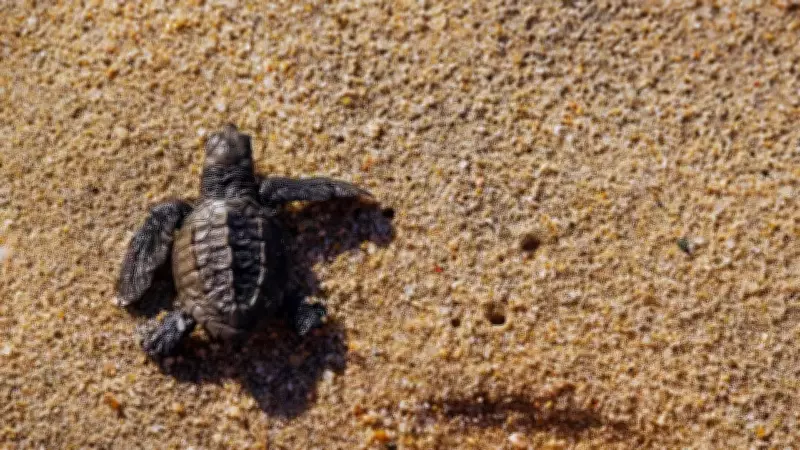
Rare Olive Ridley Turtle Hatchlings Captured on Video at Puri's Blue Flag Beach
In a remarkable natural spectacle, world-renowned sand artist and Padma Shri awardee Sudarsan Pattnaik recently shared a captivating video on his official X account. The footage showcases a rare and heartwarming sight at Puri's prestigious Blue Flag beach in Odisha: groups of Olive Ridley turtle hatchlings making their determined journey from the sandy shore toward the vast sea.
"Today the blue flag beach Puri, for the first time witnessed hatchlings Olive Ridley turtles heading towards sea in a group which is something really an incredible moment," Pattnaik wrote in his post. "I captured this video early morning." While such moments are fleeting, they powerfully underscore Odisha's globally significant role as a critical conservation region for these vulnerable marine creatures.
Odisha's Coastline: A Global Nesting Hotspot
The coastal stretches of Odisha along the Bay of Bengal are internationally recognized for hosting mass nesting events, known scientifically as arribadas, of Olive Ridley sea turtles. During these extraordinary phenomena, hundreds of thousands of turtles simultaneously emerge onto the shores to lay their eggs in synchronized natural marvels.
The state boasts some of the world's most vital nesting sites for this species, including:
- Gahirmatha Beach - celebrated as the largest Olive Ridley nesting site globally
- Rushikulya Beach - another crucial mass nesting location
- The mouth of the Devi River - an important nesting area
This concentration of nesting sites makes Odisha an absolute focal point for the survival of the Olive Ridley turtle, which is classified as Vulnerable on the IUCN Red List of Threatened Species. The state's ecological significance cannot be overstated in global conservation efforts.
Why the Puri Sighting Carries Special Significance
While Puri is primarily known as a major pilgrimage destination and popular beach resort, the occasional appearance of turtle hatchlings along its shores reveals important ecological patterns. These sightings demonstrate that turtle activities extend beyond the well-documented nesting beaches to other coastal areas of the state.
This development is significant for several compelling reasons:
- It indicates the continuity of the Odisha coastline as an integrated marine ecosystem
- It suggests turtles may be utilizing undisturbed areas for nesting or movement
- It raises public awareness about marine conservation and biodiversity protection
The hatchlings' journey from nest to sea represents a critical, vulnerable stage in their life cycle. Even minor disturbances—such as artificial lighting, human presence, or coastal development—can dramatically impact their survival rates during this delicate transition.
Conservation Measures Protecting Odisha's Marine Turtles
Odisha has implemented multiple protective measures to safeguard Olive Ridley sea turtles during their nesting and hatching seasons:
- Seasonal fishing bans in critical nesting areas to prevent accidental capture
- Deployment of forest and marine patrol staff to monitor nesting beaches
- Promotion of Turtle Exclusion Devices (TEDs) in fishing nets to allow trapped turtles to escape
- Regulation of human activities on sensitive nesting beaches
What This Means for Responsible Tourism
For travelers, Odisha's beaches offer more than scenic beauty—they provide a window into a globally important marine ecosystem. Destinations like Gahirmatha and Rushikulya aren't merely tourist beaches but vital ecological sites, while Puri demonstrates how tourism and nature conservation can intersect meaningfully.
Visitors can contribute to conservation efforts through simple, responsible actions:
- Respecting restricted areas during nesting seasons
- Avoiding flash photography near turtles
- Following all nature conservation guidelines and regulations
- Supporting local conservation initiatives and awareness programs
A Coastline of Global Ecological Importance
Odisha's coastline continues to serve as an essential habitat for Olive Ridley sea turtles, supporting one of the world's largest nesting populations. The rare sighting of hatchlings in Puri serves as a powerful reminder of the region's ecological significance and the ongoing need for conservation vigilance.
Sudarsan Pattnaik's timely documentation not only captures a beautiful natural moment but also amplifies awareness about marine conservation. As development pressures increase along coastal areas, such sightings highlight the delicate balance between human activity and wildlife preservation that must be maintained for future generations.