

Pachmarhi Sanctuary Land Transfer Ignites Environmental Conflict in Madhya Pradesh
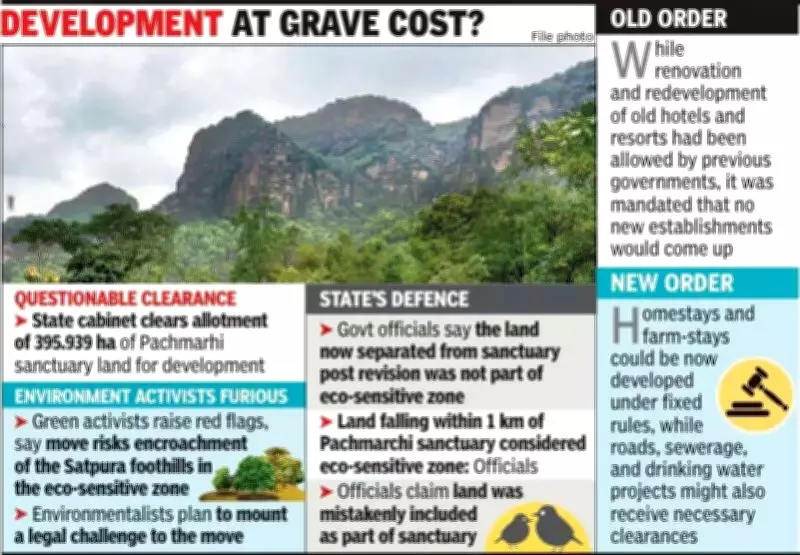
In a development mirroring nationwide controversies over conservation versus development, Madhya Pradesh's cherished hill station and wildlife refuge, Pachmarhi, has become the epicenter of a heated environmental battle. The state government's recent decision to reclassify 395.939 hectares of protected sanctuary land for urban development has triggered significant opposition from conservationists who vow to challenge the move in court.
Government Approves Land Transfer for Development
On January 27, the Madhya Pradesh state cabinet approved a significant land reclassification, transferring control of 395.939 hectares from the Pachmarhi Sanctuary to the Special Area Development Authority (SADA). This decision effectively redesignates the land from protected forest area to revenue (nazul) land, clearing the path for potential development projects in the ecologically sensitive Satpura ranges.
The government rationale centers on correcting what officials describe as a historical error—land that was mistakenly included in the Wildlife Sanctuary when it was originally notified on June 1, 1977, under Section 18(1) of the Wildlife Protection Act, 1972. According to state authorities, this revision will facilitate long-pending development work that previous governments couldn't undertake due to unclear demarcation between sanctuary and non-sanctuary areas.

Environmental Activists Sound Alarm Bells
Wildlife activist Ajay Dubey has emerged as a vocal critic of the decision, warning that Pachmarhi could face ecological consequences similar to those experienced by Shimla and Nainital, where unchecked urban expansion came at grave environmental cost. "The biggest loss resulting from this decision would be to the fragile ecosystem of Pachmarhi," Dubey stated, emphasizing that increased human intervention could deplete groundwater sources in the eco-sensitive zone.
Dubey further argued that developing civilian settlements on the foothills would conflict directly with regulations protecting the Satpura Tiger Reserve and disrupt disciplined management of the area. "I will challenge the decision in court as it threatens potential encroachment of the eco-sensitive zone," he declared, alleging the move appears designed to benefit a select few influential individuals rather than the broader public interest.
Potential Development Implications
The cabinet decision opens several possibilities for the newly designated revenue land:
- Reconstruction of old and dilapidated houses and hotels, potentially including additional floors
- Development of homestays and farm-stays under established regulations
- Implementation of infrastructure projects including roads, sewerage systems, and drinking water facilities
- Approval of government and tourism-related development initiatives
While previous administrations permitted renovation of existing structures with strict prohibitions against new establishments, the current decision represents a significant policy shift that environmentalists fear could lead to unfettered urban encroachment.
Ecological Concerns Amplified
Environment activist Subhash C Pandey expressed deep concern about the decision's potential impact, noting that even areas within 1 kilometer of the sanctuary boundary are considered eco-sensitive zones subject to strict regulations. "Development of the sensitive foothills would lead to an increase in population load," Pandey explained, "while the air quality would get progressively worse as construction and vehicular movement go up."
Pandey highlighted additional environmental threats including:

- Increased noise pollution from construction activities and loud music that could disturb wildlife
- Degradation of the area's natural health and habitat for sanctuary animals
- Disruption of the peace and sanity essential for wildlife conservation
The controversy emerges against the backdrop of nationwide debates about balancing conservation needs with development priorities, particularly following the Supreme Court's uniform definition of Aravali ranges for mining regulation and conservation purposes. As legal challenges prepare to unfold, the fate of Pachmarhi's delicate ecosystem hangs in the balance between competing visions of progress and preservation.





