

Viral Pakistan Street Interview Reignites Debate on Consent and Religious Boundaries
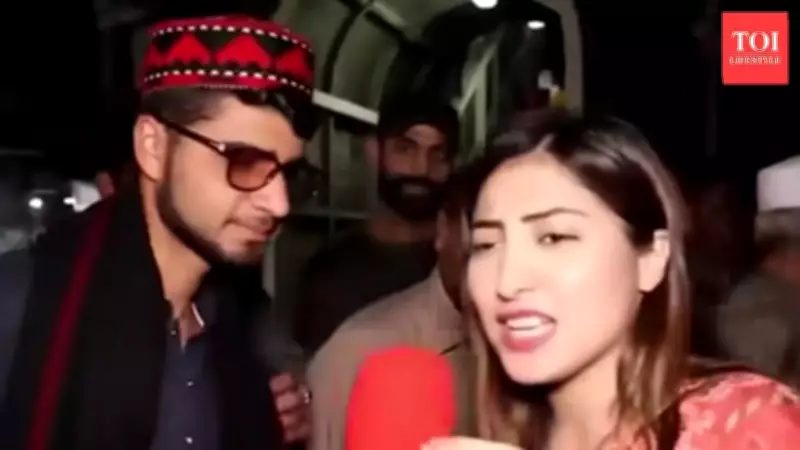
A street interview video from Pakistan has once again surged to viral status across social media platforms, eliciting intense reactions and reigniting discussions on personal beliefs and societal norms. Although the clip is not new, its recent resurgence has thrust it back into the spotlight, with users passionately debating the exchange and its implications for public discourse in Islamic societies.
From Geopolitical Concerns to Personal Confrontation
The video commences with the woman raising a pressing geopolitical issue. She articulates, "There is a war brewing between Palestine and Iran. Pakistan is a neighbouring country. If war breaks out over there, we're going to be completely ruined here, too." Instead of addressing this concern, the man abruptly shifts the conversation's focus. He declares, "First of all, I would like to say that while our country bears the name of Islam, fair enough, we do not practice a single Islamic deed within it." This pivot redirects the dialogue away from international tensions toward internal religious practices.
Clash Over Personal Choice and Religious Command
The woman then prompts him to elaborate, asking, "Such as? What sinful act have we committed?" In response, the man points directly at her and asserts, "The very first transgression we have committed is this: you are standing right in front of me, in an Islamic country, yet you do not have a dupatta covering your head. Do you understand?" He proceeds to place his shawl over her head, a physical act that escalates the tension.

The woman reacts firmly, stating, "Oh, brother! Why does your version of Islam begin and end with a dupatta? Keep your own shawl to yourself; I have my own. I have my own shawl. This is my decision, isn't it? It certainly isn't yours." The man counters, "How can this be your decision? It is a command from Allah!" highlighting a fundamental disagreement over individual autonomy versus religious interpretation.
Consent and Boundaries Under Scrutiny
The situation intensifies as the woman objects to the physical contact, emphasizing, "You touched me without my permission. Do you realize what a grave sin you have just committed?" The man denies any wrongdoing, replying, "I didn't touch you; I just placed my hand on your own head." He attempts to defuse the tension by calling her "sister," but she strongly rejects this, retorting, "Sister? No, not a sister! You are not related to me by blood. Why did you touch me without my permission? Is this what Islam teaches you?"
She further challenges his actions, questioning, "Just because it gave a commandment [regarding Parda], does that mean you can go around touching just anyone's mother or sister?" This exchange underscores critical issues of consent and personal boundaries within religious contexts.
Escalation and Social Media Backlash
As the argument persists, the woman issues a warning, stating, "Do you realize that you could be arrested for this?" The man responds defiantly, "I am ready for that." She then labels his behavior as "social harassment," with a nearby woman intervening to urge him to address the original question rather than diverting the topic.
On social media, the clip has sparked a firestorm of reactions. Circulating with captions like "Brave Pakistani feminist journalist" and "Feminism in Pakistan Salute to both ladies," many users have rallied in support of the woman. Comments such as "What's her name? I need to find her," and "On loop for the queen, slayed women," reflect admiration for her stance.
Others have pointed out contradictions in the man's actions, with one user noting, "Funny how he's so worried about her modesty but has no problem touching a woman he doesn't know to force a dupatta on her." Additional remarks include praise like "Educated reporter" and expressions of frustration, such as "Damn his audacity. Hat's off to her for her patience. I would've slapped him then and there."

Disclaimer: This article is based on a resurfaced viral video and reactions shared across social media platforms. The authenticity, context, and timing of the clip have not been independently verified. The views and opinions expressed by individuals in the video and in online comments are their own and do not necessarily reflect the views of the publication.





