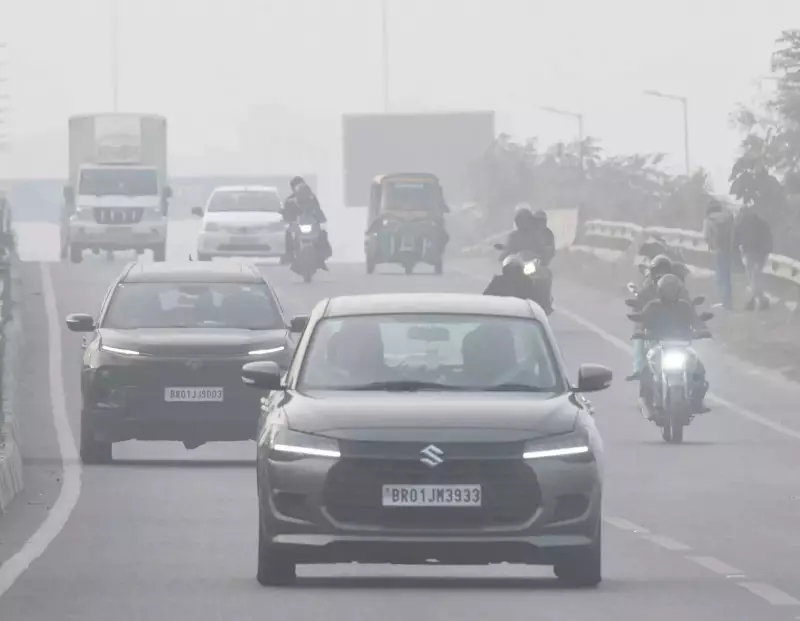
As 2025 comes to an end, Patna is witnessing a significant and welcome shift in its winter air quality. For the first time in several years, the city's December air has been noticeably cleaner, offering residents a respite from the severe pollution that typically blankets the city during the cold months.
A Breath of Fresh Air: Data Shows Clear Improvement
The daily Air Quality Index (AQI) for Patna this December has largely remained in the "moderate to poor" range of 110 to 220. This is a stark departure from the hazardous conditions that defined previous Decembers. Historical data paints a grim picture of past winters, where AQI levels would frequently soar above 300 and even cross the 400 mark, dominated by dangerous levels of PM2.5 and PM10 particles.
This pattern of severe pollution held firm even during the COVID-19 lockdown year of 2020, when December AQI was mostly in the very unhealthy to severe red zone. The years 2019, 2021, 2022, and 2023 followed suit with red alerts dominating the calendar. While December 2024 showed some moderation with unhealthy orange levels, 2025 has taken a clearer step forward.

According to the latest Central Pollution Control Board (CPCB) bulletin, Patna is wrapping up the year on a refreshing note with a city-wide AQI of 150, comfortably in the moderate category.
Experts Weigh In: Causes Behind the Cleaner Skies
Officials and environmental scientists point to a combination of factors for this improvement. Devendra Kumar Shukla, Chairman of the Bihar State Pollution Control Board (BSPCB), noted a change in the pollutant mix. On Wednesday, PM10 emerged as the dominant pollutant across Patna and other major Bihar cities, unlike previous patterns where the finer, more dangerous PM2.5 typically prevailed. He attributed elevated PM10 primarily to vehicular movement and ongoing construction activities.
Professor Atul Aditya Pandey from Patna University's geology department explained that Patna's natural geography plays a role. The region's fluvial deposits from the Ganga plain naturally contain higher concentrations of fine silt and dust, which become airborne, especially post-monsoon, making the city inherently dust-prone.
Pradhan Parth Sarthi from the Central University of South Bihar highlighted the role of favourable weather. Prevailing westerly winds in recent days helped weaken temperature inversion layers and disperse pollutants effectively. However, he cautioned against excessive optimism, stating, "When we look at the entire month's data, I cannot say it is much cleaner," and reiterated that vehicular emissions remain the dominant urban pollution source.
A Note of Caution and the Road Ahead
While the improvement is encouraging, some experts urge a measured perspective. An air quality expert, speaking anonymously, argued that natural meteorological and geographical factors are the main drivers of this year's better air, with man-made pollution control measures contributing only marginally—perhaps 3-5% at best. This viewpoint calls for more robust scientific research to accurately pinpoint pollution sources for effective long-term policy-making.
The consensus indicates that while ongoing pollution control measures and stakeholder contributions have helped, this December's cleaner air in Patna is also a product of helpful weather patterns. The challenge remains to sustain this improvement through continued, strengthened efforts targeting vehicular emissions, construction dust, and other anthropogenic sources, especially when meteorological conditions are less favourable.