

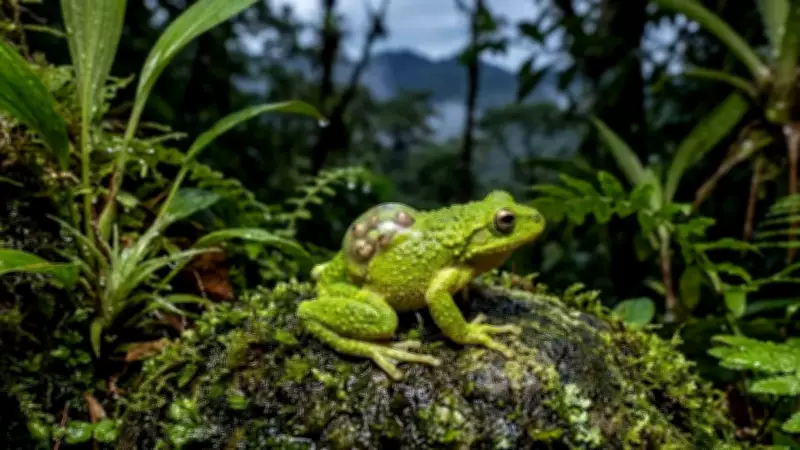
Peruvian Discovery: Miniature Marsupial Frog Species Found in Amazon
In a groundbreaking scientific revelation, researchers conducting a new study in Peru have uncovered a previously unknown miniature marsupial frog species named Gastrotheca mittaliiti. This tiny amphibian, measuring only 2.7 to 3.3 centimetres in length, is turning amphibian biology on its head with its unique reproductive adaptations.
Unique Reproductive Strategy in Isolated Mountains
Discovered in the isolated mountainous region of the Peruvian Amazon, this species harbors a remarkable secret: it utilizes an extraordinary method of reproduction that defies typical frog biology. Unlike conventional frogs that develop their eggs in water, the female Gastrotheca mittaliiti has evolved a sophisticated spawning technique where her young develop in a specialized brood pouch on her back.
This enclosed, natural, and safe area allows the embryos to live and grow until they reach developmental autonomy. This marsupial adaptation is a critical evolutionary response, enabling the frog to mitigate environmental pressures from escalating climate change threats and increasing habitat destruction in the high-altitude rainforest ecosystems it inhabits.

The Distinctive Brood Pouch and Survival Advantages
The Gastrotheca mittaliiti is distinguished by its distinct brood pouch, which earns it the "marsupial" moniker. According to reports, the female frog uses this organ to nurture her developing embryos, a feature that is crucial for survival in the mountainous Amazonas region bordering Ecuador.
In this area, standing water sources are often scarce or hazardous. By carrying her tadpoles on her back, this 3-centimeter-long species significantly enhances her reproductive success, producing the next generation without relying on water as a nursery. This adaptation represents a fascinating example of evolutionary innovation in response to challenging environmental conditions.
Conservation Concerns for Peru's Newest Amphibian
A study published in Phys has classified Gastrotheca mittaliiti as being at "high risk" of extinction. Characterized by its bright green coloration and small bumps covering its entire body, this distinctive frog faces severe threats from climate change and human-caused fires, as noted by Agence France-Presse (AFP).
Its specialized habitat in the dense rainforest is increasingly vulnerable, highlighting the urgent need for conservation efforts to protect this newly discovered species and its fragile ecosystem.
Advanced Technology Enables Discovery of Cryptic Species
Locating such a tiny, soft-bodied creature in a dense rainforest was made possible through the use of highly advanced technologies, including acoustic monitoring and DNA analysis methodologies from the University of Seville. The scientific team employed bioacoustics to record the unique vocalizations of Gastrotheca mittaliiti, capturing both the timing and frequency of its calls.
This data was then used to triangulate the species' position within the rainforest canopy. This project demonstrates the immense value of modern technology in uncovering and understanding cryptic species that might otherwise remain hidden from scientific observation.






