

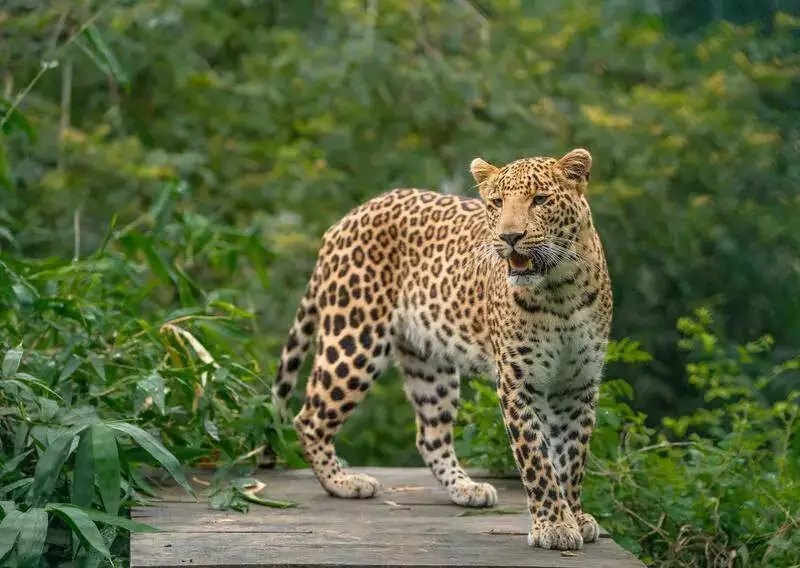
The Manikdoh Leopard Rescue Centre in Pune's Junnar division is facing an unprecedented space crisis, housing a staggering 113 leopards against a maximum capacity of 45. This severe overcrowding has forced officials into a difficult position, including pairing two adult leopards in a single 250-square-metre enclosure—a direct violation of central guidelines.
A Crisis of Space and Guidelines
Established in 2001, the centre is currently holding its highest number of big cats in 25 years. The Central Zoo Authority (CZA) mandates a minimum enclosure size of 250 square metres for one adult leopard, with an additional 100 square metres needed for each extra animal. This means a pair should ideally have 350 to 500 square metres.
"We simply don't have a choice," admitted a senior Junnar forest division official. The facility is now resorting to placing some leopards in small temporary cages, severely restricting their movement and increasing stress-induced aggression. "These are wild animals, not pets. Confinement, even for a few days, increases aggression and makes management dangerous for staff," another official explained.

Root of the Problem: Surging Human-Leopard Conflicts
The influx is driven by daily human-leopard encounters in the Junnar, Ambegaon, and Shirur regions. Maharashtra is known for one of the highest leopard populations living outside protected areas. Vast sugarcane fields, which are tall, dense, and cool, closely mimic the natural habitat of leopards, leading to frequent clashes.
Public pressure from villagers following livestock attacks or sightings has led to a high number of captures, often of "problem" leopards where relocation may not be strictly necessary. Smita Rajhans, assistant conservator of forest for Junnar, revealed the scale of the issue: "We are capturing two to three leopards every day. In the past two weeks alone, we've trapped 25."
The centre receives a mix of orphaned cubs found in fields, injured leopards rescued from traps or wells, and animals involved in conflict. While some are rehabilitated and released, many with severe injuries or behavioural issues require permanent care.
Logistical Nightmare and Pending Solutions
Overcrowding is just one part of the challenge. Feeding over 100 big cats is a massive financial and logistical burden. Each leopard consumes roughly 3kg of chicken daily, pushing the centre's daily poultry requirement beyond 300kg at a cost exceeding Rs 30,000.
Hope for relief from a private facility named Vantara, which had agreed to take 10 leopards, has faded due to a lack of response. "It's a private institution. We can't compel them," a forest official stated. However, Rajhans noted that four zoos across the country have responded to their appeals, and at least 10 leopards will be relocated soon.
A crucial proposal to build 40 additional enclosures at Manikdoh at a cost of around Rs 15 crore has been approved, but the funds are yet to be released by the state government.
Forest officials are now urgently calling for a comprehensive, state-level strategy. This plan must focus on mitigating conflicts, accelerating the construction of permanent enclosures, and enforcing stricter protocols to prevent unnecessary captures. "We cannot keep operating like this," an official stressed, highlighting the need for systemic support and sustainable, long-term solutions to manage this growing wildlife crisis.






