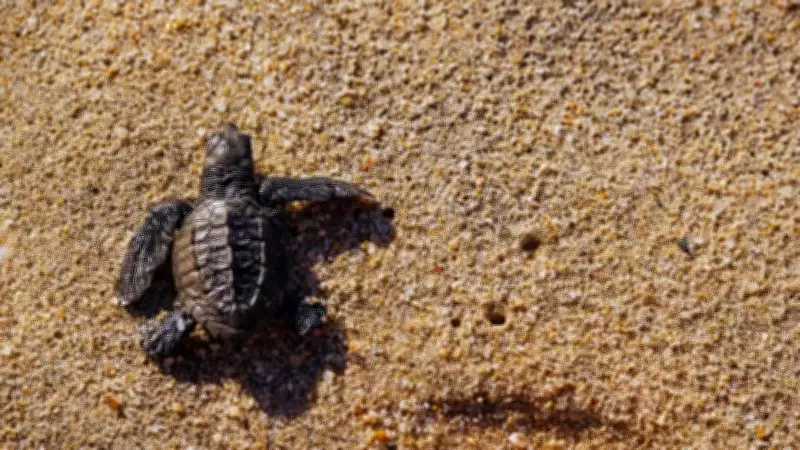
Padma Shri Sudarsan Pattnaik Captures Rare Olive Ridley Hatchlings at Puri Beach
In a remarkable social media post, internationally acclaimed sand artist and Padma Shri awardee Sudarsan Pattnaik has shared a rare and heartwarming sight from Puri's Blue Flag beach. His official account on X showcased groups of Olive Ridley turtle hatchlings making their way towards the sea, an event he described as "something really an incredible moment." Pattnaik captured the video early in the morning, noting that this was the first time such a group sighting had been witnessed at the beach.
Odisha: A Global Hub for Olive Ridley Turtle Conservation
While such moments are fleeting, they underscore Odisha's pivotal role as one of the world's most critical regions for the conservation of Olive Ridley turtles. The state's coastline along the Bay of Bengal is renowned for hosting mass nesting events, known as arribadas, where hundreds of thousands of these turtles come ashore to lay eggs. Key nesting sites include:
- Gahirmatha Beach: Recognized as the largest nesting site for Olive Ridley sea turtles globally.
- Rushikulya Beach: Another vital location for nesting activities.
- Devi River Mouth: An important area supporting turtle populations.
These sites make Odisha a focal point for the survival of the Olive Ridley species, which is classified as Vulnerable on the IUCN Red List of Threatened Species.
Significance of the Puri Sighting
Puri, primarily known as a pilgrim center and beach resort, is not typically associated with large-scale turtle nesting like Gahirmatha or Rushikulya. However, the occasional spotting of hatchlings here is significant for several reasons:
- Continuity of the Odisha Coast as an Ecosystem: It indicates that turtle activities extend beyond designated nesting areas, showcasing the coastal region's ecological integrity.
- Use of Undisturbed Areas: Turtles may utilize quieter spots for nesting or movement, emphasizing the need for habitat preservation.
- Increased Awareness: Such sightings help raise public consciousness about marine conservation and the importance of protecting sea creatures.
This early stage in the hatchlings' journey is delicate; factors like artificial lighting or human presence can significantly impact their survival.
Conservation Measures in Odisha
To protect Olive Ridley sea turtles during nesting and hatching seasons, Odisha has implemented various conservation strategies:
- Enforcement of fishing bans in critical locations during key periods.
- Deployment of forest and marine patrol staff to monitor beaches.
- Promotion of Turtle Exclusion Devices (TEDs) in fishing nets to prevent accidental catches.
- Regulation of human activities on nesting beaches to minimize disturbances.
Implications for Travelers and Nature Enthusiasts
For travelers, Odisha's beaches offer more than scenic beauty—they are integral to a globally significant marine ecosystem. Destinations like Gahirmatha and Rushikulya are not just tourist spots but ecological treasures, while Puri highlights the intersection of tourism and natural wonders. Visitors can contribute to conservation efforts by:
- Respecting restricted areas during nesting seasons.
- Avoiding flash photography near turtles to prevent stress.
- Adhering to nature conservation guidelines provided by authorities.
A Coastline of Ecological Importance
Odisha's coastline remains a vital habitat for Olive Ridley sea turtles, supporting one of the world's largest nesting populations. The sighting in Puri serves as a poignant reminder of the region's ecological significance and the ongoing need for conservation efforts to protect these vulnerable species for future generations.