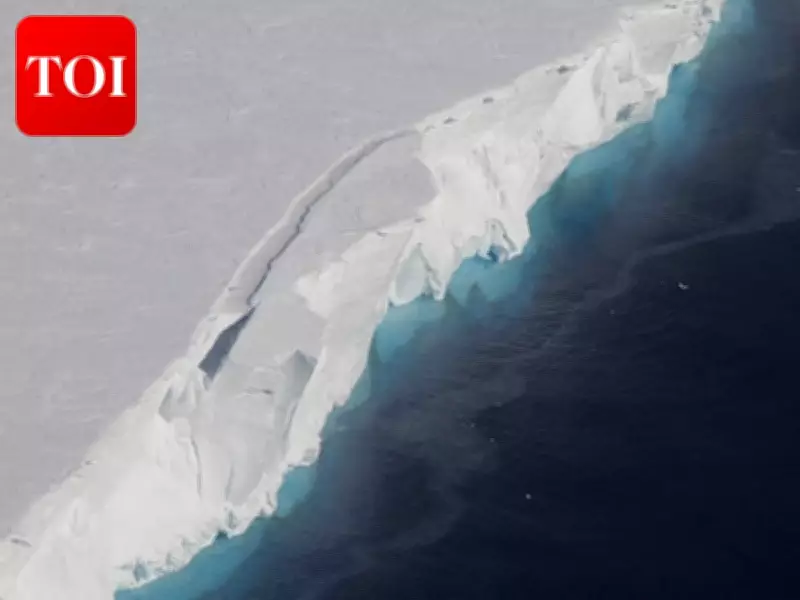
A bright orange robot submarine, nicknamed Ran, ventured under Antarctica's Dotson Ice Shelf in 2022, revealing a hidden landscape far more complex than previously understood. Two years later, the autonomous underwater vehicle disappeared under the ice and never returned. But before its disappearance, Ran produced the first high-resolution maps of a large section of the ice shelf's hidden underside.
Hidden World Beneath the Ice
What appears to most as a simple floating slab of frozen water has a remarkably complex underbelly. The Dotson Ice Shelf in West Antarctica is closely monitored for its vulnerability to ocean warming. While satellites provide surface data, the underside remains inaccessible—hundreds of meters of ice block ships and divers. Ran was designed to navigate this darkness, traveling over 1,000 kilometers under the shelf over 27 days, mapping some 55 square miles of the ice base at unparalleled resolution.
Complex Terrain Revealed
Upon examining the data, researchers were surprised by the rough nature of the underside. The observations showed colossal step-like terraces, long channels, and strange teardrop-shaped cavities in areas experiencing rapid melt. Lead researcher Anna Wåhlin of the University of Gothenburg compared seeing the images to the first glimpse of the far side of the Moon. The findings, published in Science Advances, offer an unprecedented glimpse into unseen changes below Antarctica.

Ocean-Driven Melting
The study suggests that melting processes beneath ice shelves are more complex than current models assume. Warm ocean water and currents shape a diverse landscape, with teardrop-shaped pits indicating complex fluid dynamics near the ice-ocean boundary. These features could influence the rate at which the ice shelf continues to thin and melt.
Why Floating Ice Shelves Matter
While the loss of floating ice shelves like Dotson does not directly raise sea levels, their mass loss accelerates the flow of inland glaciers into the sea. The US National Snow and Ice Data Center notes that floating shelves restrain inland ice; their melting indirectly contributes to global sea-level rise.
The Robot That Never Returned
During a follow-up mission in January 2024, Ran failed to return after a dive beneath the ice shelf. Signals ceased, and a large-scale search failed to locate it. Although its fate remains unknown, Ran's findings provide critical insights into a remote part of Antarctica, helping scientists understand the hidden landscape beneath the ice.