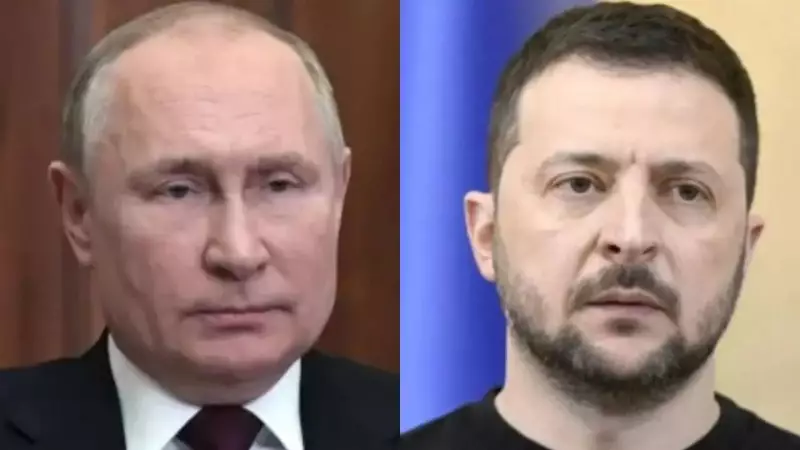
Russia has firmly reiterated its primary condition for peace negotiations, demanding that Ukraine completely withdraw its armed forces from the eastern Donbas region. This statement came just hours before crucial trilateral talks involving Russian, Ukrainian, and United States officials were scheduled to commence in the United Arab Emirates.
Kremlin's Unwavering Position on Donbas
Kremlin spokesman Dmitry Peskov emphasized Russia's longstanding position, stating clearly that Ukrainian forces must leave Donbas territory. "Russia's position is well known on the fact that Ukraine, Ukrainian armed forces, have to leave the territory of the Donbas. They must be withdrawn from there," Peskov declared. He added that "This is a very important condition" for any potential resolution to the conflict.
High-Stakes Diplomatic Meeting in Abu Dhabi
The upcoming negotiations represent what is expected to be the first direct public discussions between Moscow and Kyiv connected to a peace initiative promoted by US President Donald Trump. Senior delegations from all three nations traveled to Abu Dhabi on Friday for these critical talks.

The Ukrainian delegation includes several key figures:
- Kyrylo Budanov, President Zelensky's chief of staff
- Defence Minister Rustem Umerov
- Senior lawmaker David Arakhamia
- Army commander Andriy Gnatov
Russia's team will be led by General Igor Kostyukov, head of military intelligence, and consists entirely of military officials. The United States delegation is being headed by envoy Steve Witkoff, with Trump's son-in-law Jared Kushner also anticipated to participate.
Territorial Dispute Remains Central Obstacle
Despite intensified diplomatic efforts in recent weeks to resolve Europe's most severe conflict since World War II, Russia and Ukraine remain fundamentally divided on territorial issues. Russian forces currently control approximately twenty percent of Ukrainian territory, and President Vladimir Putin has indicated Russia will pursue full control of eastern Ukraine through military means if negotiations fail.
Ukraine has consistently warned that territorial concessions would encourage future aggression and insists any peace agreement must include safeguards against subsequent invasions. While President Zelensky has previously shown some flexibility in negotiations, he maintains that any deal involving land concessions would require public approval through proper democratic processes.
Ongoing Violence Amid Diplomatic Efforts
Even as diplomatic channels open, military confrontations continue across Ukraine. Russian drone attacks overnight in eastern Ukraine resulted in four fatalities, including a five-year-old child, according to local authorities. The strike in Donetsk region late Thursday additionally injured five individuals and destroyed two residential homes.
This region remains a primary target for Russian military operations, with recent attacks leaving significant portions of Kyiv without electricity and heating during freezing winter conditions. Russia has demonstrated minimal interest in altering its position despite continuing hostilities and humanitarian consequences.
The talks follow recent high-level diplomatic engagements, including President Trump's meeting with Zelensky in Davos and US envoy Witkoff's late-night discussions with President Putin at the Kremlin. As these critical negotiations unfold in Abu Dhabi, the international community watches closely to see whether diplomatic breakthroughs can overcome the fundamental territorial disagreements that have sustained nearly four years of devastating conflict.