Davos 2026: Global Leaders Gather to Renew Cooperation Amid Geopolitical Tensions
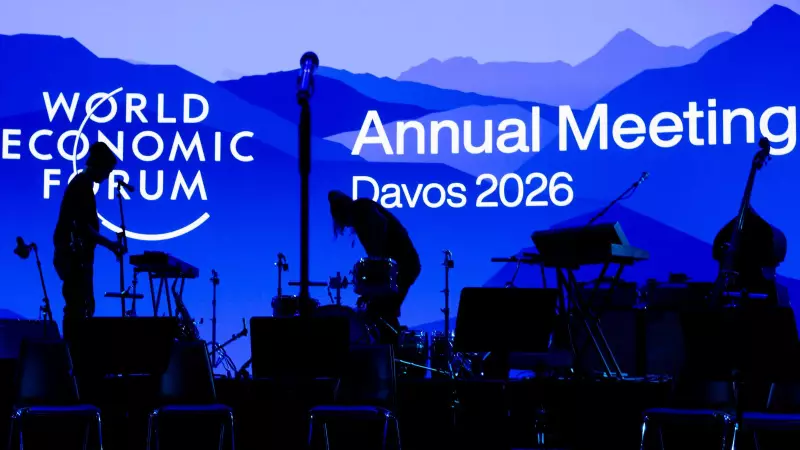
The 56th Annual Meeting of the World Economic Forum will take place in Davos, Switzerland from January 19 to 23, 2026. This major event brings together global leaders from government, business, and civil society. They will address shared challenges during a time of significant geopolitical, technological, and societal shifts.
Under the theme 'A Spirit of Dialogue', Davos 2026 aims to provide an impartial platform. Leaders will focus on collaboration, long-term solutions, and collective action. The program builds on more than five decades of convening decision-makers across various sectors.
What to Expect at Davos 2026
Sessions on geopolitics and economic growth will examine how global cooperation can be renewed. This comes amid contested norms, strained alliances, and declining trust. Discussions will explore new models of collaboration as long-held assumptions face challenges.

Leaders will focus on practical, solutions-driven approaches. They aim to manage geopolitical risk and economic uncertainty. Strengthening resilience and competitiveness remains a key goal. Enabling inclusive growth is another priority.
A key priority will be the responsible adoption of transformative technologies. This includes generative AI. The human dimension of change will also be central to the agenda.
As technology reshapes industries and work, conversations will highlight investments in people. Building resilient workforces and supporting skills transitions are important. Improving overall well-being will also be discussed.
Leaders will assess pathways to growth within planetary boundaries. They will advance secure and sustainable energy, nature, and water systems.
Who's Attending the Annual Meeting 2026
At this critical moment for global cooperation, the World Economic Forum will convene nearly 3,000 leaders. They come from across sectors and more than 130 countries.
The meeting will see record government participation. Around 400 senior political leaders are expected. This includes nearly 65 heads of state and government. Six leaders from the G7 will also attend.
They will be joined by close to 850 of the world's top CEOs and chairpersons. Almost 100 leading unicorns and technology pioneers will participate too.
The program is further strengthened by voices from civil society. Labor groups, faith-based organizations, and cultural figures will contribute. Social entrepreneurs, academics, experts, and think tanks will offer research-driven insights.
Youth leaders from the Forum's Global Shapers community will share forward-looking perspectives. Innovators and technology pioneers shaped by real-world experience will also contribute.
Extensive media participation ensures transparency. The live broadcast of more than 200 sessions will enable broad public access. Global audiences can follow, engage with, and question the discussions.
Founding and Philosophy of the World Economic Forum
German academic Klaus Schwab founded the World Economic Forum in 1971. He was a mechanical engineering graduate who later earned a Master of Public Administration from Harvard University.
Schwab served as a professor of business policy at the University of Geneva from 1972 to 2003. The Forum started as the European Management Forum. It later evolved into the World Economic Forum.
A key idea promoted by Schwab is 'stakeholder capitalism'. This model encourages companies to aim for long-term value creation. They consider the interests of all stakeholders, not just shareholders.
This includes employees, suppliers, communities, and society at large. The focus shifts away from solely short-term profits. According to the WEF, businesses need to serve a broader set of interests.
Extending this approach, the Forum brings together leaders from business, government, and civil society. They meet in the Swiss Alps to discuss major global challenges. Exploring solutions to address these challenges remains the core mission.
Davos 2026 extends its conversations beyond Switzerland through live-streamed sessions. Digital platforms and the Open Forum enable global audiences to engage. Discussions shaping the year ahead will reach people worldwide.