

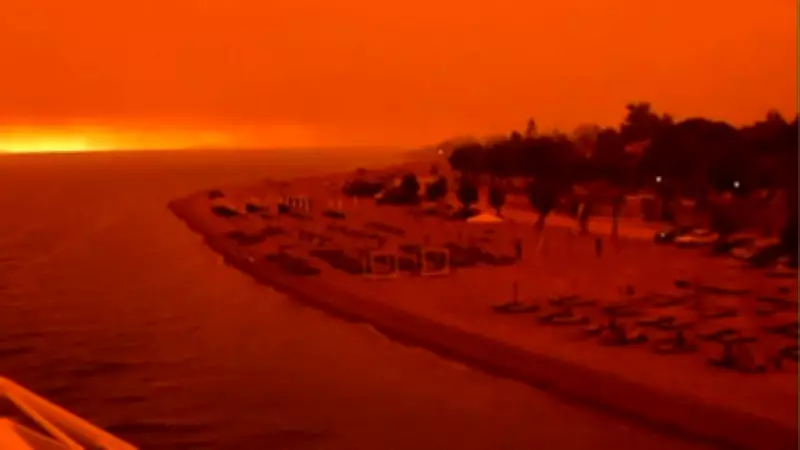
Saharan Dust Cloud Transforms Southern European Skies
A significant meteorological event has unfolded across southern Europe as a dense cloud of Saharan desert dust has spread over the region, dramatically altering atmospheric conditions. The Greek island of Crete, typically celebrated for its pristine blue skies and clear weather, now finds itself shrouded in an unusual reddish haze that has muted sunlight and severely reduced visibility.
Storm Erminio Intensifies Dust Transport
The timing of this atmospheric phenomenon coincides with the approach of the Easter travel period, a traditionally busy season for both international visitors and local residents throughout Greece. Meteorological experts have linked the intensified dust movement directly to Storm Erminio, a powerful weather system that has brought strong winds and heavy rainfall across the Mediterranean region.
Similar effects have been reported across multiple Greek islands, including the popular tourist destination of Santorini, where skies have taken on unusual orange and red tones that have affected daily routines and outdoor activities. The atmospheric conditions represent a classic Saharan dust event, occurring when powerful winds lift fine mineral particles from North African desert regions and transport them across vast distances over the Mediterranean Sea.

Scientific Explanation Behind the Red Skies
Weather patterns associated with Storm Erminio have significantly strengthened air mass movements, enabling a particularly dense layer of desert dust to reach Crete and surrounding areas. The scientific principle behind the dramatic color change involves light scattering – as sunlight passes through the suspended dust particles in the atmosphere, it scatters differently than through clear air, causing the sky to appear red or orange rather than the typical blue.
While such dust events are not uncommon in the Mediterranean region, the current intensity stands out due to specific atmospheric pressure systems and wind strength patterns. The physical impact has been substantial across affected areas, with streets, buildings, and vehicles accumulating a thin but noticeable coating of fine desert dust.
Immediate Impacts and Public Response
In locations where rainfall has occurred alongside the dust, the combination has created muddy streaks across various surfaces. Visibility has been periodically reduced, particularly during periods of higher atmospheric dust concentration. Many residents have adopted precautionary measures, including wearing face masks while outdoors to limit exposure to the fine particulate matter.
The atmospheric conditions have created a noticeably heavier feeling compared to typical clear-weather circumstances in the region. The environmental impact extends beyond visual changes, with potential implications for air quality that may particularly affect individuals with respiratory sensitivities or pre-existing conditions.
Travel Disruptions and Regional Consequences
Transportation networks have experienced significant disruptions during this dust event. Ferry routes and flight connections between Crete and the Greek mainland have been affected by reduced visibility and atmospheric conditions. The identical sky conditions observed in Santorini have similarly impacted local travel and tourism activities.
On the Greek mainland, the weather system associated with Storm Erminio has produced heavy rainfall in specific areas, leading to flooding incidents in Athens and surrounding regions. Emergency response teams were deployed in the Nea Makri area following flooding incidents that were associated with fatal accidents in the region.
Environmental and Health Considerations
The presence of substantial dust in the atmosphere raises legitimate concerns about air quality degradation, particularly for vulnerable populations including those with respiratory conditions. Health authorities recommend precautionary measures such as limiting outdoor exposure and utilizing protective masks when venturing outside.

From an environmental perspective, desert dust transport represents a natural geological process that can contribute mineral nutrients to soils in distant locations, though the specific impacts depend on the scale, duration, and composition of each dust event. The current situation continues to evolve as meteorological conditions shift across the Mediterranean basin.





