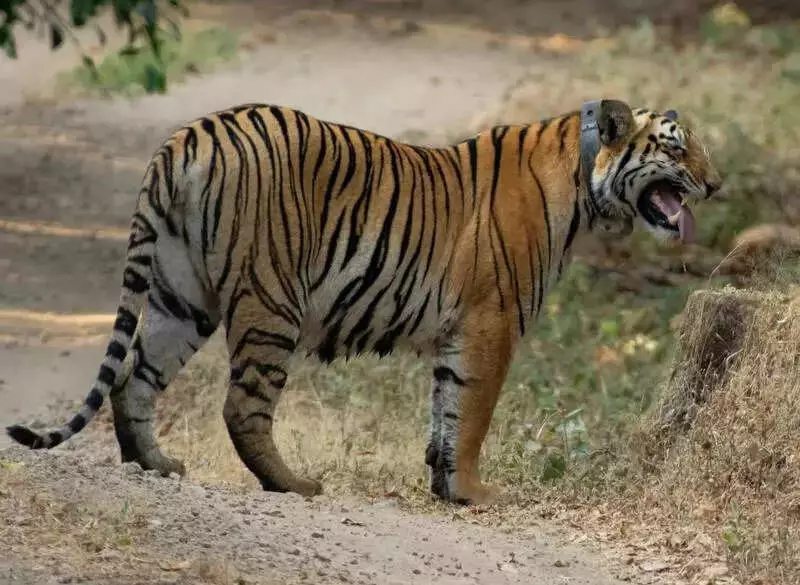
Sahyadri Tiger Reserve Ascends to Prominence in India's Wildlife Landscape
The strategic relocation of tigresses from Tadoba Andhari Tiger Reserve, combined with the establishment of resident tiger populations, has firmly positioned the Sahyadri Tiger Reserve (STR) in western Maharashtra on the national big cat conservation map. This development marks a significant milestone for wildlife preservation efforts in the region.
Historic Volunteer Participation in Tiger Census 2026
In an unprecedented display of citizen engagement, seventy-five dedicated volunteers from various parts of India converged at STR between January 11 and 17 for the inaugural phase of the All-India Tiger Estimation 2026 (AITE-26). This quadrennial census represents a comprehensive, scientifically rigorous assessment of India's wildlife populations.
The extensive survey operates under the expert supervision of the National Tiger Conservation Authority and the Wildlife Institute of India. While tiger enumeration remains its primary focus, the census methodology extends to evaluating co-predator species including leopards and jackals, providing a holistic view of the ecosystem's health.

Firsthand Encounters with STR's Majestic Predators
Several fortunate volunteers experienced direct wildlife encounters during the census activities. Some participants observed the elusive Chanda tigress within the reserve's core protected zone, while others documented fresh pug marks belonging to resident male tigers, confirming their territorial presence.
Volunteer Mayur Mundada described the experience as "thrilling and memorable." He recounted, "At 4 AM, we were greeted by the powerful growl of a tiger. One team member actually sighted the Chanda tigress. Through line transect surveys and sign surveys, we learned practical field techniques for documenting both direct and indirect evidence of herbivores and carnivores, including how to properly trace scat samples and pug marks."
Overwhelming Response and Conservation Significance
STR Field Director Tushar Chavan expressed astonishment at the public's enthusiastic response to the volunteer program. "We received approximately four hundred applications from interested participants, a level of engagement we haven't witnessed previously. Applications poured in from Maharashtra and numerous other states, demonstrating nationwide interest in our conservation work," Chavan noted.
He emphasized the estimation's critical importance for STR's management, explaining, "The tiger presence dynamics here have transformed considerably in recent years. Five tigers have now established themselves as permanent residents, a development we anticipate will be officially reflected for the first time in the upcoming national estimation results."
Tourist Sighting Highlights Reserve's Accessibility
The reserve's growing wildlife visibility was further underscored when tourist Amit Mane observed tigress 'Tara' (scientifically coded STR-T5) during a January 20 safari along the Zolambi forest route within Chandoli National Park. The majestic feline provided an extended ten-minute viewing opportunity as she engaged in territorial marking behavior, offering wildlife enthusiasts a rare, prolonged encounter from the safety of their safari vehicle.
This combination of scientific documentation, volunteer engagement, and public wildlife sightings solidifies Sahyadri Tiger Reserve's emerging status as a vital conservation area within India's network of protected tiger habitats.