

Saudi Aramco Refinery Targeted in Escalating Middle East Conflict
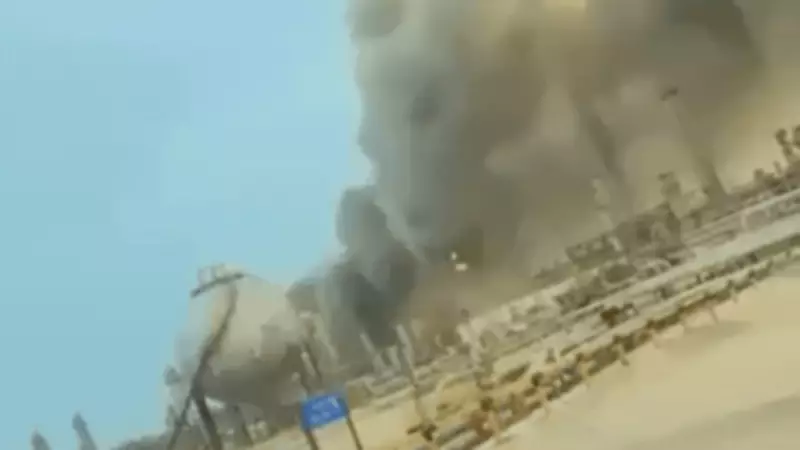
In a significant escalation of regional tensions, Saudi Aramco's Ras Tanura refining facility in Saudi Arabia was struck by falling debris on Monday. The debris originated from the successful interception of an Iranian drone, as confirmed by a Saudi military spokesman via the state-run Saudi Press Agency. This incident underscores the ongoing and volatile conflict involving the United States, Israel, and Iran, which has intensified following the targeted killing of Iran's supreme leader, Ayatollah Khamenei.
Immediate Impact and Response at Ras Tanura
Online videos from the site captured thick black smoke billowing into the sky after the attack, raising immediate alarms about potential damage and safety risks. However, reports from The Jerusalem Post, citing a Semafor reporter, indicated that the resulting fire was relatively small, isolated, and swiftly brought under control by emergency responders. Despite this, the facility was temporarily shut down as a precautionary measure, exacerbating concerns over global oil supply disruptions.
The shutdown comes at a critical time when shipping through the Strait of Hormuz—a vital maritime chokepoint responsible for transporting approximately one-fifth of the world's oil—has nearly ground to a halt. This stagnation follows a series of attacks on vessels in the area on Sunday, further straining energy markets and heightening fears of broader economic repercussions.

Broader Wave of Iranian Attacks Across the Gulf
The drone strike on Ras Tanura is part of a larger, coordinated offensive by Iran across the Middle East. In retaliation for Khamenei's killing, Iranian forces have launched missile and drone strikes targeting multiple key locations. According to Iranian state media, these attacks have included:
- Abu Dhabi and Dubai in the United Arab Emirates, with explosions reported in urban areas.
- Doha in Qatar, where commercial activities faced disruptions.
- Manama in Bahrain, where Press TV reported an Iranian missile strike at Salman Port. Iranian claims suggest the port was being used to transport American logistical equipment intended for strikes against Iran.
- Oman's commercial port of Duqm, impacting regional trade routes.
Additionally, Iranian media has circulated a video purportedly showing a US F-15 fighter jet engulfed in flames with pilots ejecting, though this claim remains unverified by independent sources. The broader conflict has also seen Israel bomb Hezbollah targets in Beirut, while Gulf nations have vowed to strengthen their defensive postures in response to the escalating threats.
Economic and Strategic Ramifications
The economic fallout from these attacks is already becoming apparent. In Iraq's Kurdistan Region, most oil production was shut down over the weekend as a precautionary measure, reflecting the widespread anxiety over energy security. The combination of refinery shutdowns, halted shipping, and production pauses threatens to create significant supply bottlenecks, potentially driving up global oil prices and impacting economies reliant on stable energy imports.
Key points to note:
- The conflict has expanded beyond military targets to include critical infrastructure like refineries and ports.
- Gulf nations are actively enhancing their defense mechanisms amid the ongoing crisis.
- The Strait of Hormuz remains a focal point of vulnerability for global oil transit.
As the situation continues to evolve, the international community is closely monitoring developments, with concerns mounting over the potential for further escalation and its implications for regional stability and global energy markets. The targeting of Saudi Aramco's facility marks a dangerous new phase in the conflict, highlighting the interconnected nature of geopolitical tensions and economic security in the Middle East.






