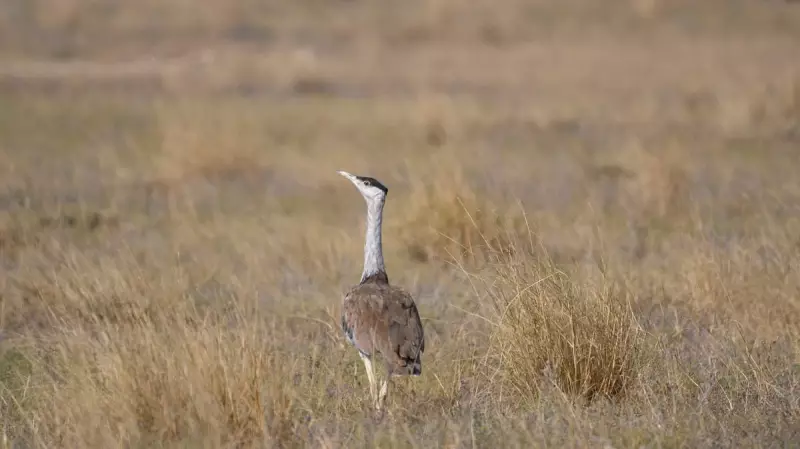
The majestic Great Indian Bustard (GIB), once a proud symbol of India's grassland ecosystems, is now teetering on the brink of extinction. Its dramatic decline presents a complex conservation puzzle, forcing a difficult national conversation about balancing ecological preservation with critical infrastructure development.
A Multifaceted Crisis for a National Icon
The plight of the GIB is not the result of a single, isolated threat. Experts point to a dangerous convergence of human-induced pressures that have pushed the species to a critical state. The primary dangers include relentless human intrusion into the bird's native grassland habitats, unplanned and rapid expansion of infrastructure projects, and the resulting severe loss and fragmentation of its living spaces. However, one threat has emerged as particularly lethal in recent years: fatal collisions with overhead power lines crisscrossing its remaining territories.
These high-tension wires, often invisible to the large, heavy-flying bustards, have become death traps. The birds, which have a narrow frontal vision, fail to see the cables in time, leading to deadly impacts. This specific threat has turned the very infrastructure that powers India's growth into one of the most significant obstacles to the survival of its most critically endangered bird.

The Grid vs. The Bird: An Urgent Dilemma
The central challenge for conservationists and policymakers is stark. On one hand, there is an urgent, non-negotiable need to protect the last remaining GIB populations from imminent wipeout. On the other, India's expanding power grid is vital for economic development and energy security. Finding a solution that safeguards the bird without sacrificing reliable electricity supply to homes and industries is a monumental task.
Potential mitigation strategies are being debated and tested. These include the urgent need to divert proposed power lines away from identified GIB habitats and priority areas. For existing lines, solutions like installing bird diverters—devices that make the cables more visible—and the costly but effective option of burying power lines underground in critical zones are on the table. Aniketan Suvvi, in his analysis dated 04 January 2026, highlighted this complex interplay of threats. The timeline underscores the prolonged nature of this crisis and the pressing need for decisive action.
Beyond Power Lines: The Broader Habitat Battle
While power lines are a focal point, conservation efforts must address the full spectrum of threats. The degradation of grassland ecosystems due to agriculture, mining, and urban sprawl has shrunk the GIB's world. Protecting and restoring these unique habitats is equally crucial. A successful survival strategy requires a multi-pronged approach:
- Habitat Securement: Legally protecting and actively managing core grassland areas.
- Infrastructure Planning: Mandating rigorous environmental impact assessments for all projects in and around GIB landscapes.
- Community Involvement: Engaging local communities as stakeholders in conservation efforts.
- Technological Fixes: Rapidly deploying and funding effective solutions like cable marking and undergrounding.
The story of the Great Indian Bustard is a test case for India's commitment to sustainable development. It asks whether the nation can forge a path where economic progress does not come at the cost of irreplaceable natural heritage. The clock is ticking, and the choices made today will determine whether future generations will witness the GIB soaring over Indian grasslands or know it only from history books.